
Last Updated on 3 weeks ago by Grisha E.
The internet offers a vast marketplace for anyone looking to generate income, but sifting through the noise to find legitimate opportunities can be overwhelming. Many guides promise quick riches with vague advice, leaving you with more questions than answers. This article cuts through the clutter, providing a curated list of proven, low-barrier methods for those seeking easy ways to make money online. We move beyond generic tips and dive into actionable strategies you can implement today, whether you're looking for a side hustle or a full-time career.
Inside, you'll find a detailed breakdown of ten distinct online income streams. Each section outlines the specific skills required, realistic earning potential, and a step-by-step guide to getting started. We cover everything from leveraging your existing skills through freelancing and virtual assistance to creating passive income with digital products and affiliate marketing. You won't just learn what to do; you'll understand how to do it effectively. This guide is designed to be a practical roadmap, equipping you with the specific insights needed to turn your time and talent into tangible online earnings, regardless of your starting point or experience level. Let's explore the methods that can work for you.
1. Freelancing Your Creative Skills
Freelancing is one of the most direct and easy ways to make money online by monetizing skills you already possess. Instead of a traditional job, you operate as an independent contractor, offering services like graphic design, writing, programming, or virtual assistance to various clients. For social media influencers, this is a natural extension of your brand; you can offer content creation, social media management, or video editing services directly to businesses.
How It Works
You create a profile on a freelance marketplace, showcasing your portfolio and setting your rates. Clients post jobs, and you can bid on projects that match your expertise.
- Platforms: Popular sites include Upwork, Fiverr, and Toptal for specialized tech talent. Each has a different model; Fiverr is gig-based, while Upwork is project-based.
- Practical Example for Influencers:
- Offer what you already do well. A food blogger with a large Instagram following can offer a "Reel Content Package" for local cafes. This package could include:
- A 2-hour on-site filming session.
- Editing of three 15-second, trending-audio Reels.
- A set of 10 high-resolution photos for their feed.
- This can be sold as a single gig on Fiverr for a fixed price, like $500.
- Offer what you already do well. A food blogger with a large Instagram following can offer a "Reel Content Package" for local cafes. This package could include:
- Getting Started: Begin by creating a strong portfolio. If you don't have client work yet, create personal projects that demonstrate your skills. A designer could re-brand a popular local business, or a writer could create sample blog posts for an industry they admire.
Key Insight: Start with smaller, well-defined projects to build a strong reputation. Positive reviews are social proof and act as a powerful magnet for attracting higher-paying clients on these platforms. Don't be afraid to underbid slightly on your first few jobs to get those crucial initial ratings.
2. Content Creation (YouTube, TikTok, Instagram)
Content creation is a powerful and accessible way to make money online by building an audience around your passions. You create and publish original video or image content on platforms like YouTube, TikTok, or Instagram, earning revenue through advertisements, sponsorships, and direct brand partnerships. For influencers, this transforms your creative outlet into a sustainable business by monetizing the attention you capture.

How It Works
You build a following by consistently posting engaging content in a specific niche. As your audience grows, monetization opportunities unlock, such as ad revenue share on YouTube, TikTok's Creator Fund, or lucrative brand deals.
- Platforms: YouTube is ideal for long-form, evergreen content, while TikTok and Instagram Reels excel at short-form, viral videos. Each platform has distinct monetization tools; you can explore a breakdown of platforms that pay content creators on rupa.pro.
- Practical Example for Influencers:
- Create a content series. A fitness coach could create a "Workout Wednesday" series on TikTok and Instagram.
- TikTok/Reels: Post a 30-second tutorial of a single exercise using a trending sound.
- YouTube: Post a full 20-minute "Follow Along" workout routine that incorporates that exercise.
- Monetization: This multi-platform approach captures different audience segments, earns ad revenue on YouTube, and attracts sponsorship opportunities from athletic wear brands who want to be featured in the series.
- Create a content series. A fitness coach could create a "Workout Wednesday" series on TikTok and Instagram.
- Getting Started: Choose a niche you are genuinely passionate about to ensure long-term consistency. Start creating content with your smartphone, focusing on good lighting and clear audio. Post on a regular schedule to train the algorithm and your audience to expect your content.
Key Insight: Consistency is more important than production value when you're starting out. Focus on a predictable posting schedule and actively engage with every comment. This builds a loyal community that platforms will reward with greater visibility, accelerating your path to monetization.
3. Affiliate Marketing
Affiliate marketing allows you to earn commissions by promoting another company's products or services. You share a unique affiliate link, and when someone makes a purchase through it, you get a percentage of the sale. This method is a fantastic way for influencers and content creators to monetize their audience's trust by recommending products they genuinely use and love.
How It Works
You join an affiliate program, receive a unique tracking link, and incorporate it into your content. When your audience clicks and buys, the affiliate network tracks the transaction and credits your account.
- Platforms: The largest program is Amazon Associates, but networks like ShareASale and Commission Junction (CJ) offer access to thousands of brands. For creators, exploring a curated list of influencer affiliate programs can uncover high-paying partnerships.
- Practical Example for Influencers:
- Build a dedicated affiliate hub. A tech YouTuber can create a "My Gear" page on their website using a free tool like Kit.co.
- List every piece of equipment: camera, microphone, lighting, laptop.
- Include Amazon affiliate links for each item.
- Link to this page in every YouTube video description and your social media bio. This creates a centralized, passive income stream from questions you already get asked.
- Build a dedicated affiliate hub. A tech YouTuber can create a "My Gear" page on their website using a free tool like Kit.co.
- Getting Started: Identify products that align with your brand and audience. To maximize your earning potential, discovering the best affiliate marketing niches and focusing on evergreen, high-demand areas is crucial. Create authentic, valuable content like detailed reviews or tutorials that naturally integrate your affiliate links.
Key Insight: Authenticity is everything in affiliate marketing. Only promote products you've used and can honestly vouch for. Your audience's trust is your most valuable asset; transparently disclosing your affiliate relationships builds credibility and leads to higher conversion rates over time.
4. Online Tutoring and Courses
Sharing your expertise through education is another of the most rewarding and easy ways to make money online. You can teach students one-on-one through live video calls or create pre-recorded courses to sell on-demand, turning your knowledge into a passive income stream. For influencers, this is a powerful way to provide direct value to your audience by teaching them the skills you've mastered.
How It Works
You can either join an existing platform to offer live tutoring sessions or build your own course using a dedicated hosting service. Both methods allow you to monetize your skills in subjects ranging from academic topics to professional development or creative arts.
- Platforms: For live tutoring, platforms like VIPKid connect teachers with students globally. For selling courses, Udemy and Teachable are industry leaders, providing tools to build, market, and sell your curriculum.
- Practical Example for Influencers:
- Create a "mini-course" based on your top content. A fitness influencer whose HIIT workout videos get the most engagement can create a comprehensive "30-Day HIIT Transformation" course.
- Module 1: Video lessons on proper form for 5 core exercises.
- Module 2: A downloadable 4-week workout schedule PDF.
- Module 3: A PDF nutrition guide with sample meal plans.
- This offers far more value than a single sponsored post and can be sold for $49-$99.
- Create a "mini-course" based on your top content. A fitness influencer whose HIIT workout videos get the most engagement can create a comprehensive "30-Day HIIT Transformation" course.
- Getting Started: Validate your topic idea by offering one-on-one coaching sessions first. This confirms audience demand and helps you refine your teaching material before investing time in creating a full course. You can create and sell online courses once you've identified a winning topic.
Key Insight: Production quality matters. You don't need a Hollywood studio, but clear audio and good lighting are non-negotiable. Invest in a decent microphone and learn basic video editing to make your content look professional, which directly influences student perception of value and justifies a higher price point.
5. Dropshipping and E-commerce
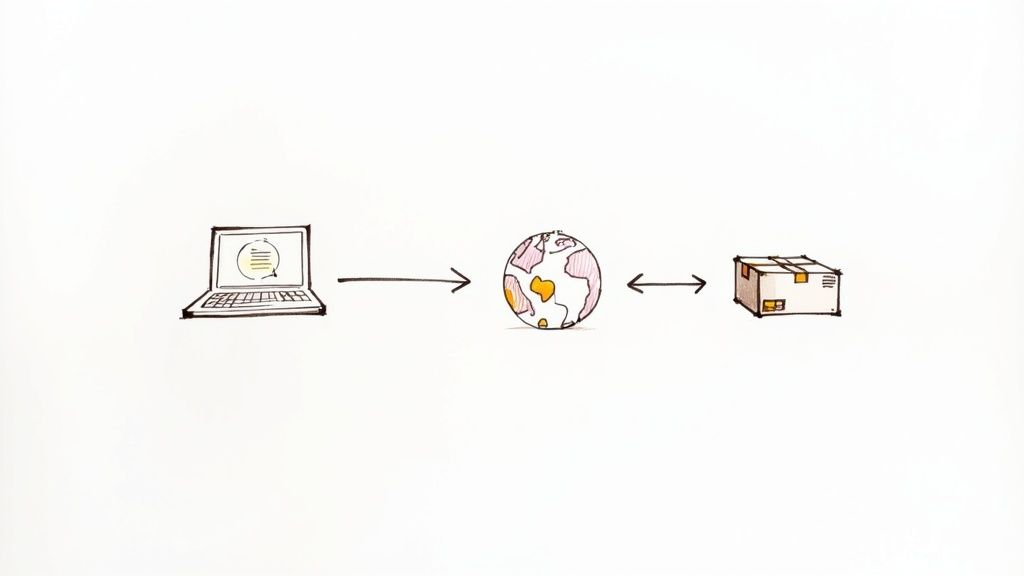
Dropshipping is one of the most accessible and easy ways to make money online by running an e-commerce store without ever holding inventory. You act as the digital storefront, handling marketing and customer service, while a third-party supplier manages product storage and direct shipping to your customers. This model significantly lowers the upfront investment and risk associated with traditional retail.
How It Works
You create an online store, typically using a platform like Shopify, and integrate it with a supplier marketplace. When a customer places an order on your site, you forward that order to your supplier, who then ships the product directly to the customer. Your profit is the difference between your retail price and the supplier's wholesale cost.
- Platforms: Shopify is the dominant platform, with apps that seamlessly connect you to suppliers on marketplaces like AliExpress. Print-on-demand services like Printful allow you to sell custom-designed apparel and merchandise without holding stock.
- Practical Example for Influencers:
- Test products with your content. A TikTok influencer known for their unique home decor style could create a dropshipping store selling trendy, niche home goods they find on AliExpress.
- Order 3-4 different products to test quality (e.g., a sunset lamp, a unique vase).
- Create viral-style videos featuring the best product.
- If a video takes off, drive traffic directly to the product page on your Shopify store to capture sales from your engaged audience.
- Test products with your content. A TikTok influencer known for their unique home decor style could create a dropshipping store selling trendy, niche home goods they find on AliExpress.
- Getting Started: Identify an underserved niche with passionate consumers. Research reliable suppliers with positive reviews and reasonable shipping times. Build a clean, trustworthy-looking online store and start testing products with small, targeted ad campaigns on platforms like TikTok or Instagram.
Key Insight: Success in dropshipping isn't just about finding a winning product; it's about building a strong brand around it. Focus on creating a unique customer experience through excellent marketing, transparent communication, and a well-curated product selection. This builds trust and turns one-time buyers into repeat customers.

6. Blogging and Content Monetization
Creating a blog or content site is a powerful long-term strategy, making it one of the most rewarding easy ways to make money online. It involves building an audience around a specific niche you are passionate about, then monetizing that traffic through various streams like ads, affiliate links, and selling your own products. For influencers, a blog acts as a central hub for your brand, owned entirely by you.
How It Works
You consistently publish high-quality content that solves problems or answers questions for your target audience. Over time, search engines like Google will start sending organic traffic to your site, which you can then monetize.
- Platforms: You can start a blog on platforms like WordPress.org for full control, or simpler services like Medium and Substack for a more direct subscription model.
- Practical Example for Influencers:
- Turn your top video content into blog posts. A travel influencer can take their popular "10 Best Things to Do in Bali" YouTube video and convert it into a detailed blog post.
- Transcribe the video script as a base.
- Expand on each point with more details, photos, and opening hours.
- Embed the original YouTube video in the post.
- Add affiliate links for hotel bookings and travel gear. This "recycles" content for a new audience on Google.
- Turn your top video content into blog posts. A travel influencer can take their popular "10 Best Things to Do in Bali" YouTube video and convert it into a detailed blog post.
- Getting Started: Choose a niche with a passionate, underserved audience. Use keyword research tools to find long-tail keywords (e.g., "best vegan restaurants in Lisbon") with lower competition. Start building an email list from day one to nurture a direct relationship with your readers.
Key Insight: Consistency trumps frequency. Publishing one deeply researched, valuable article per week is far more effective than posting five shallow ones. Focus on becoming the go-to resource for a very specific topic, and diversify your income streams early on by combining ads, affiliate marketing, and a simple digital product.
7. Digital Product Sales
Creating and selling digital products is one of the most scalable and easy ways to make money online. This involves creating a single asset, like an e-book, a set of photo presets, or a workout plan, and selling it infinitely. Unlike physical goods, there are no inventory or shipping costs, allowing you to generate passive income once the product is created. For influencers, this is a powerful way to monetize expertise and provide tangible value to their audience.
How It Works
You create a valuable digital resource that solves a specific problem for your target audience and sell it through an online marketplace or your own website. The key is to leverage your niche expertise to create something your followers genuinely need.
- Platforms: Marketplaces like Gumroad and Etsy make it simple to upload and sell digital files. For creative assets, platforms like Creative Fabrica are popular. You can also integrate sales directly into your own website using tools like Shopify.
- Practical Example for Influencers:
- Productize your workflow. A productivity creator who uses Notion can sell their exact templates.
- Product: A "Content Creator's Notion Dashboard" template.
- Features: Pre-built pages for video ideas, sponsorship tracking, and a content calendar.
- Marketing: Create a TikTok video showing a "day in the life" of using the dashboard to stay organized. Link to the Gumroad sales page in your bio.
- Productize your workflow. A productivity creator who uses Notion can sell their exact templates.
- Getting Started: Identify a common question or problem within your audience. Do they always ask for your photo editing settings? Create a preset pack. Do they want your budget-tracking system? Build a spreadsheet template. Start small, validate the idea, and build from there. For more inspiration, you can find a list of 77 digital product ideas that made $10K in 2024.
Key Insight: Don't wait for a huge audience to launch a product. Solve a hyper-specific problem for a small, dedicated niche. A well-designed digital product can convert a small following into a significant income stream because it offers direct, actionable value that goes beyond typical content.
8. Virtual Assistance
Virtual assistance is a powerful and easy way to make money online by offering administrative, creative, or technical support to businesses from a remote location. As an independent contractor, you help entrepreneurs and companies manage tasks they can't handle themselves, such as email management, scheduling, social media updates, and customer service. For influencers, this is a perfect fit, as you can offer specialized services like community management or content scheduling for other creators or brands.
How It Works
You partner with clients, often on a retainer basis, to handle recurring tasks. This creates a stable, predictable income stream while allowing you to work with multiple clients simultaneously.
- Platforms: You can find clients through dedicated VA companies like Belay Solutions and Time Etc, or find smaller, task-based gigs on sites like Fancy Hands. Many successful VAs also find clients through networking on platforms like LinkedIn.
- Practical Example for Influencers:
- Offer a specialized service package. A lifestyle influencer skilled in organization could offer a "Pinterest Management Package" for other creators. This could include:
- Creating 10 fresh pins per week using their existing blog content.
- Scheduling pins using Tailwind.
- Providing a monthly analytics report.
- This can be sold as a monthly retainer service for $300-$500/month per client.
- Offer a specialized service package. A lifestyle influencer skilled in organization could offer a "Pinterest Management Package" for other creators. This could include:
- Getting Started: Identify your top administrative or creative skills. Create a simple one-page website or a professional LinkedIn profile showcasing your services and any relevant experience. Start by reaching out to your existing network to see if anyone needs remote help.
Key Insight: Don't try to be a jack-of-all-trades. Specialize in a niche like e-commerce support, podcast management, or social media for coaches. Specialization allows you to become an expert, develop efficient systems, and command higher rates than a generalist VA.
9. Stock Photography and Media Sales
Selling stock media is one of the most passive and easy ways to make money online, especially for content creators who already produce high-quality visuals. This method involves uploading your photos, video clips, illustrations, or even audio files to stock media platforms where businesses and individuals pay to license and use them. For social media influencers, this is a perfect way to monetize existing B-roll footage or unused photos from shoots.
How It Works
You upload your digital assets to a stock media marketplace, add relevant keywords and descriptions, and earn a commission each time a customer downloads your work. The key is volume and quality, as small individual royalties add up over time.
- Platforms: Industry giants include Shutterstock, Adobe Stock, and the more premium Getty Images. Each offers a different commission structure and audience reach.
- Practical Example for Influencers:
- Sell your B-roll. A travel influencer can go through their hard drives and find unused footage.
- Identify generic, high-quality clips: a time-lapse of a sunset, a drone shot of a beach, a clip of hands typing on a laptop in a cafe.
- Upload these clips to Adobe Stock with specific keywords like "digital nomad," "remote work," or "serene travel."
- A single popular clip showing a trending destination could be downloaded hundreds of times, generating passive income long after the trip is over.
- Sell your B-roll. A travel influencer can go through their hard drives and find unused footage.
- Getting Started: Begin by curating your best 10-20 high-resolution photos or video clips. Focus on a specific niche like "remote work lifestyle," "sustainable products," or "urban gardening." Research top-selling images in that category and use similar keywords and tags when you upload your content.
Key Insight: Don't just upload random pictures. Think like a marketer. Create collections around specific themes, seasons, or business needs, such as "Holiday Office Party" or "Summer Skincare Routine." This makes your portfolio more discoverable and valuable to buyers looking for a cohesive set of images.
10. Cryptocurrency Staking and DeFi Yields
Cryptocurrency offers more ways to make money online than just trading. Staking and decentralized finance (DeFi) allow you to earn passive income from the crypto assets you already hold. Instead of letting your digital currency sit idle, you can lock it up to support a network's operations (staking) or lend it out in a DeFi protocol to earn interest, much like a high-yield savings account.
How It Works
You commit your crypto assets to a specific protocol or blockchain network. In return for contributing to the network's security or providing liquidity for trading, you receive regular rewards, typically paid out in the same cryptocurrency.
- Platforms: You can stake directly on networks like Ethereum or use DeFi lending protocols such as Aave and Compound. Centralized platforms also offer simplified staking services, though they come with different risks.
- Practical Example for Influencers:
- Start with low-risk stablecoins. An influencer with an audience interested in finance can start by lending a stablecoin like USDC on Aave.
- This avoids the price volatility of assets like Bitcoin or Ethereum.
- They can earn a variable interest rate, often higher than traditional savings accounts.
- This process can be documented as an educational content series, explaining the steps and risks to their followers.
- Start with low-risk stablecoins. An influencer with an audience interested in finance can start by lending a stablecoin like USDC on Aave.
- Getting Started: Begin by researching established, well-audited platforms. To ensure consistent returns without high volatility, learn how to earn passive income with stablecoins through various strategies before diving into more volatile assets.
Key Insight: This method carries significant risk, including market volatility and smart contract vulnerabilities. Never invest more than you are willing to lose. Start small, diversify your holdings across several trusted protocols, and thoroughly understand the tax implications of your earnings.
Quick Comparison of 10 Easy Ways to Make Money Online
| Opportunity | 🔄 Implementation Complexity | ⚡ Resource Requirements | 📊 Expected Outcomes | 💡 Ideal Use Cases | ⭐ Key Advantages |
|---|---|---|---|---|---|
| Freelancing Services | Moderate — profile, bidding, client work | Low cash; existing skills; internet | Variable income; $15–150+/hr; ⭐⭐⭐ | Skilled pros seeking flexible, immediate work | Direct client pay; low startup cost |
| Content Creation (YouTube, TikTok, Instagram) | High — consistent production & algorithm know-how | Low cash, high time/creative effort; basic gear | Slow to monetize; $100–10,000+/mo at scale; ⭐⭐ | Creatives building audience and personal brand | Passive income + brand/sponsor opportunities |
| Affiliate Marketing | Moderate — traffic generation & trust-building | Low cash; content, SEO & promotion skills | Traffic-dependent; $0–5,000+/mo; ⭐⭐ | Bloggers/creators with audience or SEO focus | Low risk; passive with evergreen content |
| Online Tutoring and Courses | Moderate–High — curriculum & production | Time to create content; platform fees; expertise | $500–5,000+/mo; $15–50/hr; ⭐⭐⭐ | Subject-matter experts teaching niche skills | Premium pricing; scalable passive courses |
| Dropshipping and E-commerce | Moderate — store setup + marketing | Moderate ad budget; supplier relationships | Highly variable; $0–2,000+/mo; ⭐⭐ | Entrepreneurs testing product ideas quickly | Low inventory risk; scalable storefronts |
| Blogging and Content Monetization | Moderate — SEO + consistent publishing | Very low cash; significant time for content | Slow growth (6–24 months); $0–5,000+/mo; ⭐⭐ | Niche-focused writers aiming for long-term traffic | Evergreen SEO value; multiple revenue streams |
| Digital Product Sales | Moderate — product creation + marketing | Time to create; low ongoing costs | $100–5,000+/mo once established; ⭐⭐⭐ | Creators with reusable assets (templates, software) | High margins; infinite scalability |
| Virtual Assistance | Low–Moderate — task systems & client onboarding | Minimal cash; communication & org tools | $15–50+/hr; $1k–5k+/mo with retainers; ⭐⭐ | Organized operators seeking steady clients | Recurring retainer income; easy entry |
| Stock Photography & Media Sales | Low–Moderate — quality + volume required | Camera/creation skills; time to upload | Low per asset; $500–3,000+/mo at scale; ⭐⭐ | Photographers/creatives with large portfolios | Passive sales; no fulfillment overhead |
| Cryptocurrency Staking & DeFi Yields | High — technical, regulatory & security risks | Crypto capital; wallets; risk management skills | Highly variable; loss to 100%+ returns; ⭐⭐ (speculative) | Experienced crypto users with high risk tolerance | Potentially high passive yields 24/7 |
Your Next Step: From Content Creator to Business Owner
You've explored ten diverse and accessible avenues for generating income online, from leveraging your expertise through freelancing and virtual assistance to building passive revenue streams with affiliate marketing and digital products. We've detailed how platforms like YouTube and TikTok can become powerful monetization engines and how even niche skills in photography or tutoring can unlock new earning potential. The core message is clear: the digital economy offers a wealth of opportunities, and the barrier to entry has never been lower.
The journey doesn't end with choosing just one path. The most successful online entrepreneurs understand that these methods are not isolated islands but interconnected parts of a larger ecosystem. A successful YouTuber uses affiliate links in their descriptions. A skilled freelancer packages their expertise into a sellable digital course. A blogger uses their platform to launch a dropshipping store. This is the transition from simply finding easy ways to make money online to building a sustainable, multifaceted business.
From scattered efforts to a cohesive brand
The key to long-term success lies in strategic integration. Instead of viewing yourself as just a content creator or a freelancer, start thinking like a business owner. Your online presence is your storefront, your content is your marketing, and your skills are your products.
Consider these strategic combinations:
- The Content-to-Product Pipeline: A fitness influencer creates workout videos on Instagram (Content Creation), recommends supplements with affiliate links (Affiliate Marketing), and sells a detailed "30-Day Fitness Plan" PDF (Digital Product).
- The Service-to-Scale Model: A graphic designer offers freelance branding packages (Freelancing Services), then creates a mini-course on "Canva for Beginners" (Online Courses) and sells a pack of social media templates (Digital Product).
- The Audience-to-E-commerce Funnel: A travel blogger writes compelling articles (Blogging), which attract an audience that they then direct to their own dropshipping store selling unique travel gear (E-commerce).
This shift in mindset is what separates a side hustle from a scalable enterprise. You stop trading time for money and start building assets that work for you, even when you're not actively creating. Your personal brand becomes the unifying thread that connects each income stream, creating a powerful and resilient financial future. The next step is to choose your starting point, commit to consistent action, and begin building the interconnected business of your dreams.
Ready to turn your expertise into a high-value digital product? Rupa provides the all-in-one platform to effortlessly create, market, and sell your online courses, templates, and digital downloads. Start building your digital empire today by visiting Rupa and launch your first product with ease.