

Last Updated on 4 days ago by Ilya
Selling digital products has become one of the simplest ways for creators to test an online offer without inventory, shipping, or a full ecommerce setup. A digital file can be created once and sold repeatedly, which makes ebooks, templates, courses, presets, printables, and software products especially practical for a low-cost launch.
You don’t need to spend a dollar to start selling digital products. Whether you’ve built an ebook, a template, an online course, or a preset pack, there are platforms ready to host and sell your work for free — no monthly fee, no upfront cost.
This guide covers 12 free platforms where creators can start selling digital products in 2026. Some charge a percentage per sale. Some offer free tiers with limits you can grow into. A few are completely free to start. We cover the trade-offs so you can understand how to sell digital products without upfront costs and choose the right free platform for your product, audience, and sales model.
Quick Comparison
| Platform | Free Plan | Fee per Sale | Best For |
|---|---|---|---|
| Gumroad | Forever | 10% | Any digital product |
| Payhip | Forever | 5% | Downloads + coaching |
| Ko-fi | Forever | 0% | Tips + downloads |
| Creative Market | Free to list | 40-60% rev share | Design assets, fonts |
| Big Cartel | Up to 5 products | 0% | Artists, indie sellers |
| Systeme.io | Up to 3 funnels | 0% | Courses + funnels |
| Kit (ConvertKit) | Up to 10k subscribers | 3.5% + $0.30 | Email list + products |
| Lemon Squeezy | Pay-as-you-go | 5% + $0.50 | Software, SaaS |
| HubSpot | Free marketing tools | 0% | Email + landing pages |
| Teachable | 7-day trial | varies | Online courses |
| Etsy | Free to open shop | 6.5% + $0.20/listing | Printables, templates |
| Sellfy | Free trial | 0% on paid plans | Digital + merch |
Gumroad
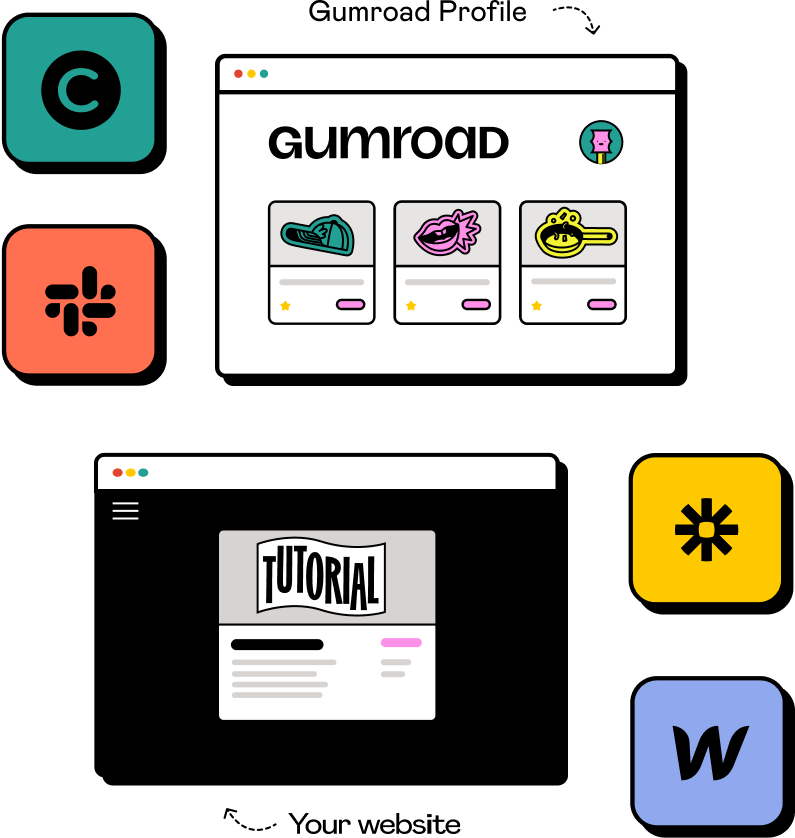
Gumroad is the most popular free platform for selling digital products — used by hundreds of thousands of creators. The free plan has no monthly cost. Gumroad takes 10% per sale, dropping as your lifetime earnings grow. You can sell ebooks, courses, software, music, templates, memberships, and more. It handles payments, file delivery, and license key generation automatically.
Best for: Creators who want zero setup friction and a battle-tested platform with no monthly fee.
Payhip
Payhip lets you sell digital downloads, courses, memberships, and coaching sessions for free. It takes a 5% cut per transaction — lower than Gumroad. You get an embeddable storefront, discount codes, affiliate tools, and EU VAT handling. Upgrade to a paid plan ($29–$99/month) to reduce or eliminate the fee.
Best for: Creators who want a lower per-sale fee than Gumroad and plan to scale to a paid plan later.
Ko-fi

Ko-fi takes 0% on tips and digital product sales on its free plan — you only pay standard payment processing from Stripe or PayPal. Ko-fi Gold ($6/month) removes branding and adds memberships and advanced analytics. For creators with a loyal community, the free plan is genuinely powerful.
Best for: Artists, writers, and creators who want to accept tips and sell a few digital products with zero platform fees.
Creative Market

Creative Market is a marketplace for design assets — fonts, templates, graphics, UI kits, and illustrations. It is free to open a shop. You earn 50–70% of each sale, and Creative Market brings millions of monthly buyers who are actively looking to purchase. Unlike general platforms, you don’t need to build an audience to make sales.
Best for: Designers and illustrators who want built-in marketplace traffic without an upfront cost.
Big Cartel

Big Cartel’s free plan gives artists a fully functional store for up to 5 products with zero transaction fees. You get a customizable storefront, discount codes, and basic analytics — all free. Paid plans ($15–$30/month) unlock more product slots.
Best for: Artists who want a clean branded storefront with no transaction fees and a small catalog.
Systeme.io
Systeme.io’s free plan includes up to 2,000 contacts, 3 sales funnels, 1 course, unlimited emails, and 0% transaction fees. It combines email marketing, sales funnels, and course hosting in one tool. If you need a complete funnel — landing page, email sequence, course delivery — Systeme.io’s free tier covers it end-to-end.
Best for: Course creators who need a complete funnel without paying for separate tools.
Kit (ConvertKit)

Kit (formerly ConvertKit) lets you sell digital products directly to your email list. The free plan supports up to 10,000 subscribers with a 3.5% + $0.30 per-transaction fee. Email list and product store live in the same platform — someone buys your ebook and is automatically added to the right follow-up sequence.
Best for: Creators who have or are building an email list and want to sell products directly to subscribers.
Lemon Squeezy
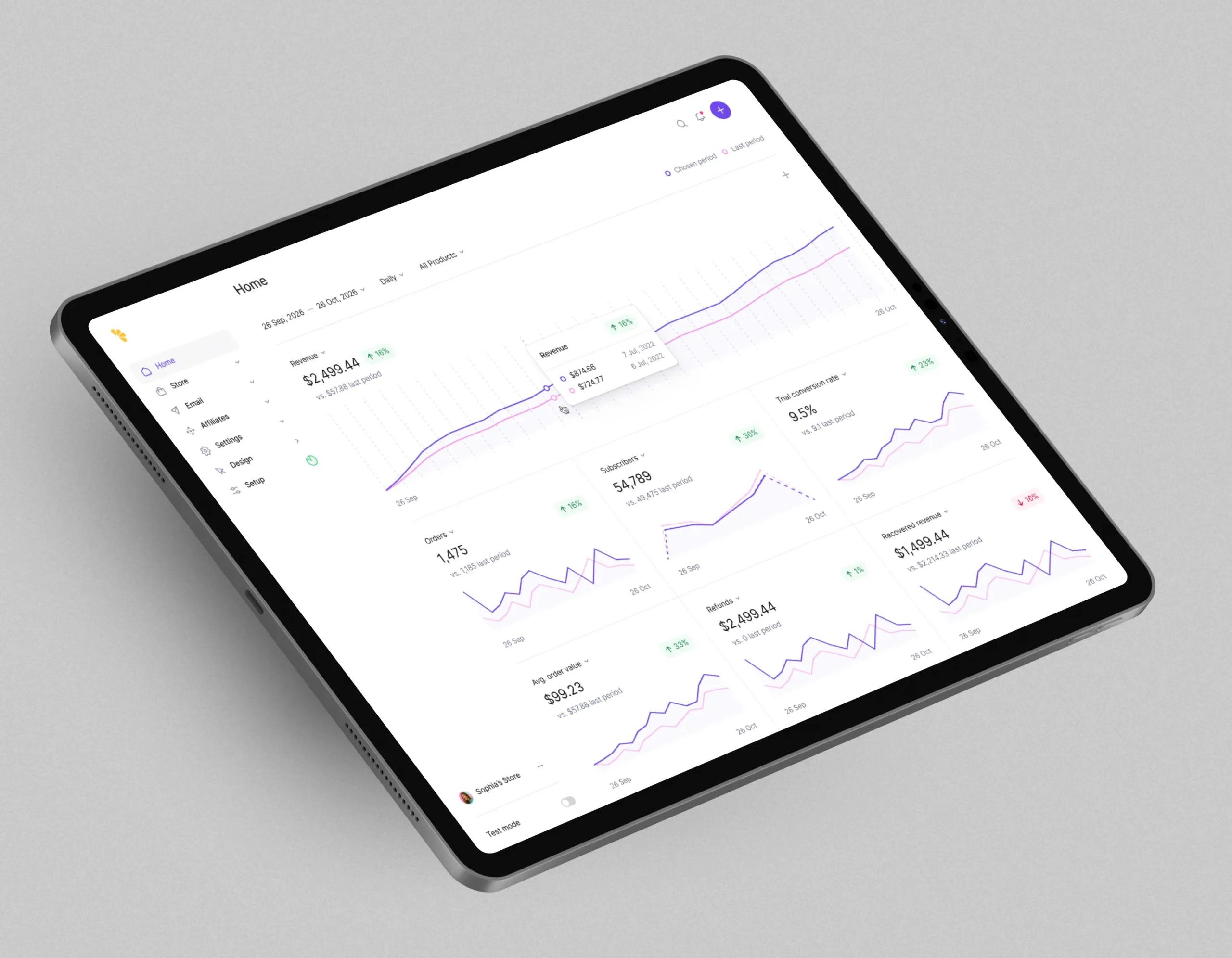
Lemon Squeezy is a Merchant of Record platform — it handles global sales tax and VAT compliance on your behalf. The free tier is pay-as-you-go: 5% + $0.50 per transaction, no monthly fee. Stripe acquired Lemon Squeezy in 2025 and is integrating its capabilities into Stripe directly. For now it operates as usual.
Best for: Software developers and digital sellers who sell internationally and want automatic global tax compliance at no upfront cost.
HubSpot Free Marketing Hub

HubSpot’s free plan is a marketing engine, not a storefront. You get a free CRM, email marketing (2,000 sends/month), landing pages, forms, live chat, and ad management. Combined with Gumroad or Payhip for checkout, HubSpot lets you run professional product launch campaigns at zero cost. Especially valuable for building an email list before launching a product.
Best for: Creators who want professional marketing tools to support product launches without paying for a full platform.

Teachable (Free Plan)
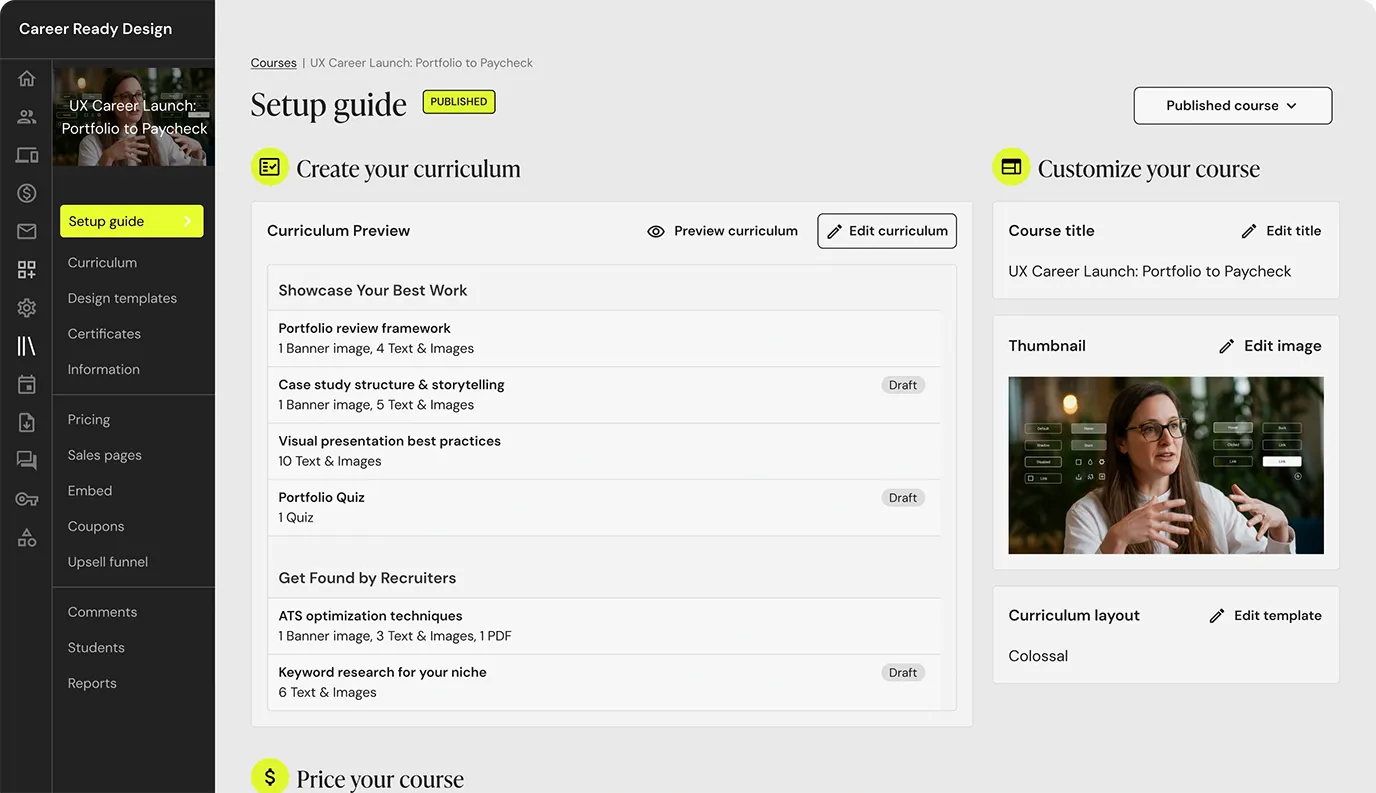
Teachable removed its free-forever plan in 2025 and replaced it with a 7-day free trial. During the trial you get full access: drag-and-drop course builder, video hosting, quizzes, student management, and affiliate tools. Paid plans start at $59/month. The trial is still useful for building and testing your first course before committing.
Best for: Course creators who want to test-drive a professional platform before paying, or who are ready to invest in a proper course business.
Etsy (Digital Downloads)

Etsy is free to open — you pay $0.20 per listing plus a 6.5% transaction fee per sale. With over 96 million active buyers, Etsy’s built-in traffic drives sales to printables, templates, SVG files, planners, and Canva templates without you needing a following. Digital downloads are delivered automatically.
Best for: Designers selling printables, templates, and digital art to buyers already shopping on Etsy — no existing audience required.
Sellfy (Free Trial)
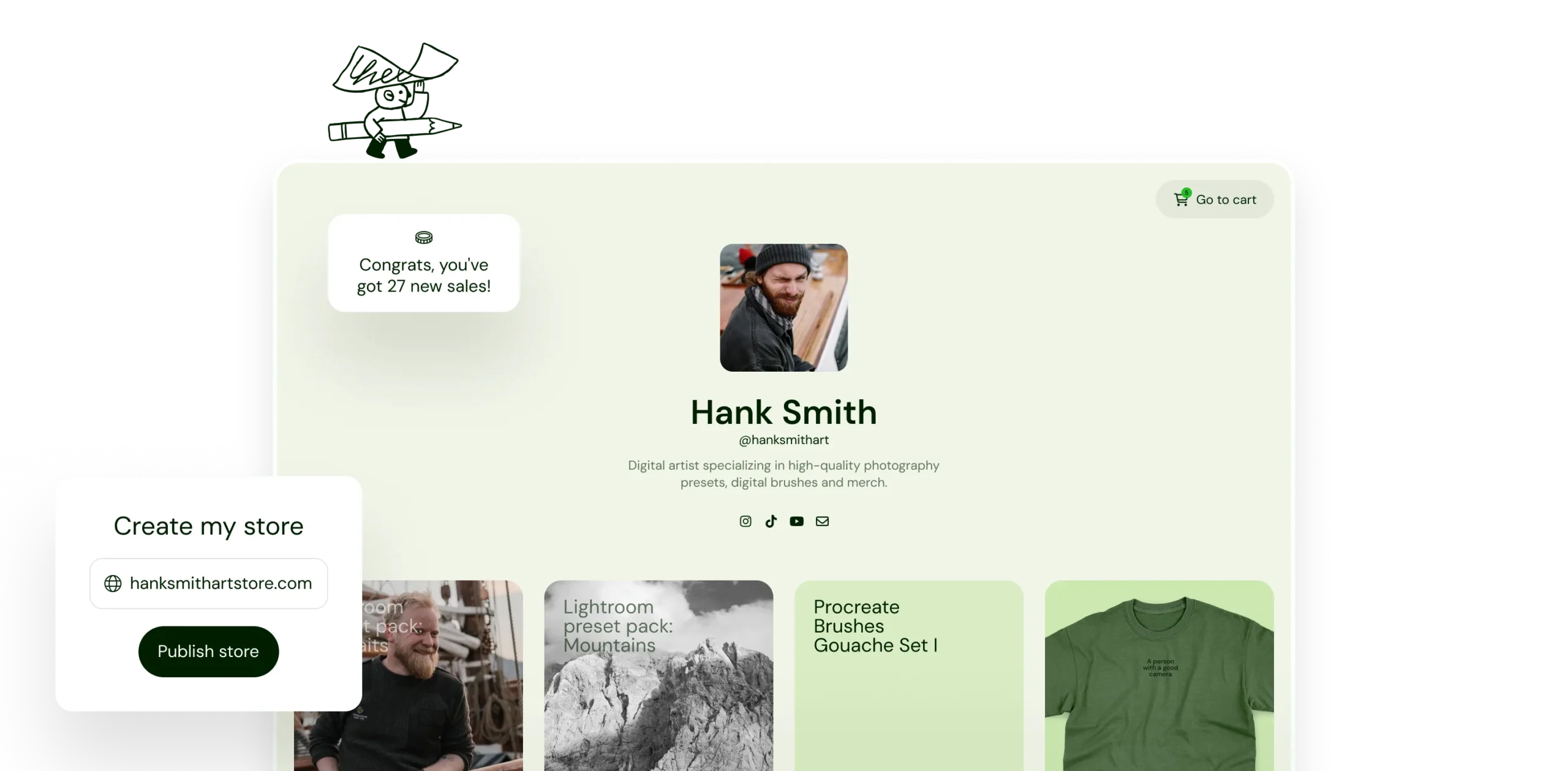
Sellfy is primarily paid ($22–$119/month) but offers a free trial. Its standout feature: you can combine digital products with print-on-demand merchandise in one store — rare among the platforms on this list. Paid plans have no transaction fees and unlimited file storage, making it good for large video files or software bundles.
Best for: Creators who want to combine digital products with physical merch in a single branded store.
How to Choose
- Selling ebooks or templates? Start with Gumroad (easiest) or Payhip (lower fees).
- Selling design assets? Creative Market brings built-in buyers.
- Building a course? Systeme.io (free forever) or Teachable (best quality, trial only).
- Have an email list? Kit lets you sell to it directly.
- No audience yet? Etsy and Creative Market bring traffic to you.
- Selling software? Lemon Squeezy handles global tax compliance automatically.
- Want digital + merch? Sellfy does both.
Once you’re selling consistently, run the numbers: if you’re paying 10% on $2,000/month in sales ($200/month in fees), a $29/month paid plan on Payhip or Rupa likely saves you money immediately.
What to Check Before Choosing a Free Platform
Before choosing a free platform to sell digital products, look beyond the words “free plan.” The right platform should match your product format, how you plan to bring traffic, and how much control you need over the customer relationship. A marketplace can help with discovery, while a storefront or checkout tool works better when you already have an audience.
1. Check the real cost after each sale
A free plan can still include transaction fees, payment processing fees, listing fees, or limits on products and features. Before you choose a platform, compare what you pay upfront with what you pay after a sale. A platform with no monthly fee may be useful at the beginning, but a paid plan can become cheaper once your sales grow.
2. Match the platform to your product type
Different digital products need different selling environments. Printables, templates, fonts, and design assets often perform better on marketplaces where buyers search for ready-made files. Ebooks, guides, presets, and simple downloads can work well on storefronts like Gumroad, Payhip, or Ko-fi. Courses, memberships, software, and SaaS-style products usually need stronger delivery, access, tax, or customer management tools.
3. Think about traffic and customer control
Some platforms help buyers discover your product through marketplace search. Others simply give you a product page or checkout link, which means you need to bring visitors from social media, email, a blog, or paid campaigns. If long-term audience ownership matters to you, check whether the platform lets you collect emails, manage customers, send follow-ups, or connect with your existing marketing tools.
Once you’re selling consistently, run the numbers: if you’re paying 10% on $2,000/month in sales ($200/month in fees), a $29/month paid plan on Payhip or Rupa likely saves you money immediately.
Want to know how well your Instagram audience is likely to convert into buyers? Use the Rupa Instagram Engagement Calculator to benchmark your engagement rate before your next launch.
Frequently Asked Questions (FAQ)
How do I start selling digital products? Start with one clear product that solves a specific problem for a specific audience. It can be an ebook, template, printable, preset pack, mini-course, Notion dashboard, AI prompt pack, or software tool. Then choose a platform that can host the product, process payments, deliver the file, and give customers access without requiring a large upfront investment.
What are the best free platforms to sell digital products? The best free platform depends on what you sell and how you plan to get traffic. Gumroad and Payhip are useful for ebooks, templates, guides, and simple downloads. Ko-fi works well for creators with an existing community. Etsy and Creative Market are stronger when you need marketplace discovery. Systeme.io and Teachable fit course-based products, while Lemon Squeezy is better suited for software and SaaS-style products.
Can I sell digital products for free? Yes, many platforms let you start selling digital products without a monthly fee. However, “free” usually means free to start, not always free per sale. Some platforms take a transaction fee, some charge listing fees, and others rely on payment processing fees through providers like Stripe or PayPal. Always check the full cost before choosing a platform.
Do I need a website to sell digital products? No. Many free platforms let you create a product page, upload your file, connect payments, and share a checkout link directly. This means you can sell from social media, a newsletter, a blog, or a link in your profile before building a full ecommerce website.
What digital products can I sell online? You can sell ebooks, templates, printables, digital planners, presets, fonts, icons, illustrations, music files, online courses, memberships, software, license keys, Notion dashboards, AI prompt packs, and other downloadable or access-based products. The best product is usually one that solves a narrow problem and is easy for the buyer to use immediately.