
Digital marketing for coaches isn't just about posting on social media and hoping for the best. It's a deliberate system for attracting clients by clearly defining your brand, creating genuinely helpful content, and using the right channels to build your authority. The goal is to pull clients in with your expertise rather than constantly chasing after them.
Your Framework for Attracting High-Value Coaching Clients
As a coach, you're already a leader in your audience's eyes. But to turn that influence into a thriving, scalable business, you need more than just great advice—you need a clear, repeatable system. The coaching world is booming, which brings both incredible opportunity and a ton of competition.
Just how fast is it growing? The global coaching industry exploded by a staggering 60% in just three years, jumping from $2.85 billion in 2019 to $4.65 billion in 2022. That kind of growth means having a solid digital marketing strategy isn't just nice to have; it's essential if you want to stand out. For a deeper dive, you can learn more about the business of coaching and its rapid expansion.
To build a marketing engine that consistently brings in high-value clients, you need a framework where every piece works together. Stop trying to be everywhere at once. Instead, let's focus on mastering four core pillars, one after the other.
This visual breaks down the process, showing how you move from simply having a brand to achieving measurable growth.
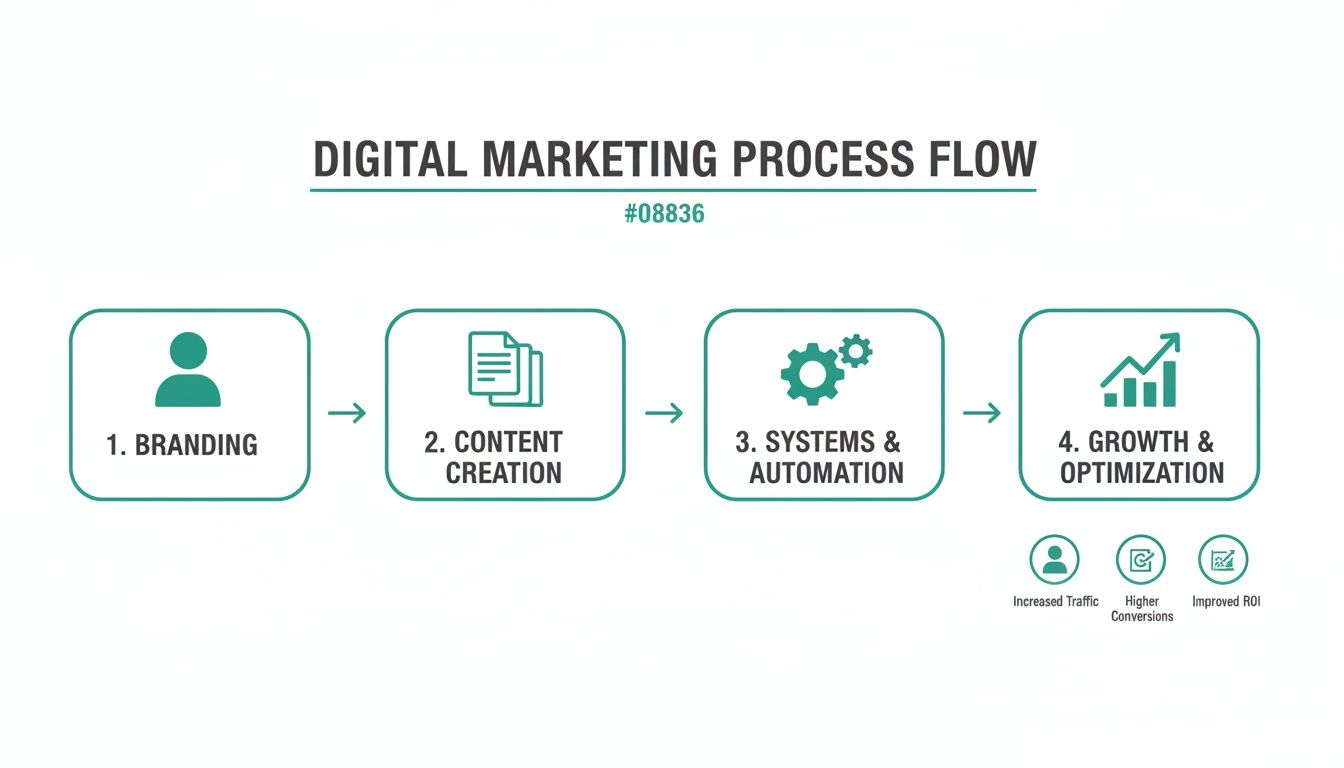
Think of it as a journey. Each step logically builds on the last, creating a sustainable path to growing your coaching business.
The Four Pillars of Client Attraction
Your success really comes down to how well you integrate these four key elements:
- Define Your Brand: This is your foundation. It's all about getting crystal clear on who you serve, the exact problem you solve, and what makes your coaching style different. This is what makes you memorable.
- Create Magnetic Content: Your content is where you prove you know your stuff. It should teach, inspire, and show potential clients that you understand their biggest struggles and can guide them to a solution.
- Build Automated Systems: To scale without burning out, you need systems. This means having email sequences, lead magnets, and sales funnels working for you 24/7.
- Measure and Grow: You have to know your numbers. Tracking key metrics shows you what's actually working so you can double down on the activities that generate real results and paying clients.
Let's quickly recap these core components.
Your Core Digital Marketing Framework
This table lays out the essential components of a successful digital marketing plan for any coach. It's the blueprint you can always come back to.
| Marketing Pillar | Key Objective | Example Tactic |
|---|---|---|
| Brand Definition | Establish authority and a unique market position. | Create a detailed Ideal Client Avatar. |
| Content Creation | Demonstrate expertise and build trust with your audience. | Write a weekly blog post addressing a key client pain point. |
| System Automation | Nurture leads and convert followers into clients efficiently. | Set up a 5-part welcome email series for new subscribers. |
| Measurement & Growth | Optimize your efforts based on real-world data for better ROI. | Track website conversion rates for your free discovery call. |
When you get these four pillars working in sync, you make the crucial shift from just being a content creator to being a strategic business owner. That's how you build a profitable and impactful coaching practice.
Finding Your Niche in a Sea of Coaches
Let's be blunt: calling yourself a "life coach" today is like being a drop of water in the ocean. It’s a guaranteed way to be ignored. The coaching world is crowded, and if you're trying to appeal to everyone, you'll end up appealing to no one.
The secret to breaking through isn't shouting louder; it's becoming the only logical choice for a very specific group of people. This means ditching the generic labels and carving out a niche that's uniquely yours.
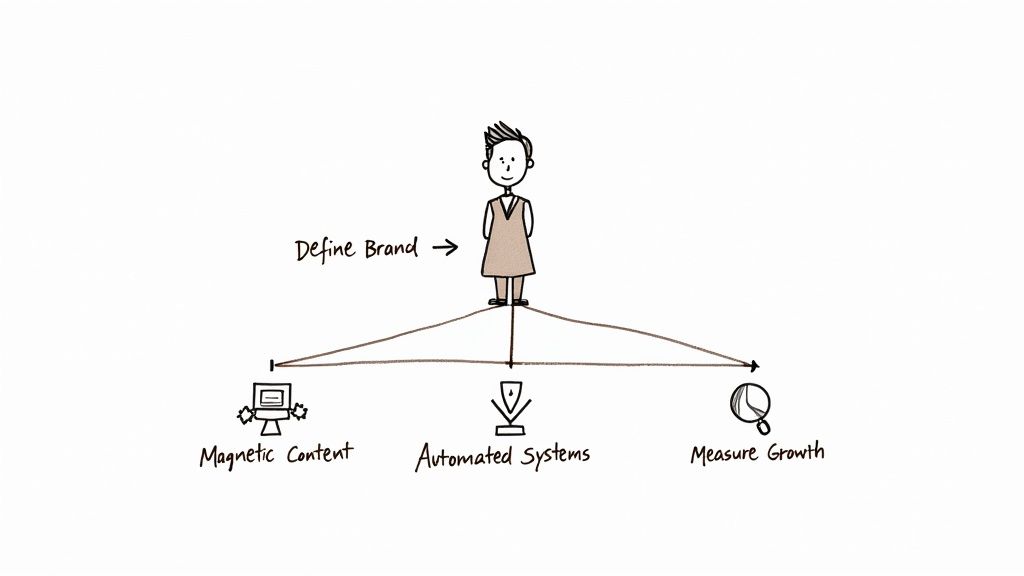
This isn't just good advice—it's a survival strategy. The number of active coaches is expected to skyrocket from 71,000 in 2019 to nearly 168,000 by 2025. In a market that competitive, a well-defined niche is your single greatest advantage.
How to Unearth Your Perfect Coaching Niche
So, where do you find this magical niche? It’s not about pulling an idea out of thin air. Your most profitable, fulfilling niche lies at the intersection of three things: your skills, your passions, and a real-world problem you can solve.
Here’s a 3-step listicle to find your perfect niche:
- List Your Skills: Go beyond your coaching certificate. List everything. Were you a killer project manager? A wizard with personal budgets? A master at navigating tricky corporate politics? Example: A coach who was once an HR manager has unique skills in salary negotiation and career pathing.
- Identify Your Passions: What topics could you talk about for hours? Your genuine excitement is what will fuel your content creation week after week. It’s non-negotiable. Example: A coach who is obsessed with sustainable living could combine that with their business skills to coach owners of eco-friendly brands.
- Pinpoint Problems You've Solved: This is where the magic happens. Think about your own journey. Did you successfully navigate a career change? Overcome crippling burnout? Help a friend triple their freelance income? Your past results are the best proof of your future value. Example: A coach who paid off $50k in debt has a powerful, proven result they can build a financial coaching niche around.
Expert Tip: A great niche isn't just about who you serve. It's about the specific transformation you deliver. "Business coach" is forgettable. "Launch strategist for creative entrepreneurs selling their first digital product" is a niche that pulls people in.
Stop Guessing and Start Validating
Once you have a few ideas, it's time to test them against reality. Your job now is to become an expert listener in the online spaces where your ideal clients already are. You can use a few different audience research tools to make this easier, but here are some quick tips:
- Dive into Reddit: Find subreddits related to your potential niche (think r/freelance, r/personalfinance, r/Productivity). Pay close attention to the exact words people use to describe their frustrations, fears, and dreams. These are your future headlines and sales copy.
- Join Niche Facebook Groups: Find the communities where your ideal clients are asking for help. Observe. What questions pop up over and over again? The most common problems are usually the most profitable ones to solve.
- Use Quora and AnswerThePublic: These platforms are a direct pipeline into your market's brain. See what questions people are typing into Google. This isn't guesswork; it's a clear look at market demand.
When you do this foundational work, you’re building your coaching business on a solid base of real client needs. It makes every other part of your marketing—from content to sales calls—infinitely more effective.
Creating Content That Turns Followers Into Clients
Your content is the bridge that turns a casual scroller into a paying client. This is where you prove you get their struggles and can actually deliver the transformation they’re looking for. A solid digital marketing plan for coaches hinges on creating content that doesn’t just chase likes—it moves people to take real action.
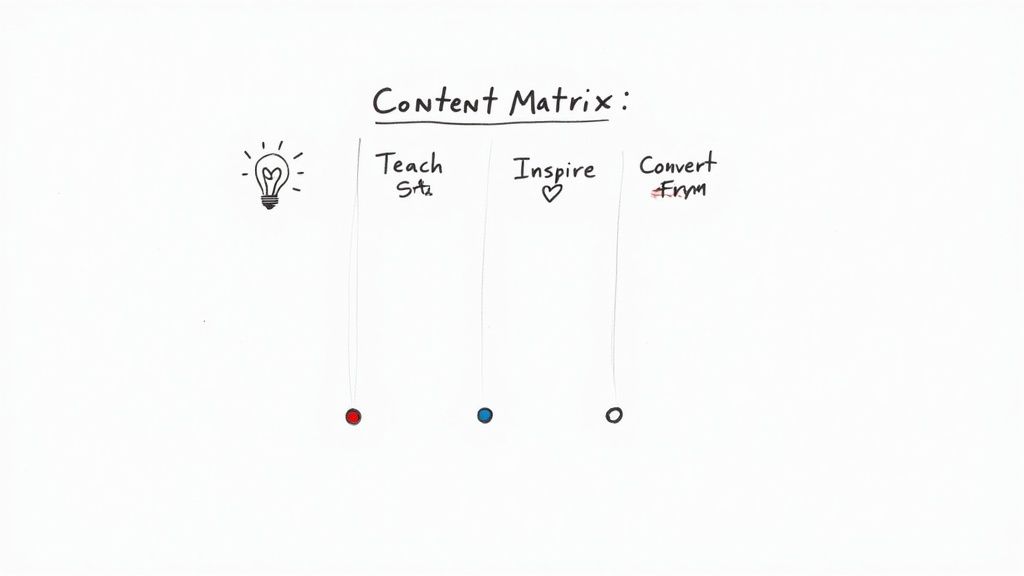
The biggest mistake I see coaches make is random posting. Stop throwing spaghetti at the wall. Every single thing you post should have a purpose. A simple but powerful way to structure this is the Teach, Inspire, Convert model. This little framework keeps you on track, ensuring you’re building trust and actually driving sales.
Teach with Valuable Insights
First, be genuinely helpful. Teaching content positions you as the go-to authority by giving your audience quick wins and "aha" moments. You’re not giving away the entire farm, just demonstrating that you know your stuff.
Here are a few practical content ideas that work like a charm:
- "How-To" Carousels: Break down a tricky process into simple, swipeable steps. Example: A fitness coach posts a carousel titled, "How to Master the Perfect Squat in 5 Slides."
- Myth-Busting Reels: Call out a common misconception in your niche. Example: A business coach films a short video on "Why 'Hustle Culture' is Actually Killing Your Productivity."
- Quick Tip Lists: Share 3-5 actionable tips people can use right away. Example: A mindset coach shares a post titled "3 Journal Prompts to Kick Imposter Syndrome to the Curb."
Inspire Through Storytelling
Once you’ve shown them you’re an expert, it’s time to show them you’re human. Inspirational content is where you connect on a deeper level by sharing stories—your own, your clients', and others that echo your audience's journey.
Key Takeaway: Facts tell, but stories sell. Your vulnerability and authenticity are your greatest marketing assets. Sharing your own struggles and triumphs makes you relatable and shows potential clients what’s possible for them, too.
Here are two quick ways to add inspirational content to your feed:
- Post a Client Testimonial: Screenshot a glowing text from a client or use a quote from a success story. Example: A graphic with a client's headshot and the text, "Working with Jane helped me double my income in 3 months!"
- Share a Personal Story: Tell a story about a challenge you overcame that mirrors what your ideal client is going through right now. This forges an emotional bond that logic alone can't touch.
Convert with Clear Calls to Action
Alright, you’ve taught them and inspired them. Now you have to tell them what to do next. Converting content is where you make a direct offer. A great way to do this is with a lead magnet—a freebie you offer in exchange for an email address. This moves followers from a platform you’re borrowing (like Instagram) to one you own (your email list).
Here are a few powerful lead magnet ideas:
- A "What's Your Type?" Quiz: A relationship coach could offer a quiz like, "Find Out Your Communication Style in 2 Minutes."
- An Exclusive Video Training: A sales coach might create a free 10-minute video on "My Script for Handling the Top 3 Sales Objections."
- A Resource Guide or Checklist: A productivity coach could offer a PDF download of "The Ultimate Weekly Planning Checklist for High-Achievers."
This table breaks down how different content ideas fit into your overall strategy.
High-Impact Content Ideas for Coaches
| Content Type | Platform | Primary Goal | Example |
|---|---|---|---|
| How-To Carousel | Instagram, LinkedIn | Teach (Build Authority) | “5 Steps to Set Up Your First Sales Funnel” |
| Myth-Busting Reel | Instagram, TikTok | Teach (Grab Attention) | “The #1 Myth About Manifestation That’s Holding You Back” |
| Client Testimonial | All Platforms | Inspire (Build Trust) | A graphic with a client headshot and a powerful quote about their results. |
| Personal Story | Instagram, Facebook | Inspire (Build Connection) | A vulnerable post about a failure and what you learned from it. |
| Quiz/Assessment | Website, Social Bio | Convert (Lead Generation) | “What’s Your Leadership Blind Spot? Take the Quiz!” |
| Free Checklist | Website, Social Bio | Convert (Lead Generation) | “Download My Free Pre-Launch Checklist for Your Next Offer” |
By consistently rotating through content that teaches, inspires, and converts, you build a reliable system for attracting a steady stream of dream clients.
For coaches looking to package their knowledge effectively, figuring out how to sell content online is a crucial next step in monetizing your expertise. And to get the most mileage out of every piece of content you create, check out these 10 proven content repurposing strategies.
Master the Right Channels for Your Coaching Brand
It’s tempting, I know. The pressure to be everywhere at once—Instagram, TikTok, LinkedIn, YouTube—is huge. But spreading yourself that thin is a surefire way to burn out and get mediocre results.

The smartest thing you can do is pick one, maybe two, platforms where you know your ideal clients are already hanging out. Then, go all in. Depth beats breadth every single time. A powerful, focused presence on one channel will always crush a weak, scattered presence on five.
This isn't just about picking what's popular; it's about finding the perfect match between your coaching style, your ideal client, and the platform's unique culture.
Choosing Your Power Platform: A Quick Guide
Think of each social media channel as having its own distinct personality. Here’s a breakdown to help you choose:
- Instagram for Community and Visuals: Best for wellness, life, and mindset coaches. The platform is built for visual storytelling. Example: A health coach runs daily Q&As in their Stories, building an incredible sense of connection with their audience.
- LinkedIn for Authority and High-Ticket Clients: Non-negotiable for business, career, or executive coaches. This is where professionals look for industry insights. Example: A business coach writes a deep-dive article on "The Future of Leadership in Tech," landing it right in front of the VPs and founders they want to work with.
- YouTube for Deep-Dive Education: Perfect if your coaching involves explaining complex ideas. There's no better platform for building trust through long-form educational content. Example: A finance coach creates a video series on "Building Your First Investment Portfolio," proving their expertise.
- TikTok for Virality and Lead Generation: A powerhouse for reaching new audiences fast. It's a goldmine for coaches who can distill their wisdom into short, punchy videos. Example: A productivity coach goes viral with a 30-second clip on "3 Hacks to Save 5 Hours a Week," driving traffic to a free guide in their bio.
My biggest piece of advice? Don't just post and ghost. The real magic happens when you become an active member of the community. Jump into comment sections, answer questions in relevant groups, and team up with other creators in your niche.
Your Channel-Specific Game Plan
Once you've planted your flag, it's time to get strategic. Here are some simple, actionable playbooks to get you started.
For the Health Coach on Instagram
- Teach with Reels: Create snappy videos showing a quick, healthy recipe or a 60-second mindfulness technique.
- Host Weekly Q&As in Stories: Use the question sticker and invite followers to ask you anything. Answering on video builds a personal connection.
- Create Carousel "Mini-Guides": Design a 5-slide carousel on a topic like "5 Foods That Boost Your Energy." These are super shareable.
- Go Live with a Guest: Find another wellness creator and do a joint Instagram Live to cross-promote your audiences.
For the Business Coach on LinkedIn
- Publish One High-Value Article Weekly: Go deep on a client case study, analyze an industry trend, or offer a bold viewpoint on a common problem.
- Engage in Comments of Industry Leaders: Leave thoughtful, insightful comments on content from the big names in your field to get seen by the right people.
- Showcase Client Wins: When a client hits a major milestone, celebrate them with a post (and tag them!). It’s the most powerful social proof you can get.
- Use Polls to Start Conversations: Ask smart questions related to your niche, like, "What's the biggest leadership challenge you're facing in 2025?"
Building a Sales Funnel That Works For You
Your social media is buzzing, which is fantastic. But if you're stuck manually replying to every DM, you're on a fast track to burnout. You need a system that attracts, nurtures, and converts leads for you—even while you sleep. This is exactly what a sales funnel does.
Don't let the term "sales funnel" scare you. It's just an automated path to guide someone from being a casual follower to a paying client. For most coaches, the heart of this system is a powerful email marketing sequence.
The Simple Funnel Blueprint
The core idea is to move people from social media—where you’re renting space from an algorithm—over to your email list. Your email list is an asset you 100% own and control.
It all starts with a compelling free offer, a lead magnet. You promote this in your social media bio and posts. Once someone signs up, an automated email sequence kicks in to build a relationship and prove your value on autopilot.
Your 5-Day Automated Welcome Sequence
A well-crafted welcome sequence builds rapport, delivers value, and then gently introduces your paid coaching services. Here’s a practical, five-day email sequence that just works.
- Day 1: Instant Delivery & Warm Welcome. Deliver the lead magnet instantly. Keep the email short. Welcome them and briefly reintroduce yourself and the transformation you provide.
- Day 2: Share a Quick Win. Give them something small but valuable they can implement right away. Example: A business coach could send an email titled "3 Common Pricing Mistakes and How to Fix Them."
- Day 3: Inspire with a Client Story. Share a short, powerful testimonial or a mini case study. Let potential clients see themselves in your current clients' success.
- Day 4: Address a Common Objection. Tackle a big myth, fear, or limiting belief that holds your ideal client back. Example: A mindset coach might send an email titled, "Is 'Imposter Syndrome' Just an Excuse?"
- Day 5: The Soft Pitch. After 4 days of delivering pure value, you've earned the right to make an offer. Invite them to book a free discovery call and link directly to your booking calendar.
Pro Tip: Stop the scheduling back-and-forth. Use a tool like Calendly and embed it in your emails and on your website. This lets potential clients book a call the moment they feel inspired, which dramatically increases conversion rates.
Of course, a great funnel needs a steady stream of people entering it. Learning how to generate leads on social media is the skill that will keep your funnel full.
For an even deeper dive with more examples, check out our complete guide on how to build a creator sales funnel that actually works. Getting this system in place is what frees you up to do what you do best: coach.
Let Data Drive Your Marketing Strategy
You can't just throw content out there and hope for the best. Real growth comes from knowing your numbers and letting them tell you what to do next. When you stop guessing and start tracking, you build a predictable system for attracting clients.
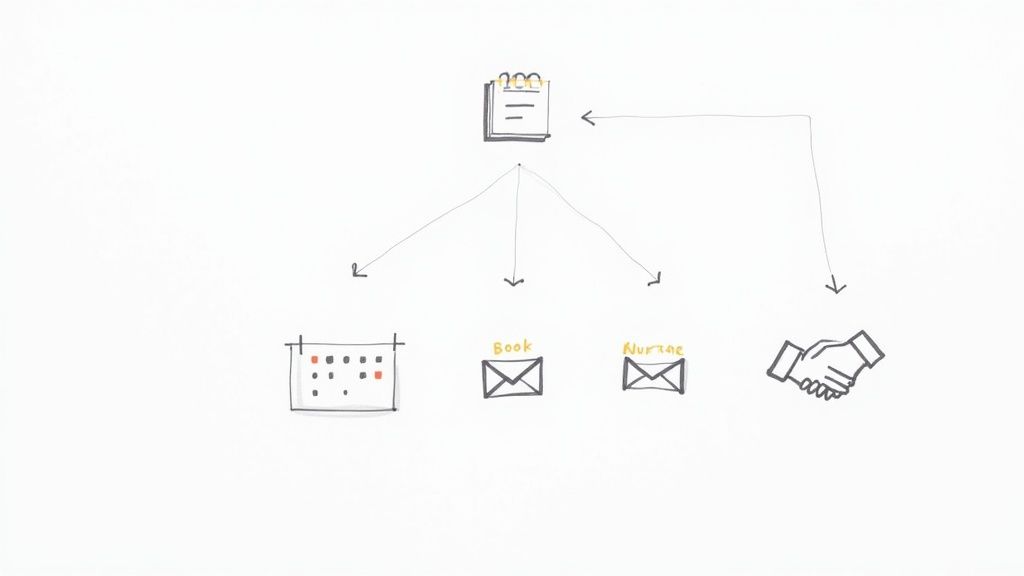
It's easy to get distracted by vanity metrics like follower counts. Instead, focus on the key performance indicators (KPIs) that actually move the needle in your coaching business.
Your Monthly Marketing Check-In: 3 KPIs to Track
Set aside time each month to look at what's really happening. This isn't about judgment; it's about getting clear on what your audience wants. Here’s a list of what to track:
- Top-Performing Content: Look past the likes. Which posts got the most saves, shares, and genuine comments? These are the topics your audience is craving. Double down on this style or topic next month.
- Email Click-Through Rate (CTR): When you send an email, are people actually clicking the links inside? A strong CTR means your calls to action are hitting the mark. A low CTR might mean your subject line or offer needs tweaking.
- Booking Page Conversion Rate: This one is crucial. Of all the people who land on your booking page, what percentage actually schedules a call? This metric tells you how effective your sales process is. If it's low, you might need to add more testimonials or clarify your offer on the page.
Practical Example: You review your data and discover that your behind-the-scenes Instagram Reels consistently send more people to your booking page than static quote graphics. Boom. Now you know exactly where to put more creative energy next month. It’s that simple.
Common Questions Coaches Ask About Digital Marketing
Let's be honest, jumping into digital marketing can feel like learning a new language. You've got questions, and you need real answers, not just theory. I've heard these same questions from countless coaches over the years, so let's clear up some of the most common ones right now.
How Much Should a New Coach Spend on Digital Marketing?
This is a big one, and the answer might surprise you. When you're just starting out, your budget should be zero dollars.
Seriously. Your most valuable resource isn't your money; it's your time. Pour that time—maybe 5-10 hours a week—into creating genuinely helpful content on the one social media platform where you know your ideal clients are already hanging out. Get in the trenches, engage in conversations, and build real relationships.
Once your organic efforts are bringing in a consistent flow of clients, then you can think about paid ads. A good starting point is to reinvest 5-10% of your coaching revenue to amplify the content and offers that are already proven to work.
Do I Really Need a Website Right Away?
Nope. A polished website is a fantastic long-term goal, but it's not what gets you your first client. Don't let the thought of building one paralyze you.
Many six-figure coaches got their start with nothing more than a well-optimized social media profile and a link to a scheduling tool like Calendly in their bio.
Your first priority is to build an audience and validate your coaching offer. A website is a great home for all your testimonials and content down the road, but it's not a prerequisite for success. Get started without it.
Which Social Media Platform Is Actually Best for Coaches?
The "best" platform isn't the one with the most users; it's the one where your people are. You have to go where your ideal client lives online. This is non-negotiable.
Here are a few real-world examples:
- Coaching corporate leaders? LinkedIn is your playground. It’s built for professional authority.
- A wellness coach for millennial women? You'll find your community on visual platforms like Instagram and TikTok.
- Helping entrepreneurs build online courses? YouTube is perfect for demonstrating your expertise through in-depth, educational videos that build massive trust.
Do your homework, find out where your specific audience spends their time, and then go all-in on that one platform. Master it. Dominating one channel is far more effective than being a ghost on five.
Ready to stop guessing what to sell and start building predictable income from your audience? Rupa analyzes your followers to identify the perfect digital product for your niche and then generates the sales page, checkout, and email sequences you need to launch in hours, not weeks. Monetize your audience with Rupa.