
So, what is coaching in business? Think of it as a strategic partnership. A professional coach works with you to unlock your own potential, clarify your goals, and build a solid plan to scale your influencer brand.
It’s not about someone giving you all the answers. It’s about being asked the right questions so you can find your own. For a creator, it’s like having a co-founder whose only job is to see you win.
Unlocking Your Potential What Is Coaching in Business
Think of a business coach as a personal trainer for your entrepreneurial brain. A personal trainer pushes you to build physical strength and endurance. A business coach does the same for your strategic muscle—helping you sharpen your decision-making and holding you accountable to the massive goals you set for your brand.
They aren't there to dictate your next move. Instead, they create a space for you to explore ideas, navigate roadblocks, and bring your biggest visions to life. This unique approach is why coaching has exploded in popularity. The number of professional coaches has jumped to around 167,300 worldwide as of 2025, a stunning 2.35 times increase since 2019. That alone shows how vital this kind of support has become.
Coaching vs Mentoring vs Consulting
It’s easy to lump coaching in with mentoring and consulting, but they play very different roles. Knowing the difference is key to getting the help you actually need. If you're just starting out, a solid starter guide to become an influencer can lay the groundwork before you consider hiring an expert.
This visual breaks down the unique focus of each professional role.
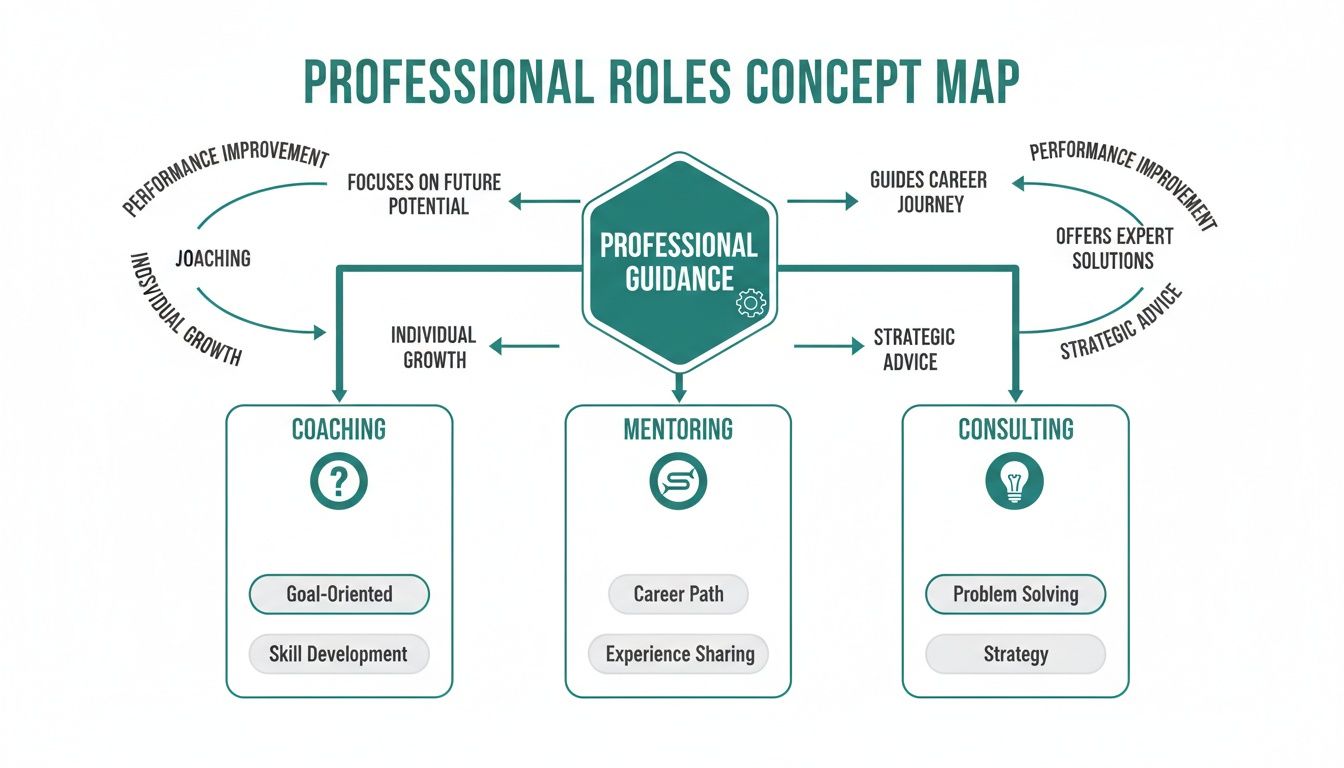
The big takeaway? Coaching is all about looking forward and asking powerful questions. Consulting is about providing expert answers, and mentoring is about sharing wisdom from personal experience.
To make this crystal clear, here's a quick cheat sheet.
Coaching vs Mentoring vs Consulting at a Glance
| Role | Primary Focus | Key Question They Ask |
|---|---|---|
| Coach | Your Future Potential & Growth | "What do you think the next step should be?" |
| Mentor | Your Path (Based on Theirs) | "Here’s what I did in a similar situation…" |
| Consultant | Solving a Specific Problem | "Here is the solution to your problem." |
This table shows how a coach puts the power back in your hands, which is a fundamentally different approach.
Let’s put this into a real-world scenario for a beauty influencer:
- A Consultant would look at your analytics and say, "Your engagement drops on Reels over 30 seconds. You need to create a 15-second series using trending audio to boost views."
- A Mentor might share, "When I was at your stage, launching my own lipstick line was a total game-changer. Let me walk you through the manufacturer I used."
- A Coach, on the other hand, would ask, "You’ve said you want to build a deeper connection with your audience. What ideas do you have for that, and how might a product launch fit into that vision?"
See the difference? The coach’s goal is to help you discover the best way forward. This process is essential for building the skills you'll need for long-term success, like figuring out how to approach https://rupa.pro/blog/monetizing-social-media/. It ensures the strategies you build are 100% authentic to you and your brand.
Five Ways a Coach Can Transform Your Influencer Brand
Knowing what a coach does is one thing, but seeing the real impact on your brand is what counts. For influencers, business coaching isn't a luxury; it's a strategic move that can alter your career path by bringing structure to a chaotic industry.
Here are five practical ways a coach can turn your content creation into a profitable, long-lasting business.

1. Gain Crystal-Clear Focus
As a creator, you're juggling content creation, DMs, brand deals, and your next big idea. It’s easy to get stuck in "busy work" and lose sight of what actually grows your business. A coach is your strategic partner, helping you cut through the noise.
- Practical Tip: A coach will help you identify your "Big 3" goals for the quarter. Instead of chasing ten different ideas, you'll focus your energy on the three that will deliver 80% of your results.
- Influencer Example: You have ideas for a YouTube series, a merch drop, and a collab offer. A coach helps you evaluate each one against your long-term vision. You realize the collab offers the best brand alignment and immediate ROI, allowing you to confidently table the other ideas.
2. Sharpen Your Strategic Vision
Great content is step one. Building a resilient business is a different ballgame. A coach challenges you to think like a CEO, not just a creator, helping you diversify income and build a brand that can survive algorithm shifts. They can offer a fresh perspective on everything from optimizing Instagram affiliate marketing to identifying new platforms where your audience is hiding.
A business coach doesn’t hand you a vision. Instead, they give you the framework and outside perspective to uncover and sharpen your own. It’s all about turning your creative gut feelings into a concrete, long-term business plan.
3. Build Unshakeable Accountability
How many brilliant ideas are collecting dust in your notes app? Accountability turns ambition into reality. A coach is that dedicated partner who ensures you do what you say you're going to do.
- Practical Tip: At the end of each session, you'll commit to 1-3 specific "action items" to complete before your next call. This breaks huge goals into manageable weekly tasks.
- Influencer Example: You've been meaning to launch a paid newsletter for months. With a coach, you set a firm launch date and break it into weekly actions: Week 1 is choosing a platform, Week 2 is outlining the first three editions, etc. Suddenly, the goal feels achievable. You can then use your existing social media engagement strategy to promote it.
4. Develop Real Leadership Skills
As your brand grows, so does your team—a VA, a video editor, brand partners. Moving from solo creator to leader requires new skills. A coach helps you build the confidence to delegate, manage people, and lead projects effectively.
- Practical Tip: A coach can role-play difficult conversations with you, like giving constructive feedback to an editor or negotiating a higher rate with a brand, so you feel prepared and confident.
5. Boost Your Confidence and Mindset
The creator journey is a rollercoaster of self-doubt and comparison. A coach acts as your personal hype person and mindset mentor, helping you overcome imposter syndrome, celebrate your wins, and build the mental resilience to handle criticism and setbacks. This is the foundation for long-term success.

Exploring Different Business Coaching Styles
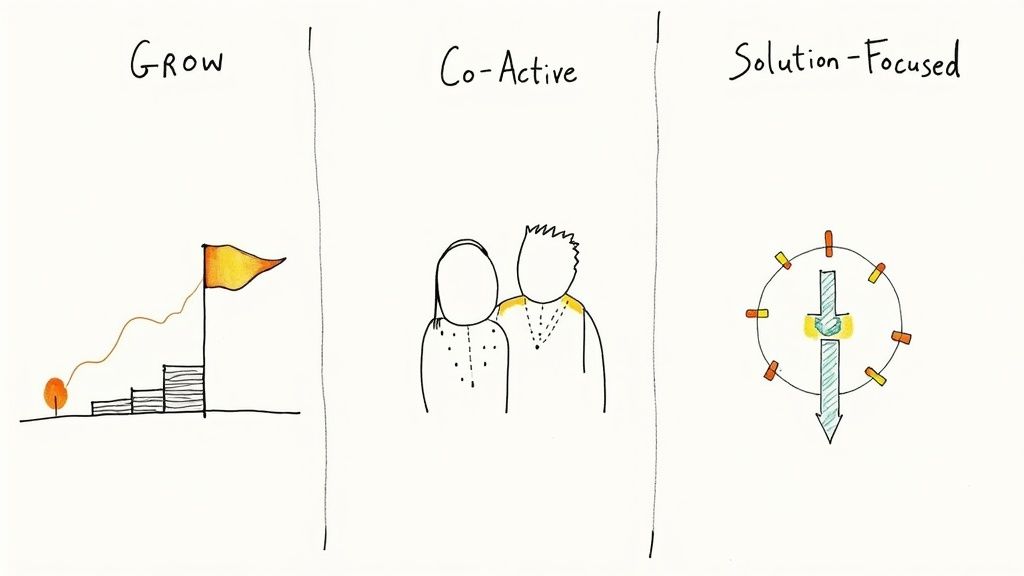
Business coaching isn't one-size-fits-all. Coaches use specific frameworks to structure their sessions and get you results. Think of them as different playbooks for winning the game. The right one for you depends on your personality and what you’re trying to achieve.
Here are three popular coaching styles you’ll encounter.
The GROW Model: Your Roadmap to Success
The GROW model is a simple, logical, and powerful tool for setting goals and solving problems. If you're a creator who loves a solid plan, this is for you.
- G – Goal: What, exactly, do you want to achieve? Example: "I want to gain 500 subscribers for my new paid community in the next 60 days."
- R – Reality: Where are you right now? Example: "I have a mailing list of 2,000 people but haven't mentioned the community yet. My Instagram engagement is high, but my conversion to links is low."
- O – Options: What are all the possible ways to get there? Example: Brainstorm everything—a 5-day challenge, a promotional webinar, exclusive content teasers, a founder's discount.
- W – Will (or Way Forward): What will you commit to doing? Example: "This week, I will draft a 3-part email sequence announcing the community and schedule 5 Instagram stories teasing the launch."
Co-Active Coaching: For Holistic Brand Alignment
The Co-Active approach is less about a single project and more about you as a whole person. It’s built on the belief that you are naturally creative and resourceful. This style is perfect for influencers who want to build a brand that feels 100% authentic and aligned with their personal values. It’s also great for group settings, as we explore in our guide to designing cohort-based courses.
Solution-Focused Coaching: For Quick Momentum
If you feel stuck and just want to move forward now, Solution-Focused coaching is your jam. It avoids deep dives into the past and instead focuses on what’s already working so you can do more of it. A coach using this style might ask, "If you woke up tomorrow and your content creation felt effortless and fun again, what would be different?" This helps you picture success and work backward to find the fastest way there.
Is It Time to Hire a Business Coach? A Quick Checklist
Knowing when to hire a coach is just as important as knowing why. If any of these points sound painfully familiar, it might be the perfect time to get support.
- You're Stuck in a Growth Plateau: Your follower count is flat, engagement feels stale, and you're recycling old ideas. A coach helps you see new angles to get things moving again.
- You're Overwhelmed by Opportunities: You have too many ideas (memberships, courses, podcasts) and no idea which one to pursue first. A coach provides the clarity to choose the right next step.
- You're Facing a Major Business Decision: Should you sign with an agency? Launch that big-ticket product? A coach acts as an impartial sounding board to help you make a confident choice.
- You're on the Edge of Burnout: You’re drowning in DMs and deadlines with no time left for yourself. A coach helps you build systems and boundaries to run your business without it running you into the ground.
For many creators, deciding to launch a digital product is a huge crossroads. A coach provides the structure and accountability to turn that idea into a reality. This is especially true when you want to create and sell online courses but feel completely stuck on how to start.
How to Find the Right Business Coach for You
Finding the right coach is a game-changer. With the coaching market hitting a massive $5.34 billion in 2025, the options can feel overwhelming. The U.S. business coaching industry alone is now worth $20 billion. These numbers prove how many creators are seeking expert guidance, which makes it even more important to choose wisely. You can discover more about the coaching industry's growth on luisazhou.com.
Think of it like hiring a key team member for your brand.
A 4-Step Playbook for Choosing Your Coach
- Define Your #1 Goal: Before you start your search, get clear on what you want to achieve. Is it scaling your income, launching a product, or avoiding burnout? Write it down.
- Look for Creator Economy Experience: Don't settle for a generic business coach. Find someone who understands your world. Their testimonials and case studies should feature influencers and digital entrepreneurs.
- Check for Credentials and Social Proof: A certification from an organization like the International Coaching Federation (ICF) shows commitment. Also, look for a strong online presence, client reviews, and valuable content that proves their expertise.
- Schedule "Chemistry Calls": This is the most important step. A coach can look perfect on paper, but you need to vibe with them. Schedule intro calls with 2-3 candidates to gauge their communication style and see if you feel understood.
A great chemistry call should feel like an energizing and insightful conversation. You should walk away feeling heard and optimistic, not sold to. Trust your gut.
5 Must-Ask Questions for a Potential Coach
Have these questions ready for your chemistry call to make an informed decision:
- What’s your experience working with influencers or creators at my level?
- Can you share an example of how you helped a client overcome a similar challenge to mine?
- What coaching model do you typically use, and why?
- What do you expect from me to make our coaching partnership successful?
- How do you measure progress and success with your clients?
Asking these questions helps you understand their process and how they handle the realities of what coaching in business truly involves, ensuring you find a partner who will challenge and support you.
Answering Your Top Questions About Business Coaching
You're likely wondering about the practical stuff: How much does this cost? How long will I need it? And what results can I honestly expect? Let's clear up those final questions.
What’s the Real Cost of Business Coaching?
The cost varies widely, which means you can find something that fits your budget. Here’s a typical breakdown:
- Monthly Retainer: Most common. You pay a set monthly fee for a certain number of calls and support. Rates can range from $500 to $5,000+ per month.
- Package Deals: Project-based programs, like a 3-month "Launch Your First Course" package, designed to achieve a specific outcome.
- Group Coaching: A more affordable option where you join a small group of creators being coached together. This is great for community and learning from others' experiences.
How Long Does a Coaching Relationship Last?
It’s a strategic partnership for a particular season of growth. A great coach’s goal is to empower you to eventually become your own best advisor.
- 3-Month Sprint: Perfect for an intense, short-term goal like a product launch or rebrand.
- 6-Month Partnership: The sweet spot for bigger goals, like building out a new income stream or hiring your first team member.
- 12 Months or More: For deep, foundational change, like scaling from a solo creator into a full-fledged media company.
What Kind of ROI Can I Realistically Expect?
A frequently cited study found that businesses see an average return of 7 times their initial coaching investment. ROI is a mix of hard numbers and powerful mindset shifts.
Tangible Wins (The Numbers):
- Increased revenue from new product offers.
- Higher-paying brand deals from confident negotiation.
- More free time from streamlined operations.
Intangible Wins (The Mindset):
- Massively improved confidence in your decisions.
- A crystal-clear vision for your brand's future.
- Feeling less overwhelmed and more in control.
Is Virtual Coaching as Good as Meeting in Person?
For online creators, the answer is a huge "yes." Virtual coaching is often the best way to go. It removes geographic limits, letting you work with the absolute best coach for you, no matter where they live. It’s flexible, efficient, and fits perfectly into a digital-first business model.
Ready to stop guessing what your audience wants and start selling it to them? Rupa uses AI to analyze your social media presence and gives you proven digital product ideas—complete with sales pages, email scripts, and checkout flows. Launch in hours, not weeks, and build predictable income for your brand. Find out what you should sell next.