
Staring at a blank page is where great video ideas go to die. As an influencer, you know that feeling. That’s why the pros almost never start from scratch—they lean on a video script template as their creative roadmap. Think of it as your secret weapon to ditch the rambling, feel more confident on camera, and keep your followers glued to the screen.
Why Top Creators Start With a Script Template
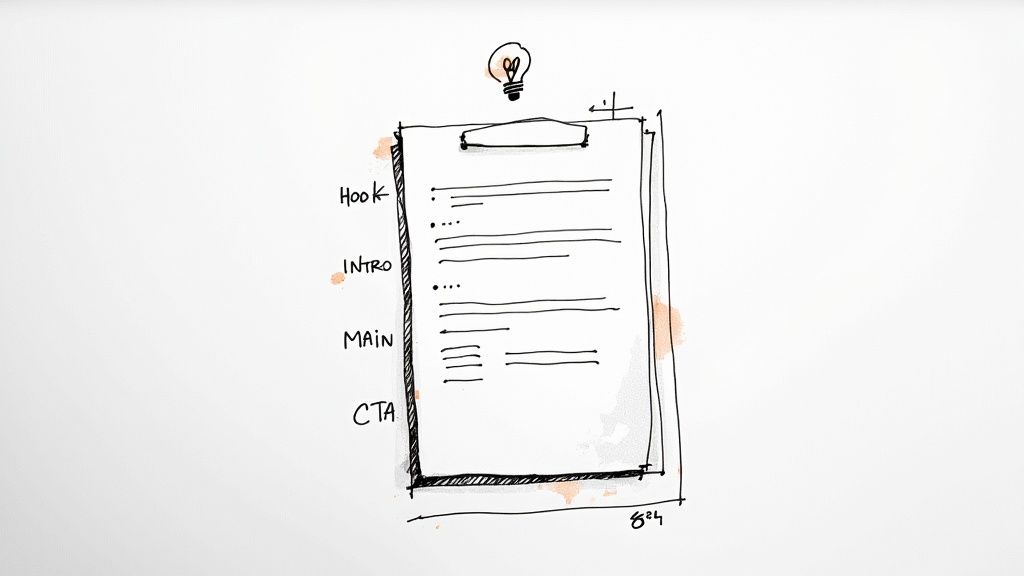
A script template isn't some rigid set of rules meant to stifle your creativity. Far from it. It’s the foundation you build your content on, bringing structure to your ideas so that every video comes out clear, concise, and genuinely impactful. For influencers, consistency is currency, and using a template is the best way to keep your brand voice uniform no matter where you post.
This isn’t just a preference; it’s a proven strategy. Over 70% of marketing teams are now using some kind of structured video script template to get their content organized. A popular framework, 'Problem-Solution-Proof-Action,' has been shown to boost conversion rates by up to 32% compared to unstructured, off-the-cuff videos. When you get into a rhythm, you can slash production time by as much as 50%.
Save Time And Beat Creative Blocks
The single biggest benefit? A good template saves you hours of frustrating guesswork. Instead of agonizing over what to say next, you have a clear path to follow. This is a game-changer, especially when you're on a tight content schedule.
Here are 3 quick wins you get from using a template:
- No More Rambling: It forces you to get straight to the point, which is exactly what your audience wants.
- A Huge Confidence Boost: When you know your key points inside and out, you’ll feel way more prepared and natural on camera.
- Faster, Easier Editing: A well-planned script means fewer mistakes, less "umms" and "ahhs," and a much quicker post-production workflow.
A great script doesn't just outline what you say; it maps out the entire viewer experience. It anticipates where you'll add B-roll, on-screen text, and visual cues, turning a simple monologue into a dynamic story.
Build A Consistent And Engaging Brand
Every piece of content you put out there is your brand's voice. A template helps you make sure that voice stays consistent, whether you're creating a 30-second TikTok or a 10-minute YouTube deep dive. That consistency is what builds trust and lets your followers know exactly what to expect from you.
By giving your ideas structure from the get-go, you also get much better at hooking viewers in those critical first few seconds—a non-negotiable part of any successful social media engagement strategy.
For creators diving deep into short-form content, it's worth exploring specialized YouTube Shorts template resources to really nail that vertical video format. At the end of the day, a solid script is the first real step toward turning casual viewers into a loyal community.
Breaking Down a Script That Actually Gets Views
Ever wondered why some videos go viral while others flop? It's rarely luck. The videos you can't stop watching are almost always built on a solid, deliberate structure designed to grab you and not let go.
Let's move past the theory and dissect the 5 key ingredients of a high-performing video. Once you get these down, filling out any script template stops being a chore and starts becoming a formula for success.
1. Your First Three Seconds: The Hook
You have literally a handful of seconds to stop someone from scrolling. With the average human attention span hovering around a mere 8 seconds, your hook needs to hit like a lightning bolt. This is, without a doubt, the most critical part of your entire script.
Ditch the boring "Hey everyone, welcome back to my channel." You don't have time for that. Instead, lead with the most compelling part of your video—the conflict, the value, or the surprising result.
Here are 3 hook formulas that work like a charm for influencers:
- The "You're Doing It Wrong" Hook: (Fitness Influencer) "If you're still doing crunches to get abs, you're wasting your time. Here's what actually works."
- The "Secret Revealed" Hook: (Beauty Influencer) "This is the one skincare product your dermatologist secretly hopes you never find out about."
- The "Unexpected Outcome" Hook: (Travel Vlogger) "I booked the cheapest flight I could find, and you won't believe where it took me."
2. The Quick Intro: Set the Scene
Okay, you've got their attention. Now what? You have a very brief window to introduce who you are and what this video is actually about. Keep it tight. This isn't the time for your life story; it's a quick handshake that tells the viewer they're in good hands.
Your intro needs to answer one simple question from the viewer: "Why should I stick around?" Let them know the problem you're about to solve or the amazing thing they're about to learn.
Practical Example: "I'm Sarah, and for the next 60 seconds, I'm going to show you my 3-step process for editing viral Reels right from your phone."
A great intro is a promise. You're setting an expectation and reassuring the viewer that their time will be well spent. It's your first real chance to build trust.
3. The Main Content: Deliver on Your Promise
This is the real meat of your video, the part where you make good on the promises from your hook and intro. The secret to great main content isn't just what you say, but how you structure it. Don't just dump a list of facts on your audience. Guide them.
Whether you're teaching a new skill or telling a story, organize your points logically. Think in terms of steps, numbered lists, or clear bullet points in your script. To make this section truly land, you need to know your audience inside and out. Using a few good audience research tools can be a game-changer here, helping you pinpoint exactly what they care about.
4. The "Aha!" Moment: The Big Reveal
Every memorable video has a peak—that one moment of clarity or the single most important tip that makes everything click. This is your "Aha!" moment. It's the key takeaway you want burned into your viewer's memory.
Don't just drop it in randomly. Build up to it. Hint at it in your intro and let your main content lead right to it. This creates a natural sense of anticipation and makes the final payoff feel that much more rewarding.
Practical Example: (DIY Influencer) After showing the steps to build a shelf, the "Aha!" moment is the secret trick to make it look like expensive floating shelving: "But the real magic is this $2 bracket from Home Depot. It makes the whole thing look custom."
5. The Call to Action (CTA): Tell Them What's Next
You've done the hard work, but don't drop the ball at the finish line. A video without a clear Call to Action is a huge missed opportunity. You have to tell your audience exactly what you want them to do next.
Be direct and focus on a single action. Asking them to like, comment, subscribe, hit the bell, and follow you on three other platforms all at once is a recipe for them doing nothing at all. Pick one.
Here are 3 simple CTAs you can use today:
- To build community: "Drop a comment below and tell me your biggest struggle with [your topic]."
- To drive traffic: "I put together a free [template/guide] to help you get started. Grab it at the link in my bio."
- To grow your channel: "If this was helpful, make sure you follow for more tips just like this."
Adapting Your Script for Every Social Platform
A script that slays on YouTube can easily fall flat on TikTok. It's a common trap. But here's a little secret from the trenches: you don't need a brand-new script for every platform. The real pros learn how to adapt a single, solid idea for the unique vibe of each audience. It's all about working smarter.
Think about it. A YouTube viewer is leaning back, ready for a deep dive. Someone scrolling Instagram is in a rapid-fire swiping mode. If you don't adjust your pacing, tone, and what you ask them to do next, you're just shouting into the void.
Tailoring Your Script for YouTube
YouTube is where you can really stretch your legs. It’s built for longer videos, giving you the space to tell a real story and build a genuine connection with your audience. Your script needs to match that marathon-not-a-sprint energy.
Here are 3 tips for your YouTube scripts:
- Hook with a Promise: Forget generic clickbait. Your YouTube hook needs to make a specific promise. For example, "By the time this video is over, you'll know the three biggest mistakes every new creator makes… and exactly how to fix them."
- Structure for Retention: Don't just ramble. Break your content into logical chapters and add timestamps. This is a huge signal to viewers that you respect their time and have a clear, organized plan.
- A Conversational CTA: Instead of just saying "like and subscribe," ask a specific, thoughtful question related to your video. This is how you spark real conversations and build a community, not just a subscriber count.
Optimizing Scripts for Instagram Reels
Instagram Reels are a completely different beast. They're all about fast, visually satisfying snacks of content. Your script often takes a backseat to the visuals and audio. In many cases, it's less of a script and more of a shot list.
The first three seconds of a Reel determine its fate. A killer visual, like a slick transition or a surprising shot, will grab someone far more effectively than your opening line.
When scripting for Reels, you have to think in quick cuts. Your focus should be on supporting a fast-paced edit with text overlays that pop, all timed perfectly to a trending sound. Your message needs to be simple and direct enough to land even if the viewer has their sound off.
The core flow of any great script, though, follows a pretty universal path—from grabbing attention to getting them to act.
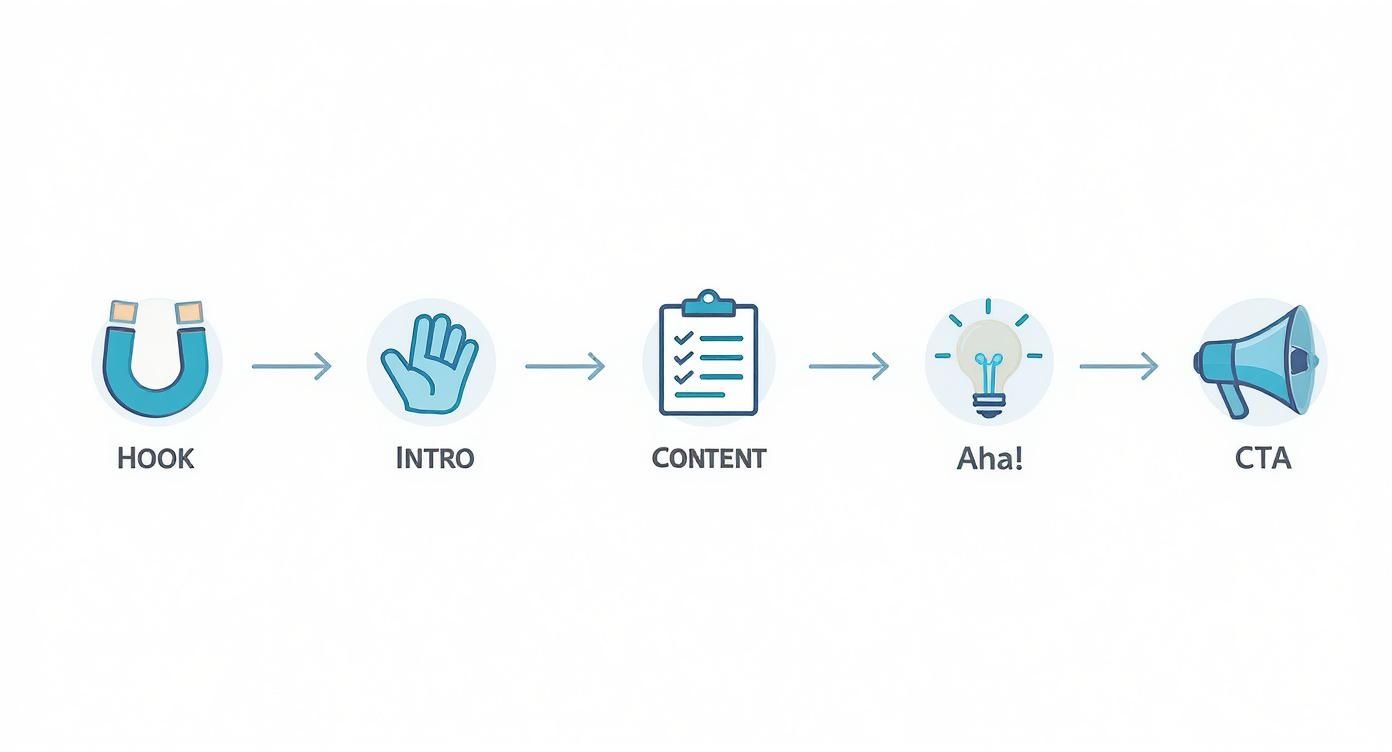
This process shows that whether it's a long tutorial or a quick clip, you always need that strong hook, a quick intro, the juicy content, a key "aha!" moment, and a clear call-to-action.
Scripting for High-Energy TikToks
TikTok is all about speed, authenticity, and jumping on what's hot right now. Your script has to be incredibly tight, and more often than not, it's built to fit inside a pre-existing trend or sound.

It’s no surprise that video is projected to make up 82% of all internet traffic, with most of that happening on mobile phones. This has created a massive opportunity, and we're seeing 44% of brands jumping on short-form video templates to sell their products. The best ones are masters of the 3-second hook: they present a relatable problem, offer a lightning-fast solution, and finish with a simple CTA.
Here's how to adapt your core idea for the TikTok machine:
- Lead with the Trend: Don't fight the algorithm. Find a trending audio or challenge and write your script to fit that format.
- Keep Dialogue Minimal: Think short, snappy sentences. On-screen captions are non-negotiable, as a huge chunk of users watch with the sound off.
- End with an Open Loop: Instead of a simple "buy now," try ending with a cliffhanger or a question that begs for a comment. Teasing a "Part 2" is a classic for a reason—it works.
To get those engagement numbers up, a powerful caption is your best friend. If you're feeling stuck, using a TikTok caption generator can be a great way to get the creative juices flowing.
Practical Tips to Elevate Your Script Writing
Alright, you've got the basic structure down. Now for the fun part: adding the spark that makes a video feel special. This is what separates a decent video from a truly memorable one. A solid video script template is your blueprint, but these next few tips are the pro-level touches that will make your content feel authentic and genuinely shareable.
The number one mistake I see creators make is writing a script that sounds like a script. People connect with people, not with a teleprompter. Your goal should always be to write in a conversational tone that’s true to how you actually talk.
Here’s a trick I swear by: read every single line out loud before you even think about hitting record. If a sentence feels clunky or awkward rolling off your tongue, your audience will feel it too. Tweak it until it sounds like something you’d naturally say to a friend.
Write for the Edit
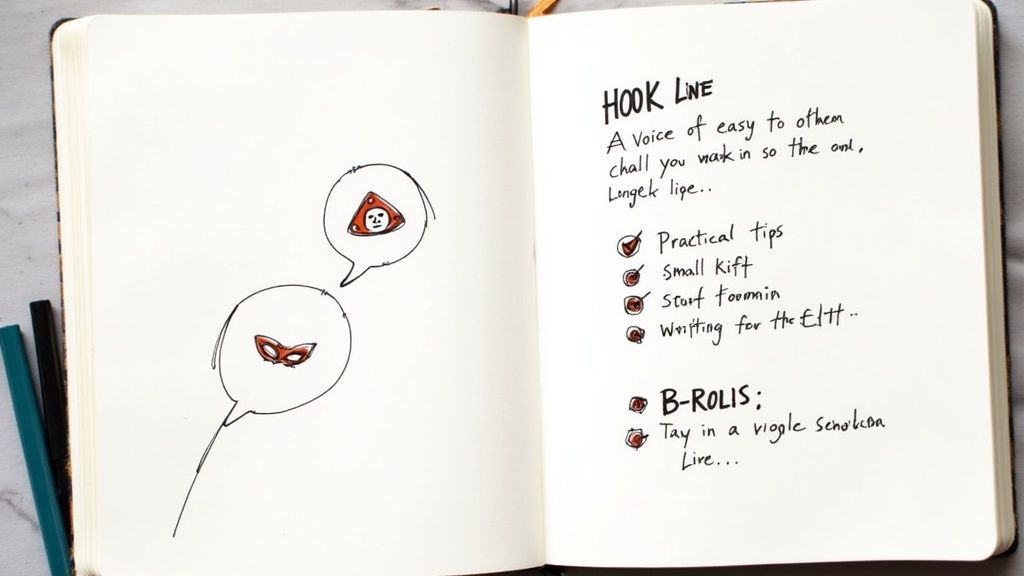
Great videos don't just happen; they're planned. "Writing for the edit" is a mindset where you think like an editor while you're writing the script. Instead of just focusing on the dialogue, you’re actively jotting down notes about the visuals right in your template. This simple habit turns a basic script into a full-blown production guide.
I recommend adding a dedicated column in your script template for visual cues. It can be a game-changer. Here’s a list of visual cues to include:
- B-Roll: "[Cut to a shot of me mixing ingredients in a bowl.]"
- On-Screen Text: "[Text overlay: ‘Secret Ingredient: Cinnamon!’]"
- Camera Angle: "[Switch to close-up shot of the final product.]"
- Sound Effect: "[Add a ‘ding’ sound effect here.]"
Thinking this way from the start not only makes the filming process smoother but also guarantees your final video will be dynamic and visually interesting, keeping your viewers hooked from beginning to end.
Your script shouldn't just detail what you say; it should map out what the viewer sees and feels at every moment. Planning your visuals ahead of time is the fastest way to level up your production quality.
Use Simple Storytelling Techniques
Let's face it, humans are wired for stories. You don’t need to write a Hollywood blockbuster, but a simple narrative arc can make your content incredibly powerful. One of my favorite techniques is to create a "villain."
The villain isn't a person—it's the problem your audience is struggling with.
If you're a fitness coach, the villain might be "gym intimidation." For a finance expert, it could be "the overwhelming stress of credit card debt." When you clearly define the problem, your solution (the "hero" of your video) becomes so much more impactful.
Another great way to connect is by weaving in personal anecdotes. Sharing a quick, relatable story about a mistake you made or a tough lesson you learned builds instant trust. It shows you've been in their shoes, which is far more compelling than just rattling off a list of facts.
To keep these ideas straight, here's a quick cheat sheet for what works and what doesn't.
Quick Guide to Script Writing Dos and Don'ts
| Do This | Don't Do This |
|---|---|
| Read your script out loud. It's the best way to catch unnatural phrasing. | Write in a formal or academic tone. Keep it conversational. |
| Plan visuals in advance. Think B-roll, text overlays, and camera angles. | Only focus on the words. A video is a visual medium first. |
| Keep sentences short and punchy. This makes them easier to say and hear. | Write long, complex sentences. You'll stumble over them on camera. |
| Use personal stories. They build trust and make your content relatable. | Just state facts and figures. People connect with emotion, not data alone. |
| Define the "villain" (the problem). This makes your solution the "hero." | Assume the audience understands the problem. Clearly state what you're solving. |
Think of these not as strict rules but as helpful guardrails. The more you practice, the more intuitive this will all become, and the better your videos will be for it.
Using AI for Faster and Smarter Scripting
https://www.youtube.com/embed/jaOIw-NiEPM
Let's be real—sometimes the creative well just runs dry. Whether you're staring down a creative block or just trying to keep up with a relentless content schedule, AI can be an incredible collaborator. This isn't about replacing your unique voice; it's about giving yourself a powerful head start.
AI tools can seriously speed up the initial, often most tedious, parts of creating a script. Instead of burning hours brainstorming, you can get a solid draft in your hands in just a few minutes.
Believe it or not, some estimates suggest that 30% of all marketing messages, including video scripts, will soon be generated or at least assisted by AI. It's no wonder there's been a 254% increase in businesses using automated tools for their video content. The efficiency gains are just too good to ignore.
From Blank Page to First Draft in Seconds
Think of AI as your personal brainstorming partner, one that never gets tired. It can take a simple idea and spin out dozens of potential angles, hooks, and outlines almost instantly. This lets you skip that frustrating "blank page" phase and dive right into refining the good stuff—adding your personal flair.
The key to getting great results from AI is to give it specific, action-oriented prompts. The more context you provide, the better and more relevant the output will be.
Here are 3 example prompts to get you started:
- For Brainstorming Hooks: "Write five catchy video hooks for a 60-second tutorial about vegan baking."
- For Outlining Content: "Create a simple outline for a YouTube video script comparing two popular camera lenses for vloggers."
- For Drafting a Script: "Turn these bullet points about my morning routine into a conversational, 30-second TikTok script."
Using AI for your initial script doesn't mean your content has to sound robotic. The real magic happens when you take that generated draft and infuse it with your personality, your stories, and your unique perspective. It’s a tool for efficiency, not a replacement for creativity.
3 Practical AI Prompts for Influencers
Ready to give it a shot? Here are 3 prompts you can adapt for your own niche to really get the ball rolling on your scripting process.
- Generate a Story Arc: "Create a short story arc for an Instagram Reel about overcoming gym anxiety. Include a hook, a moment of struggle, the solution, and a motivating call-to-action."
- Refine Your CTA: "Rewrite this call-to-action to be more engaging for a fashion-focused audience: 'Click the link in my bio.' Give me three creative alternatives."
- Create Title Variations: "Give me ten clickable YouTube titles for a video about 'my honest review of the new XYZ smartphone.' Make them sound authentic and not like clickbait."
Getting comfortable with these techniques can help you produce high-quality content faster than ever before. For those who want to take it a step further, various AI tools for script to video conversion can also help turn your finished scripts into engaging videos with minimal effort.
And if you're looking to build out your entire creative arsenal, be sure to check out our guide on the best tools for content creators to discover even more ways to level up your workflow.
Got Questions About Video Scripts? Let's Dig In.
Even with a great template in hand, you're bound to have some questions. It happens to everyone. Let's walk through a few of the most common things creators ask when they're trying to nail down their scripting process.
Getting these details right is about more than just one video. It’s about building a solid, repeatable workflow that saves you time and helps you make better content, consistently.
How Long Should My Script Actually Be?
This is the million-dollar question, and the answer is: it depends entirely on where the video is going. But I can give you a really solid rule of thumb. Most people speak at a comfortable pace of about 150-170 words per minute.
So, let's break that down:
- For a 60-second TikTok or Reel: You're aiming for a script that's tight—right around 150 words. This forces you to get to the point fast.
- For a 10-minute YouTube video: You’ve got more room to breathe. A script for this would be in the neighborhood of 1,500-1,700 words, giving you space for storytelling and deeper dives.
The absolute best way to know for sure? Read your script out loud and time yourself. You'll immediately hear where you can trim the fat and make your points land with more punch.
Will Using a Template Make Me Sound Like a Robot?
I hear this concern a lot, but honestly, it's completely up to you. A script template is a framework, not a cage. Think of it as a set of guardrails to keep you on track—it makes sure you nail your hook, hit your key points, and stick the landing with a clear call to action.
A template gives your content bones; your delivery gives it a soul. The goal is to internalize the main ideas so you can speak to the camera, not just read at it.
The trick is to write like you talk. Use your own words and phrasing. Then, practice it a few times before you hit record. That little bit of rehearsal helps you shift from "reading" a script to "telling" a story, which is what truly connects with your audience.
What's the Best Way to Use a Script While Filming?
Finding a comfortable way to reference your script on set can make all the difference in your on-camera confidence. There isn't one "right" way, but here are 3 methods that work really well for different types of creators.
- Teleprompter Apps: If your script is long and you need to be word-perfect, these are a lifesaver. You can get apps for your phone or tablet that scroll the text right over your camera lens, so you’re always looking in the right direction. A tool like Teleprompter Premium is a popular choice.
- Bullet Points on a Whiteboard: For a more natural, off-the-cuff vibe, this is my go-to. Just jot down your main talking points on a whiteboard or a big piece of paper and place it just off-camera. It lets you glance over for a quick reminder without breaking your flow.
- The Old-School Printout: Never underestimate the classics. Taping a printed script just below or beside your camera lens works surprisingly well. It keeps your eyes close to the lens, so you still feel connected to the person watching on the other side.
Ready to stop guessing what your audience wants and start building predictable income? Rupa is an AI-powered platform that analyzes your social media presence to tell you exactly what digital product to launch. Get your audience-matched product idea, plus all the landing pages, emails, and checkout flows you need to start selling in hours, not weeks. Monetize your audience with Rupa.