
If you've spent time building an audience that trusts you, selling digital products online is the logical next step. It’s a powerful move that goes beyond one-off brand deals, allowing you to turn your knowledge into a real, scalable business. You create something valuable once—like a detailed ebook or a set of time-saving templates—and you can sell it forever. The best part? No shipping and no inventory.
Why Digital Products Are Your Next Smart Move
As an influencer or creator, you've already conquered the toughest part: building a community that genuinely listens to you. Now it's time to take that relationship to the a new level and build an income stream that you actually control. Brand deals are fantastic, but let's be honest, they can be unpredictable. Digital products put you firmly in the driver's seat.
Forget about the logistical headaches of physical merch. This is about monetizing your expertise directly and giving your followers the exact solutions they’re already asking you for. It’s not just about earning money; it’s about delivering real, tangible value that solves a genuine problem for your audience.
The Massive Opportunity for Influencers
The sheer scale of this opportunity is hard to ignore. By 2025, the digital products economy is on track to generate over $2.5 trillion in annual value around the globe. This isn't just a trend; it's a fundamental shift in how creators are turning their skills into revenue without ever touching a physical product.
You are perfectly positioned to grab a piece of this pie. For influencers, this model just makes sense for a few powerful reasons:
- Sky-High Profit Margins: You do the work to create the product once. After that, nearly every sale is pure profit. No manufacturing costs, no shipping fees, no overhead eating into your earnings.
- Infinite Scalability: Selling to ten people is just as easy as selling to ten thousand. The delivery is automated, meaning your income isn’t limited by the number of hours you can work.
- Built-In Market Research: You have a direct line to your future customers. Your DMs, polls, and comment sections are a goldmine of ideas, telling you exactly what your audience needs and what they're willing to pay for.
- Authentic Monetization: It feels so much better to sell a product you created that genuinely helps people than it does to push a brand you’re not 100% passionate about. This approach actually strengthens your bond with your community.
The big idea here is simple: you’re packaging your unique expertise into a digital format that your audience can purchase and use instantly. It’s the most direct path to serving your community while building a business that lasts.
From Content Creator to Business Owner
Making the leap to selling digital products is really a mindset shift. You're evolving from someone who just makes content to an entrepreneur building a valuable business asset. The best place to start? Think about the questions you get asked over and over again. Your first product idea is probably hiding in plain sight right there.
For example, a fitness influencer who’s constantly asked for workout plans could create and sell a "30-Day Fitness Planner." A creator who shares graphic design tips could bundle their best assets into a "Canva Template Kit." The possibilities are directly linked to the value you're already giving away for free.
To get the ball rolling, it helps to know what kinds of assets you can create. Take a look at this guide on what digital downloads are and how they work—it’s the perfect playbook for turning your influence into income.
Finding a Profitable Digital Product Idea
Let's be honest, the hardest part of selling digital products is often figuring out what on earth to sell. You’ve built an amazing community, but what will they actually open their wallets for?
The good news is, the answer is usually hiding in plain sight. It’s right there, within the conversations you're already having with your audience.
Forget about chasing trends or brainstorming in a vacuum. Your most profitable product idea will come from combining what your audience needs with what you do best. People follow you for a reason—your expertise, your style, your perspective. Now, it's just a matter of packaging that unique value into something they can buy.
3 Tips to Find Your Bestselling Idea
The best digital products solve a real, specific problem. And lucky for you, your audience is constantly talking about their problems. Here are three practical tips to find out exactly what they want:
- Mine Your DMs and Comments: What are the questions you get asked all the time? If you're constantly explaining your workout split, sharing your favorite gluten-free recipes, or detailing your photo editing process, that's a massive clue. Practical Example: A fashion influencer keeps getting asked, "How do you find good thrift spots?" She could create a digital guide called "The Ultimate Thrift Store Directory for [Your City]."
- Check Your Top-Performing Content: Pull up your analytics and look at your most saved and shared posts. What made them so valuable? That post on "5 Poses to Look More Confident" that got saved a thousand times could easily become a premium "Posing Guide for Authentic Photos." Practical Example: A travel blogger's Reel about "How I Plan My Trips on a Budget" goes viral. They can turn that into a "Budget Trip Planning Notion Template" that people can buy and duplicate.
- Run Smart Polls: Don't just ask, "What should I sell?" That's too broad. Instead, use Instagram Story polls to validate specific ideas. Practical Example: "Which would help you more right now? A) My 30-Day Content Planner or B) My Media Kit Template." The feedback is immediate and direct.
This isn't about guesswork; it's about active listening. Your followers are literally telling you what they're willing to pay for. To go even deeper on this, you can check out our detailed guide on how to identify demand for digital products.
Match Your Strengths to Their Struggles
Once you’ve pinpointed a common problem, the next step is to connect it to your unique skills. What value can you provide that people can't just Google? This is how you transform your influence into a tangible, sellable asset.
Sometimes your skills are obvious—you're a killer photographer or a certified personal trainer. But often, they're more subtle. Maybe you have an uncanny knack for writing witty, engaging captions, or you've perfected a system for planning a month of content in a single afternoon.
The magic happens at the intersection of what your audience is struggling with and what you're uniquely good at solving. That sweet spot is where authentic, high-demand digital products are created.
10 Digital Product Ideas to Get You Started
To get the wheels turning, here are a few proven ideas that are perfect for creators looking to make their first sale. See if any of these spark an idea that aligns with what your community is asking for.
- The Viral Video Template Pack: A bundle of ready-to-use video templates for Reels or TikTok. Include shot lists and trending audio suggestions to save your followers hours of editing headaches.
- A 30-Day Niche-Specific Content Planner: Don't be generic. Create a planner specifically for "Food Bloggers" or "Bookstagrammers," packed with daily prompts, hook ideas, and relevant calls to action.
- Custom Photo & Video Filter Presets: Is your visual aesthetic a huge part of your brand? Package your signature look into a collection of one-click presets for Lightroom Mobile or another popular app.
- An Ebook on 'How I Grew to 100k': Your journey is a roadmap. Document the exact strategies, mistakes, and breakthroughs that got you where you are today. People will pay for that kind of transparency.
- The Ultimate Media Kit & Brand Pitch Template: So many creators freeze up when it's time to pitch. Sell a slick, customizable media kit template (made in Canva) and throw in some proven email scripts for contacting brands.
- A Mini-Course on Personal Branding: Teach the "how" behind your success. A short, focused course on finding your voice and building a die-hard community can be incredibly powerful.
- Exclusive Behind-the-Scenes Content: Use the "close friends" feature or a private feed to offer a paid subscription. Share unedited vlogs, raw tutorials, or intimate Q&A sessions that aren't available anywhere else.
- A Guide to Landing Your First Paid Brand Deal: Demystify the process for up-and-coming creators. Create a simple, step-by-step guide that covers everything from setting rates to reading contracts.
- Printable Planners or Digital Journals: From fitness trackers to gratitude journals, beautifully designed printables are a fantastic and accessible entry-level product.
- An Email Course on Monetizing Social Media: Set up a 5 or 7-day automated email series. Each day, a new lesson on a specific monetization strategy gets delivered straight to your subscribers' inboxes.
Pick one idea that genuinely excites you and offers real, tangible help to your audience. The best products are always the ones you’re passionate about creating and your followers are truly eager to buy.
How to Create a High-Quality Digital Product
Alright, you’ve done the groundwork and validated your idea. Now for the exciting part—actually building a digital product that people will rave about.
The goal here isn’t just to create something that works. It’s to craft a resource so valuable that your customers feel like they struck gold. You want them to get such an incredible deal that they can't help but tell their friends.
And don't worry, this isn't as intimidating as it sounds. You don't need a degree in computer science or a fancy design studio. Selling digital products is more accessible than ever, thanks to a ton of user-friendly tools. Your real focus should be on delivering quality, polish, and a fantastic experience from the second someone hits "buy."
User-Friendly Tools to Build Your Product
You absolutely do not need to be a professional designer or video editor to create something that looks amazing. Here's a list of go-to tools that influencers use to create products quickly and easily:
- For Ebooks & Planners: Canva is your best friend. Its drag-and-drop interface and massive template library make designing beautiful PDFs a breeze.
- For Mini-Courses & Tutorials: Loom is perfect for recording your screen and camera simultaneously. It's ideal for adding a personal, face-to-face instructional touch without needing complex editing software.
- For Written Guides & Checklists: Don't sleep on Google Docs/Slides. You can write an entire ebook in Docs or build a presentation in Slides, then simply export them as a PDF. They're free and powerful.
Honestly, the specific tool you choose matters far less than the value you pack into the final product. Just start with what feels easy and accessible, and pour your energy into making the content itself incredible.
Your 5-Step Pre-Launch Quality Checklist
Before you even dream of launching a new product, run it through a rigorous quality check. A polished product instantly builds trust and shows you genuinely care. Here's a quick checklist to follow:
- Brand Consistency Check: Does the product use your brand fonts and colors? Is your social media handle visible but not obnoxious? It needs to feel like a seamless part of your brand.
- Proofread Everything (Twice!): Typos make even the best product feel cheap. Do one manual read-through, then run it through a tool like Grammarly for a second pass.
- Use Easy-to-Access File Formats: Is the product in a universal format? PDF is king for documents, MP4 for video, and .ZIP for bundles. Don't force your customers to download special software.
- Test the Full Customer Journey: Go through the entire purchase and download process yourself. Is it smooth? Are instructions clear? This single step prevents a flood of "how do I open this?" DMs later.
- Confirm It's Mobile-Friendly: Can the ebook be read comfortably on a phone? Are the PDF links clickable on mobile? Since most of your audience is on their phone, the entire experience must work flawlessly on a small screen.
Speaking of mobile, its importance cannot be overstated. With an estimated 73% of purchases now happening on phones and sales projected to hit $4.2 trillion by July 2025, a mobile-first approach is non-negotiable.
4 Ways to Pack Your Product With Value
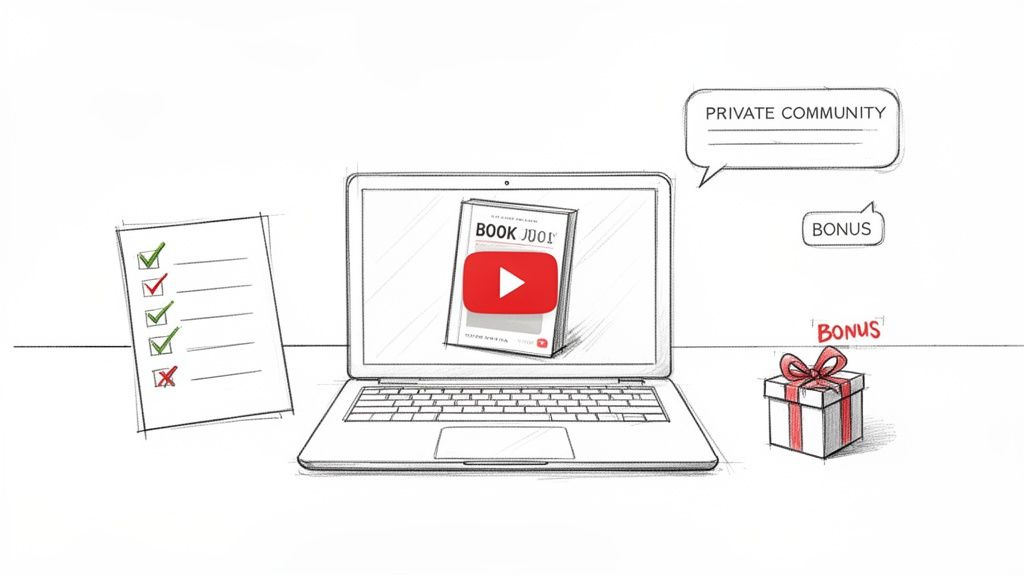
A good product solves a problem. A great product over-delivers and turns a one-time buyer into a lifelong fan. The secret is to stack your offer with bonus materials that make the perceived value skyrocket.
The secret to a successful launch is making your offer a complete no-brainer. When a potential customer sees the core product plus all the incredible bonuses you've included, the decision to buy becomes incredibly easy.
Instead of just selling a standalone ebook or a pack of templates, think about what else you can throw in to guarantee your customer’s success. This is how you really stand out.
- Add Bonus Checklists or Worksheets: Selling a "Content Planning" ebook? Include a printable weekly content calendar they can stick on their wall.
- Offer an Exclusive Q&A Session: Give a live group Q&A call to the first 50 buyers to ask you anything about the topic.
- Provide Access to a Private Community: Create a temporary Discord server or a private Instagram group where buyers can connect, share wins, and ask questions.
- Include a Behind-the-Scenes Video: If you sell photo presets, include a short video showing your unedited editing process. It’s a huge value-add.
These extras don't just make your product more appealing; they show that you're truly invested in your customers' results. For a deeper dive into this, check out our full guide on how to create digital products your audience will absolutely love.
Choosing the Right Sales Platform
So, you've created an amazing digital product. Now, where are you going to sell it? This isn't just a minor detail—it's a huge decision. Think of your sales platform as your digital storefront. It dictates your customer's experience, how you manage sales, and ultimately, how much money lands in your bank account.
For most social media creators, this boils down to two main paths: slick "link in bio" tools or more powerful, dedicated storefronts. One isn't necessarily better than the other; the right choice really depends on what you're selling, how tech-savvy you are, and where you see your business heading.
Path 1: All-in-One 'Link in Bio' Tools
If you want to get your product out there today, these tools are your best friend. Platforms like Stan Store or Beacons are built for speed, turning your bio link into a simple, effective mini-store where followers can buy your new guide or template with just a few taps.
They’re a fantastic starting point, especially for a first launch. Here’s why:
- Insanely Fast Setup: You can have a product live and ready to sell in less than an hour. No coding, no complex web design.
- Seamless for Buyers: The checkout process is designed for mobile users coming directly from apps like Instagram or TikTok, which means less friction and more conversions.
- Everything in One Place: Many come with built-in analytics and email marketing tools, giving you the basics without needing a bunch of different subscriptions.
The trade-off? You give up a lot of customization. You're essentially renting space within their ecosystem, which can feel limiting if you want to expand into a full-blown brand with multiple, complex offerings.
Path 2: Dedicated Storefront Platforms
Maybe you're thinking bigger. If you plan on launching a whole suite of digital products or want complete control over your brand's look and feel, a dedicated storefront like Gumroad or Shopify is the way to go.
Gumroad has long been a favorite among creators for good reason. It hits that sweet spot between simplicity and power. It’s incredibly easy to get started but comes packed with features like discount codes, tiered pricing, and affiliate programs—perfect for selling ebooks, presets, or video courses.

Shopify is the undisputed heavyweight champion of e-commerce. It offers total control over your website's design, functionality, and customer journey. This is the right move if you're building a long-term brand, plan to sell dozens of products, or might eventually add physical merchandise to your lineup.
Your platform choice should match where your business is right now. Start simple with a tool that lets you get to market quickly and validate your idea. You can always upgrade to a more robust system as your product line—and your revenue—grows.
How to Pick the Right Platform for You
Feeling a little stuck? Don't overthink it. Focus on a few key factors to make a decision without getting lost in the weeds. If you want to really dig in, we've put together a much more detailed comparison in our guide on choosing a platform for selling digital products.
For a quick overview, this simple chart can help you compare the most popular options for influencers.
Digital Product Platform Comparison for Influencers
This chart gives you a quick snapshot of the top platforms, highlighting what they do best and how they charge, so you can pick the right one for your specific needs as a creator.
| Platform | Best For | Pricing Model | Key Feature |
|---|---|---|---|
| Stan Store | First-time sellers needing an all-in-one "link in bio" solution. | Monthly Subscription (e.g., $29/mo) | Extremely fast setup and optimized mobile checkout. |
| Gumroad | Creators who want a simple but powerful standalone storefront. | Fee-Per-Transaction (e.g., 10% per sale) | Flexible pricing models and a clean, creator-focused interface. |
| Shopify | Building a long-term, scalable e-commerce brand with many products. | Monthly Subscription + Transaction Fees | Unmatched customization and a huge app ecosystem for adding features. |
After you've weighed the pros and cons, the most important thing is to just pick one and get started. The "perfect" platform is the one that gets your product in front of customers, not the one that keeps you stuck in analysis paralysis for weeks. You can always switch later on as your business evolves.
Your 7-Day Social Media Launch Plan
You've poured your heart into creating a fantastic digital product. Now, how do you get it into the hands of the people who need it most? Forget about complicated, jargon-filled marketing funnels. This is your simple, day-by-day roadmap to launching and selling your product using the social media platforms you already know and love.
The secret to a successful launch is telling a great story. Over one week, we'll guide your followers from being casual observers to becoming excited customers. The goal is to build genuine anticipation, highlight a problem they're facing, present your product as the perfect solution, and give them a compelling reason to buy now.
Of course, before you launch, you need a place to sell. Picking the right platform is crucial for a smooth process. You don't have to go all-in on a complex e-commerce site from day one.
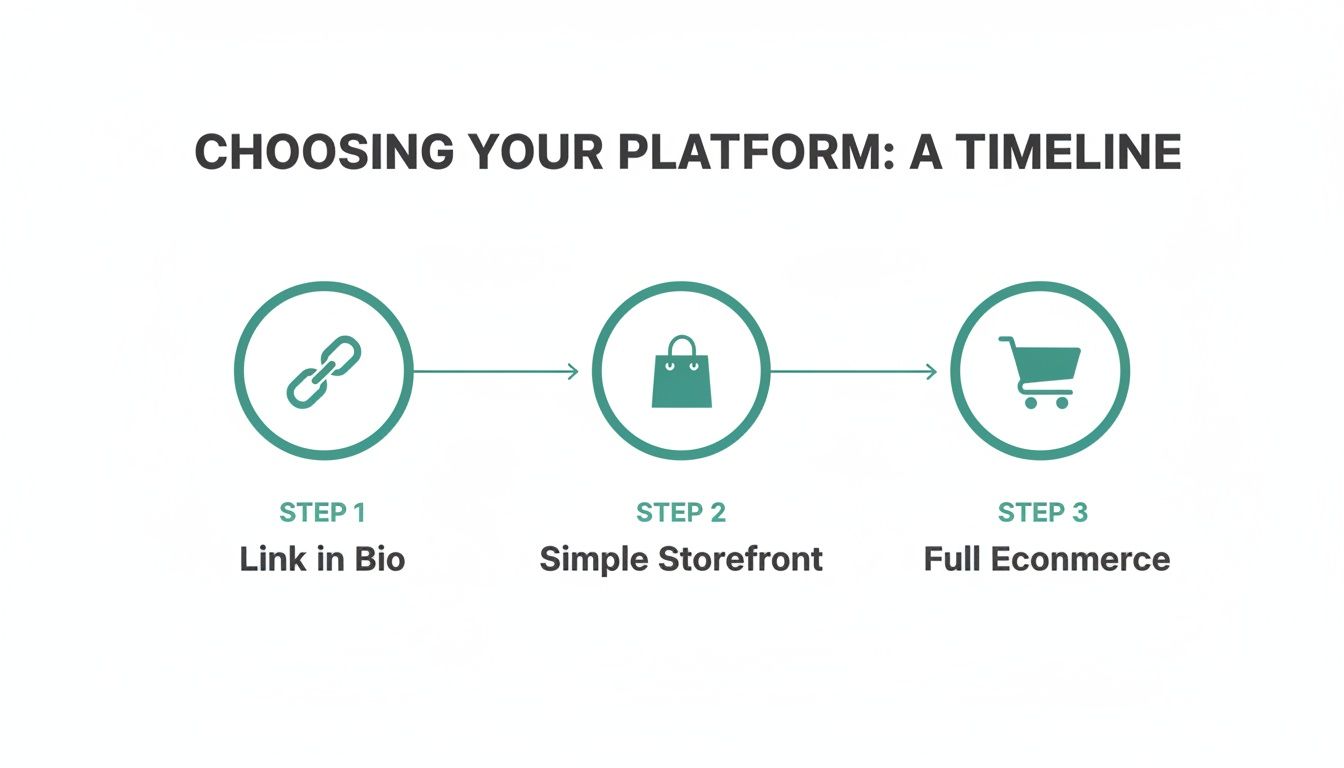
As you can see, you can start small and scale up as your business grows. The important thing is to just get started without getting bogged down by tech.
The Pre-Launch Phase: Building Hype
A great launch doesn't begin on Day 1. It starts the week before. This is your time to plant seeds of curiosity and, most importantly, build an email waitlist. Your email list is gold—it’s a direct line to your most engaged followers, far from the whims of social media algorithms.
- Set Up a Simple Waitlist: Use a free tool to create a quick landing page. All it needs to do is capture email addresses from people who want to be the first to know about your "secret project."
- Tease, Don't Tell: Use Instagram Stories to drop hints. Share a few behind-the-scenes clips of you creating the product, run polls asking about a specific pain point your product solves, or use the question sticker to ask, "What’s your biggest struggle with [your topic]?"
- Offer a Freebie: Give everyone who joins the waitlist a small, valuable gift, like a one-page checklist or a mini-guide related to your main product. This builds trust and gives them a taste of the quality you deliver.
Your Day-by-Day Launch Content Calendar
Here is a proven content plan for your official launch week. Feel free to adapt these ideas to fit your unique voice and niche. To make sure your posts get seen, finding the best time to post on social media is a game-changer for maximizing your reach.
Days 1 & 2: The Problem
Your only goal here is to make your audience feel completely understood. Don't even mention your product yet. Just focus on the pain point it solves.
- Reel/TikTok: Create a short, relatable video that showcases the frustration or struggle your audience deals with. Using trending audio is a great way to boost your reach.
- Instagram Story: Run a simple poll: "Does anyone else struggle with X?" Then, follow it up with a few slides sharing your own past struggles with the problem. Get vulnerable; it builds connection.
Days 3 & 4: The Solution
It's time for the big reveal! Now you can finally introduce your product as the answer to the problem you've been talking about.
- Carousel Post: Design a multi-slide post. The first slide should be a bold statement about the solution. The next slides can reveal your product cover, walk through the key features, and explain the transformation it offers.
- Go Live: Host a quick live session to officially announce the product. Your genuine excitement is contagious! Answer questions from the audience and let everyone know the link is now live in your bio.
Days 5 & 6: Social Proof & Urgency
People trust what other people are already buying and loving. This is where you show off early wins and add a little friendly urgency.
- Share Testimonials: Did you give a few people early access? Post screenshots of their positive DMs or create simple graphics with their glowing quotes.
- Announce a "Launch Bonus": Go on Stories and announce a special bonus that's only available for the first 48 hours. This could be anything from a bonus template to a private Q&A call. It’s the perfect nudge for people who are on the fence.
The most powerful marketing isn't about perfectly polished graphics; it's about authentic social proof. A simple screenshot of a happy customer's message can be more persuasive than any sales copy you could ever write.
Day 7: The Last Call
This is your final push. Make it crystal clear that the launch offer or special bonus is about to disappear.
- Use the Countdown Sticker: Pop the countdown sticker in your Instagram Stories and let it run all day. It’s a powerful visual reminder that time is running out.
- Create a Final Value Post: Share one last piece of content that addresses a common question or objection you’ve heard all week. End with a very clear call to action: "The launch bonus disappears at midnight. The link in my bio is your last chance to get it!"
This structured plan takes the guesswork out of launching, letting you focus on what really matters: connecting with your audience and confidently selling your digital product.
Common Questions About Selling Digital Products
Jumping into the world of digital products can feel like a huge leap. It's totally normal to have a few questions swirling around in your head before you take the plunge. Let's tackle some of the most common hurdles creators and influencers face.
How Do I Price My First Digital Product?
Pricing your first product can feel like a guessing game, but it’s less about the hours you put in and more about the value you deliver. The biggest mistake creators make is pricing too low.
Instead of just copying what others charge, think about the transformation your product provides.
Practical Example: A media kit template that helps another creator land a $1,000 brand deal is worth way more than $10. Your price needs to reflect the powerful result your customer gets.
For your first launch, I highly recommend a tiered pricing strategy. It gives your audience options and can seriously boost your revenue. Here's a quick list of how that could look:
- The Basic Tier: The core offer. For example, your "30-Day Content Planner" PDF for $27.
- The Premium Tier: The core offer plus high-value bonuses. For $47, they get the planner plus a video tutorial on your content batching process and a swipe file of your best-performing caption templates.
This approach doesn't just cater to different budgets; it makes the premium option look like a fantastic deal. It’s one of the best ways to boost your average order value from day one. If you want to dive deeper into maximizing sales, this practical guide to improving your ecommerce conversion rates is an excellent resource.
What Legal Stuff Do I Need to Worry About?
Look, this isn't formal legal advice, but protecting your hard work is non-negotiable. You can get the basics in place without hiring an expensive lawyer right away.
First, you need a clear Terms of Use document. This should state upfront that the product is for personal use only and cannot be shared, resold, or redistributed. This simple step is your first line of defense against piracy.
Next, make your refund policy impossible to miss. For digital products delivered instantly, an "all sales are final" policy is standard practice. The key is transparency. Make sure customers see it before they click "buy" to prevent headaches and disputes down the road. As you grow, you'll need to think about sales tax, but most modern platforms like Gumroad or Shopify can handle that automatically for you.
Having basic protections in place isn't about being paranoid; it's about being a professional. A clear terms of use and a visible refund policy build trust and set clear expectations for your customers.
How Do I Handle Customer Support?
Great customer support is your secret weapon for turning one-time buyers into loyal fans. And the best part? You can automate most of it.
Start by creating a simple FAQ page or document that anticipates your customers' most common questions.
5 Essential Questions for Your FAQ:
- How will I get the product after I buy it?
- What kind of file is it (e.g., PDF, MP4, .zip)?
- What software do I need to use this?
- I can't find my download link. Help!
- What's your refund policy?
Pop a link to this FAQ right into your purchase confirmation email. Seriously, this one move will probably handle 80% of your support tickets before they even happen. For everything else, a simple, dedicated support email address is all you need. Just be ready to respond quickly and helpfully, especially during that first launch week.
Ready to stop guessing and start selling? Rupa is the AI-powered platform that tells you exactly what digital product your audience wants to buy. It analyzes your social media, identifies profitable product ideas, and then generates all the assets you need—from the sales page to the email scripts—so you can launch in hours, not weeks. Build predictable income with Rupa today.