
Picture this: you have a marketing assistant who works around the clock, 24/7. This assistant welcomes new followers with personalized DMs, keeps potential customers engaged with valuable content, and tracks every interaction, all while you get to focus on creating amazing content. That’s the magic of marketing automation for small business—a powerful way to grow your brand without needing a huge team.
What Is Marketing Automation Anyway?

Let's cut through the tech talk. At its core, marketing automation is just about setting up "smart rules" for your marketing tasks that then run on their own. Instead of manually sending every single welcome email or follow-up message, you build a system that triggers these actions based on what your audience does.
Practical Tip: Think of it like Instagram's "Quick Replies," but on steroids. A useful quick reply might be, "Hey! Thanks so much for the follow. I share tips on [your niche] every week. You can also grab my free guide here: [link].". Now, imagine that happening automatically for every new follower. That's automation.
Key Takeaway: Marketing automation isn't meant to replace your authentic connection. It's designed to amplify it by freeing you up to engage where it truly matters—like creating killer content or having real conversations in your DMs.
Leveling the Playing Field for Influencers
As an influencer or small business owner, your time is everything. Automation is your secret weapon, acting as a force multiplier that allows a solo creator to deliver the kind of consistent, personalized experiences that used to be reserved for big corporations with big budgets.
This isn't just a trend; it's a necessity. With the number of small businesses projected to hit 400 million globally by 2025, the demand for smart, efficient tools has skyrocketed. The marketing automation market itself is expected to jump from $5.65 billion to a staggering $14.55 billion by 2031, which tells you just how vital this strategy is becoming.
Here are 3 quick wins you can get with automation:
- Welcome New Subscribers: Automatically greet new community members with a pre-planned email series that makes them feel right at home.
- Nurture Potential Customers: Guide interested followers with targeted content that shows them the value you provide, step by step.
- Segment Your Audience: Send the right messages to the right people by grouping them based on their interests or how they've interacted with your brand.
For content creators, this means you can build a reliable system to sell digital products or services without being chained to your inbox. As you build your workflow, you might find some of the best tools for content creators integrate perfectly with automation platforms. If you're ready to go deeper, check out this comprehensive guide to marketing automation for small businesses.
Why Your Small Business Needs Automation Now
If you're a creator or small business owner, you know your most valuable resource isn't your follower count—it's your time. Marketing automation is like hiring a tireless assistant, giving your brand the power of a full-scale marketing team without the massive overhead. It's really all about working smarter, not just harder, to forge genuine connections with your audience.
Instead of getting lost in the weeds of repetitive tasks, you get to pour your energy into creating amazing content and actually talking to your community. Let's look at 3 game-changing benefits.
1. Get Your Precious Time Back
Trying to manually manage every welcome email, social media post, and follow-up is a fast track to burnout. All those "little" jobs pile up, stealing hours from your week.
Actionable Tip List: 3 Tasks to Automate Today
- Replying to common DMs: Set up keyword triggers. If someone DMs "LINK," an automation can instantly send your link-in-bio.
- Welcoming new email subscribers: Create a 3-part email series that introduces you, shares your best content, and asks them a question to start a conversation.
- Posting to multiple platforms: Use a scheduling tool to plan your content for the week and have it post automatically to Instagram, TikTok, and Pinterest.
2. Boost Your Sales and Lead Quality
A quick follow-up can be the difference between a curious browser and a loyal customer. Automation makes sure you never miss that crucial window.
Actionable Tip List: 3 Sales Automations for Creators
- Abandoned Cart Emails: Someone adds your new course to their cart but gets distracted. An hour later, they get a friendly reminder email. Boom, recovered sale.
- Launch Sequences: Announcing a new digital product? An automated email sequence can build hype, answer FAQs, and handle the final countdown for you.
- Webinar Follow-ups: Host a free workshop? Automatically send the replay to everyone who registered and a special offer to those who attended live.
This isn't just about feeling more efficient. Studies show an average return of $5.44 for every $1 spent on marketing automation. That’s a staggering 544% ROI, making it one of the smartest investments a creator can make.
3. Build a Consistent Brand Presence
Consistency is everything on social media. It builds trust and keeps you top-of-mind. Automation helps you maintain that steady, reliable presence. A strong presence also needs an effective social media engagement strategy to work alongside your automated posts.
Key Insight: Automation doesn’t make your brand less personal. It creates the space for you to be more personal where it counts by taking over the repetitive tasks that drain your creative energy.
Actionable Tip List: 3 Ways to Automate Consistency
- Content Scheduling: Batch-create your Reels on Monday and schedule them to post throughout the week at peak times.
- Weekly Newsletters: Set up a template for your weekly email. An automation can pull in your latest blog post or YouTube video and send it to your list every Friday morning like clockwork.
- DM Campaigns: When launching a new product, an automation can send a personalized DM to followers who engaged with your launch posts, starting a one-on-one conversation.
By putting these systems in place, you stop treating marketing like a list of chores and start building an efficient, self-sustaining growth engine. To get the most out of it, understanding the top marketing automation best practices is a must.
Core Automation Features Every Small Business Should Use
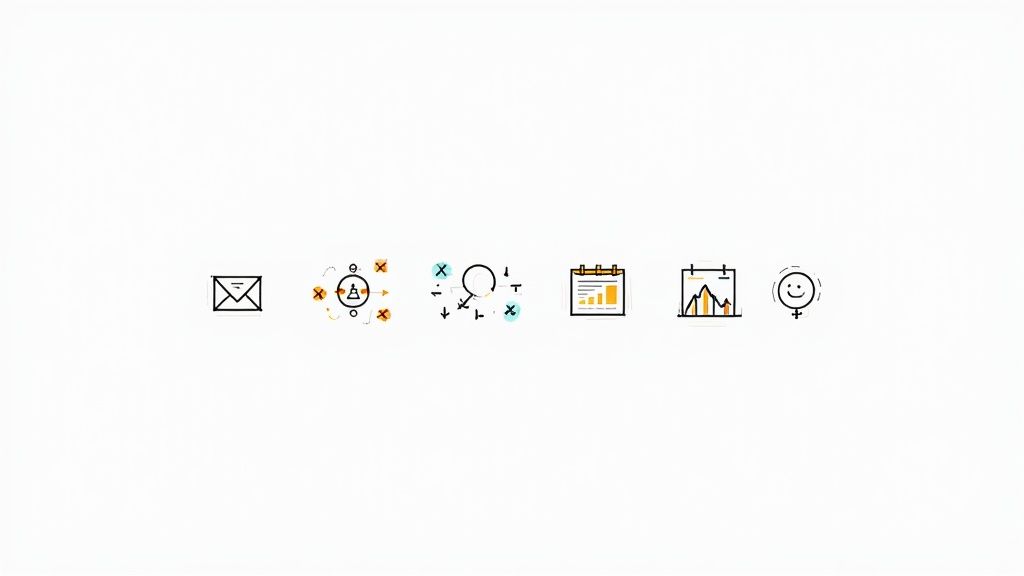
Jumping into marketing automation for small business can feel a bit overwhelming. But here’s the secret: you don't need to master everything at once.
Instead, zero in on a few essential features that deliver the biggest wins right away. Think of these features as your ultimate toolkit for turning repetitive tasks into a smooth, self-running system.
1. Automated Email Marketing
This is your home base. It's how you build relationships and drive sales, even while you sleep.
Top 3 Email Automations for Influencers:
- Welcome Series: When someone new joins your list, an automated 3-5 part email series can instantly introduce your brand, share your best content, and make them feel like part of the community.
- Abandoned Cart Reminders: If you sell digital products, courses, or merch, this is a must-have. An automated email can gently nudge people who leave items in their cart, recovering lost sales.
- Content Upgrade Delivery: Offer a free checklist in a blog post? Automation instantly sends the PDF to anyone who signs up, providing immediate value.
2. Lead Nurturing Workflows
Most followers aren't ready to buy on day one. Lead nurturing guides them from "just curious" to "loyal fan" with valuable content.
A workflow is just a set of "if this, then that" rules. If someone downloads your free guide, then automatically send them a follow-up email a few days later with a related blog post. It's a hands-off way to stay top-of-mind.
This systematic approach makes a huge difference. Businesses using automation report an 80% increase in leads and a jaw-dropping 451% increase in qualified leads when nurturing is involved.
3. Audience Segmentation
Sending the same generic message to everyone is a fast track to the unsubscribe button. Segmentation splits your audience into groups so you can send hyper-relevant content.
3 Smart Segments for Influencers:
- "New Subscribers": People who joined in the last 30 days. Send them your foundational content.
- "Engaged Fans": Anyone who has opened your last 5 emails. Send them exclusive content or early access to new offers.
- "Customers": People who have bought a product. Exclude them from sales pitches for things they already own and send them content on how to get the most out of their purchase.
4. Social Media Scheduling and Automation
Showing up consistently on social media is non-negotiable, but it's a huge time drain. Automation tools are a lifesaver.
3 Social Media Automation Hacks:
- Post Scheduling: Plan and schedule your content across multiple platforms in advance.
- Keyword Auto-Reply: Set up an automation to reply to comments or DMs that contain a specific word (like "link" or "guide").
- Engagement Follow-up: Automatically send a DM to anyone who engages with a specific poll or quiz in your Stories. You can dive deeper and learn how to set up Instagram DM automation for a product launch.
5. Landing Pages and Forms
How do you get people onto your email list? Landing pages and sign-up forms. Most automation platforms have built-in tools to create simple pages to capture leads.
Practical Tip: Create a dedicated landing page for your main freebie (e.g., "The Ultimate Content Creator Checklist"). Promote this single link in your bio across all platforms. When someone signs up, the form automatically adds them to your list and triggers your welcome email sequence.
Key Automation Features and Their Impact
| Automation Feature | What It Does | Real-World Example for an Influencer |
|---|---|---|
| Email Workflows | Sends a series of emails based on triggers. | A new subscriber automatically gets a 3-part "welcome" series introducing your brand and best content. |
| Segmentation | Divides your audience into specific groups. | Splitting your email list into "Beginners" and "Advanced" to send more targeted fitness tips. |
| Social Scheduling | Plans and publishes social media posts ahead of time. | Batch-creating a week's worth of Instagram posts on Monday and scheduling them to go live automatically. |
| Landing Pages | Creates simple, conversion-focused web pages. | Building a dedicated page for your new "Free 5-Day Challenge" with a sign-up form. |
| Analytics | Tracks performance and provides data insights. | Seeing which email subject line got the most opens so you can write better ones next time. |
These core features work together to create a powerful, self-sustaining marketing engine for your brand.
6. Basic Analytics and Reporting
You can't improve what you don't measure. A good platform gives you straightforward analytics to see what's working.

3 Key Metrics to Track:
- Email Open Rate: Are your subject lines catchy enough?
- Click-Through Rate: Is your content compelling people to click?
- Conversion Rate: Are people taking the action you want (e.g., buying a product)?
This feedback loop is crucial. It shows you exactly what your audience loves, so you can stop guessing and start creating more of what works.
Choosing The Right Automation Tool On A Budget
Picking your first marketing automation tool can feel like trying to choose the right filter for a photo. There are hundreds of options, and they all promise great results. But the "best" one is simply the one that fits you.
For creators and solopreneurs, the right tool isn't about having the most bells and whistles. It's about finding something that feels intuitive and solves your biggest headaches without breaking the bank.
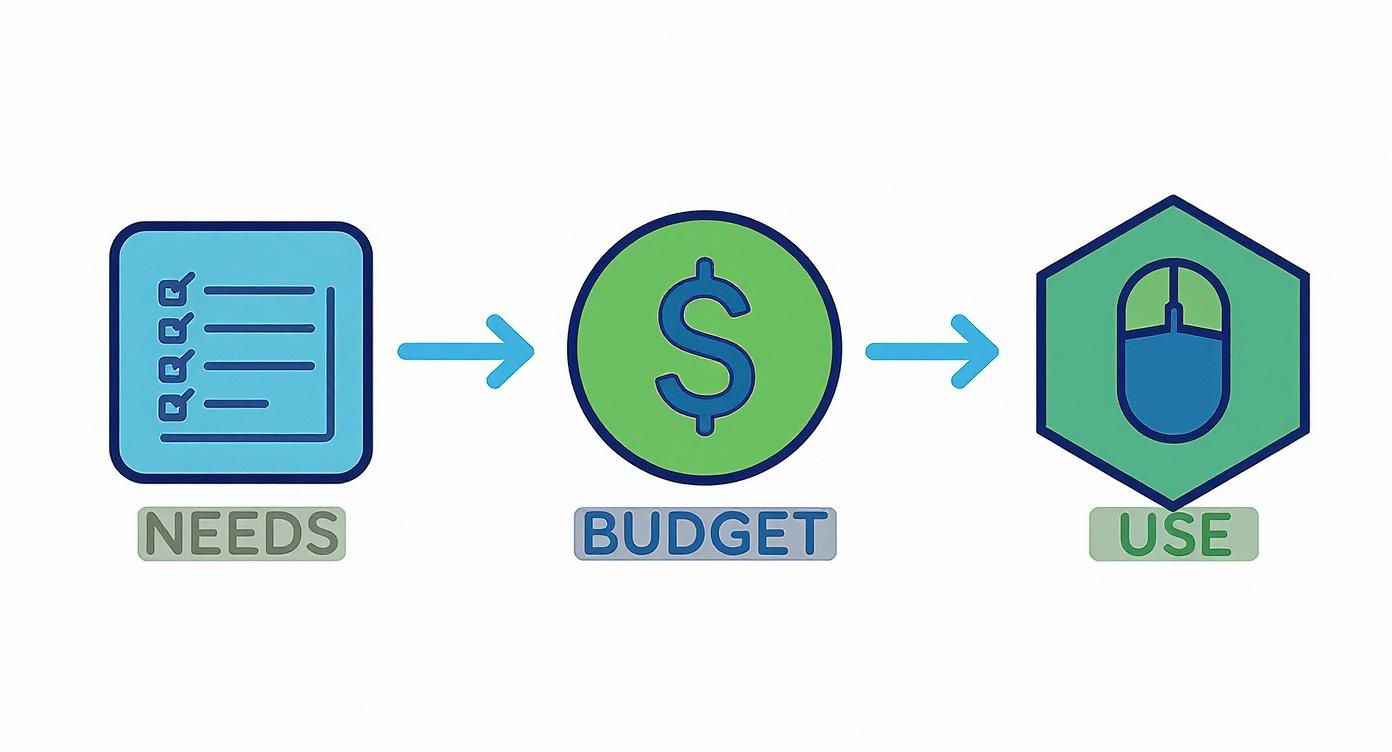
Step 1: Pinpoint Your Core Needs
Before you look at pricing, figure out what you actually want automation to do.
Useful Tip Checklist: What's Your #1 Goal?
- Grow My Email List: I need simple forms and landing pages to get subscribers.
- Nurture My Audience: I want to send automated email welcome sequences.
- Save Time on Social: My main goal is to schedule my content in advance.
- Sell My Products: I need abandoned cart reminders and sales funnels.
- All of the Above: I need an all-in-one tool to manage everything.
Getting clear on this stops you from paying for a pro-level tool when you just need the basics.
Step 2: Set a Realistic Budget (and Hunt for Free Plans)
The great news? Many of the best platforms have fantastic free or low-cost plans perfect for getting started.
Useful Tip: Don't think of your budget as a limitation; think of it as a filter. Zero in on tools that let you start for free or for less than $50 a month. This gives you runway to test the software and make sure it’s actually saving you time and making you money.
Look for a "freemium" model. This usually means the core features are free up to a certain number of subscribers (say, your first 1,000 contacts). This model is ideal because the platform grows with you.
Step 3: Prioritize Simplicity and Integration
A powerful tool is useless if it’s a nightmare to use. Always take advantage of a free trial. Can you build a simple workflow in 15 minutes, or do you need to watch an hour of tutorials?
Also, check the integrations. Your automation tool needs to play nicely with the other apps you already use, whether that's Shopify, WordPress, or your favorite social media scheduler. Good integrations mean less manual work.
Comparing Popular Automation Tools for Small Businesses
To give you a head start, here’s a quick look at three popular platforms that are known for being budget-friendly and great for creators.
Comparing Popular Automation Tools for Small Businesses
| Feature | Tool A (e.g., Mailchimp) | Tool B (e.g., ConvertKit) | Tool C (e.g., HubSpot Starter) |
|---|---|---|---|
| Best For | Beginners who need a simple, all-around tool for email and basic automation. | Creators, bloggers, and anyone selling digital products who need powerful sales funnels. | Small businesses planning for long-term growth with an all-in-one marketing and sales CRM. |
| Free Plan | Yes, up to 500 contacts and 1,000 email sends per month with basic features. | Yes, up to 1,000 subscribers with unlimited landing pages and email broadcasts. | Yes, a robust free toolkit with CRM, email marketing, forms, and more. |
| Key Strength | An incredibly user-friendly interface and beautiful, professional email templates. | Powerful segmentation and automation rules built specifically for the creator economy. | A fully integrated system that grows with you, from free tools to an enterprise-level platform. |
| Ease of Use | Excellent. The drag-and-drop builder is one of the easiest to master. | Very Good. More powerful than Mailchimp, but still very intuitive for creators. | Good. A steeper learning curve due to its vast features, but the starter plan is very manageable. |
Ultimately, the best tool is the one you’ll actually use. Mailchimp is a fantastic starting point for its simplicity. ConvertKit is the go-to for creators serious about building funnels. And HubSpot is for those who want a platform they can grow into for years to come. Start with a free plan and see which one feels right.
Your First Three Marketing Automations to Set Up Today
Theory is great, but let's get practical. The best way to grasp the power of marketing automation for small business is to build your first workflow. Focus on these three high-impact automations to get quick wins.
1. The Welcome Email Series
First impressions are everything. This automates that crucial first handshake with a new follower.
Your 3-Day Welcome Sequence Blueprint:
- The Goal: To onboard new subscribers, create an instant connection, and point them toward your most valuable content.
- The Trigger: A person fills out a sign-up form on your website or link-in-bio.
- The Steps:
- Email 1 (Sent Immediately): Welcome & Here's Your Freebie! Confirm their subscription, deliver any promised download, and tell them what to expect from your emails.
- Email 2 (Sent on Day 2): My Top 3 [Blog Posts/Videos] for You. Share your best content to provide immediate value and establish your expertise.
- Email 3 (Sent on Day 3): Quick Question… Ask them what they're struggling with related to your niche. This invites a reply and gives you priceless audience insight.
This simple sequence ensures every new subscriber gets a consistent, positive first impression of your brand. If you want to get more advanced, many principles from a course launch email sequence can be applied here.
2. The Abandoned Cart Reminder
If you sell anything online, this automation is non-negotiable. It helps you recover the 70% of online shopping carts that are abandoned.
An abandoned cart automation can recover between 3% and 14% of otherwise lost sales. For an influencer, that can easily add up to thousands in extra revenue each year.
Your 2-Step Abandoned Cart Blueprint:
- The Goal: To recover sales you would have otherwise lost.
- The Trigger: A customer adds a product to their cart but doesn't complete the purchase within 1 hour.
- The Steps:
- Email 1 (Sent 1-3 Hours Later): Did you forget something? A simple, low-pressure reminder showing the product they left behind with a clear button to "Complete Your Purchase."
- Email 2 (Sent 24 Hours Later): Your items are waiting + a testimonial. Add a touch of social proof by including a glowing customer review for the product.
3. The Content Delivery Automation
Your expertise is your most valuable asset. Packaging it into a "lead magnet"—like a free PDF guide—is a brilliant way to grow your email list. This automation delivers it instantly.
Your Content Delivery Blueprint:
- The Goal: To automatically deliver a lead magnet the moment someone signs up.
- The Trigger: A person submits their email in a form for your free resource.
- The Steps:
- Tag the Subscriber: Immediately apply a tag (e.g., "Downloaded_Checklist"). This is huge for sending targeted messages later.
- Send the Email: The automation instantly sends an email with a direct link to download the resource. This builds trust and shows your brand is professional.
This automation is simple to set up but incredibly powerful for turning your best content into a lead-generation machine that works 24/7.
Got Questions About Marketing Automation? Let's Talk.
Jumping into marketing automation can feel like a big step. Let's tackle some of the most common questions head-on.
Will This Make My Marketing Feel Robotic?
This is the #1 fear, but good automation does the opposite. It makes it easier to be more personal at scale.
Useful Tip List: 3 Ways to Keep it Personal
- Use Personalization Tokens: Automatically insert a subscriber's first name
[FNAME]into your emails. - Write in Your Voice: Automation just handles the sending. You still write the emails. Keep your tone authentic and conversational.
- Segment Your Audience: Send emails based on what people have clicked on or purchased. A fitness influencer can send different meal prep tips to "vegan" vs. "keto" segments. This feels hyper-relevant, not robotic.
Isn't Marketing Automation Crazy Expensive?
Nope! That’s a myth. Many tools are built specifically for small businesses with generous free plans.
- Start for free: Platforms like Mailchimp and ConvertKit let you use core automation features for free up to 1,000 subscribers.
- It pays for itself: Think about the ROI. An abandoned cart email that wins back just one sale a month could easily cover the software's cost.
How Much Time Will This Actually Take to Set Up?
There is some upfront work, but it's a "work now, relax later" situation.
Realistic Time Commitment:
- Initial Setup (2-5 hours): Choose your tool and build your first 1-2 automations (like your welcome series). Most tools have drag-and-drop builders that make this easy.
- Ongoing Management (1-2 hours per month): Once running, you're mostly just checking in, tweaking a subject line, or building a new workflow for a specific launch.
When you compare that to the hours you’d spend manually sending follow-up emails every single day, the time savings are massive.
Can I Use This if I Don't Sell Physical Products?
Absolutely. Marketing automation is a game-changer for service providers, coaches, and content creators.
3 Automation Examples for Service-Based Influencers:
- For a Coach: Someone downloads your checklist of common mistakes. An automation sends them a series of emails digging deeper into each point, ending with an invitation to book a free discovery call.
- For a Designer: A potential client fills out your contact form. A workflow instantly sends them an email with your portfolio and client testimonials.
- For a YouTuber: You can use automation to deliver a free 5-day email course. This builds incredible trust and positions you as an expert long before you ever ask for a sale.
At its core, automation is just about creating smart, value-driven communication systems, no matter what you sell.
Ready to stop guessing what your audience wants and start selling it to them? Rupa analyzes your social media presence to identify digital product ideas your followers are already asking for. Then, it generates the landing page, emails, and checkout flow so you can launch in hours, not weeks. Monetize your audience with Rupa today.