
So, you’ve built a killer following, but what’s next? Let's talk about cohort-based courses. A cohort-based course is where a group of students—your "cohort"—learns together on a set schedule. Think of it like a high-energy workshop you lead, not a dusty library of old videos.
This model transforms your audience from passive followers into a tight-knit community that gets real results, with you leading the charge.
Why Cohort Courses Beat Traditional Online Learning
If you’ve ever launched a self-paced course, you know the drill: tons of sign-ups, but only a handful of students actually finish. It's not your content; it's the model.
Cohort-based courses fix this by adding two game-changing ingredients: community and accountability. It's the difference between handing someone a workout PDF and coaching a live fitness bootcamp. That group energy, the shared deadlines, and your direct guidance motivate people to show up and do the work.
The Problem with Self-Paced Courses
For influencers, the self-paced model often fails to build deep connections. Students buy your content and disappear, leaving zero room for real interaction or brand loyalty. It’s a huge problem.
Self-paced courses are notorious for completion rates as low as 12% to 15%. Cohort-based learning flips this by focusing on social learning and shared progress, driving sky-high engagement and ensuring your students get the transformation you promise.
Before we dive deeper, here’s a quick breakdown of the key differences.
Self-Paced Courses vs Cohort Based Courses
| Feature | Traditional Self-Paced Course | Cohort Based Course |
|---|---|---|
| Learning Pace | Individual, "do it anytime" | Group, fixed schedule |
| Community | None or a disconnected forum | Active, built-in peer group |
| Accountability | Relies solely on self-discipline | High, driven by peers & deadlines |
| Access to You | Limited to pre-recorded content | Direct access via live sessions, Q&As |
| Completion Rates | Very low (12-15%) | Very high (often 85%+) |
| Price Point | Lower, commodity-based | Higher, premium experience |
| Transformation | Hit or miss, often superficial | Deep, driven by application & support |
As you can see, the value proposition is completely different. One sells information, while the other sells transformation.
4 Killer Benefits for Influencers
Switching to a cohort model isn't just a different way to teach; it’s a strategic move to build a sustainable influencer business. Here are four tips on why it's a game-changer:
- Get Raving Testimonials: High completion rates mean more success stories. When your students win, they'll shout it from the rooftops. That social proof is gold for your next launch.
- Charge Premium Prices (and Get Them): Live sessions, direct access to you, and a private community create a high-touch, VIP experience. You can confidently charge more because you're delivering way more value than a simple video series.
- Build a Loyal Super-Community: Students don't just learn from you; they network and form real bonds. Your course becomes a hub, creating a loyal community ready to buy whatever you offer next.
- Become the Go-To Expert: When students get amazing results, your authority skyrockets. Their success becomes your success, cementing your status as a leader in your niche.
A cohort-based course lets you shift from being a content creator broadcasting to many, to a community leader guiding a dedicated group. This is how you build an asset, not just an audience.
Ultimately, this structure lets you offer a powerful, high-impact experience that builds deeper loyalty than any "like" or "follow" ever could. If you want to dive deeper, you can explore more of our articles on the cohort-based course model.
The Five Pillars of a Profitable Cohort Course
Great cohort-based courses don't just happen. They're carefully designed experiences built on a framework that keeps students engaged and gets them results. When you design a structured, high-touch experience, you transform a simple course into a profitable digital product.
Focusing on these five core pillars helps you build a system that delivers a premium experience your audience will happily pay for.
The image below nails the difference in student interaction between a standard, self-paced course and a dynamic cohort model.
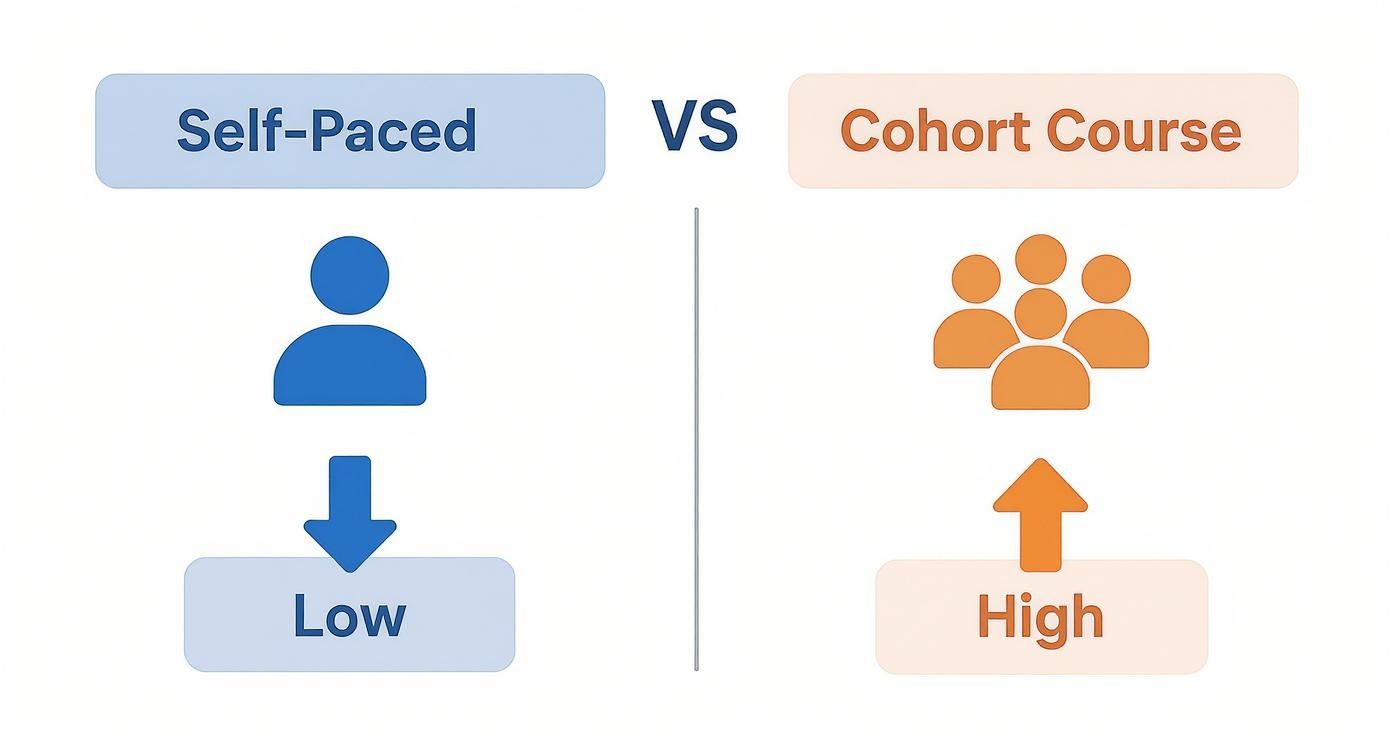
As you can see, that group dynamic is what makes cohort courses so powerful—it’s a huge factor in their success.
1. A Fixed Schedule Creates Urgency
A defined start and end date is the engine that drives your entire course. This simple constraint creates positive pressure and fights procrastination—the #1 killer of self-paced programs.
- Practical Example: Announce a "4-Week Instagram Reels Accelerator" that kicks off on June 1st. The clear timeline gives people a reason to sign up now and, more importantly, to show up and participate.
This schedule also turns your course into an "event." That scarcity—the feeling they need to join now or miss out—is an incredibly effective motivator.
2. Live Sessions Build a Direct Connection
Live sessions are where the magic happens. This is your chance to build a direct, personal relationship with your students and answer their specific questions. Here are three practical ways to use them:
- Weekly Q&A Calls: Jump on Zoom and let students ask you anything about that week's lessons. This direct access is a huge selling point.
- Expert Guest Interviews: Bring in another creator from your niche for a special session. It adds massive value and a fresh perspective.
- "Hot Seat" Coaching: Pick a few students to receive live, direct feedback on their work. Everyone in the group learns from watching the process.
3. A Dedicated Community Hub Fosters Support
Your cohort needs a private, dedicated space to connect outside of live calls. This is where they collaborate, ask for help, and cheer each other on. This peer-to-peer interaction is often as valuable as your content.
When students learn together, they form real bonds and build a network that often lasts long after the course wraps up. This turns your course from a simple transaction into a powerful community asset.
Platforms like Circle.so, Slack, or even a private Facebook Group are perfect for this. Fostering this interaction is crucial, and you can learn more about developing a community that thrives in our other guide.
4. Project-Based Learning Gets Tangible Results
People sign up for a transformation, not just information. The best way to deliver that is through hands-on, project-based work. Ditch quizzes and give them assignments that produce a real-world outcome.
- Practical Example: A course on "YouTube for Beginners" could have a final project where every student has to script, shoot, edit, and publish their first full video by the end of the course.
This ensures they’re not just passively learning but actively applying new skills.
5. A Defined Transformation Clarifies the Outcome
Finally, your course needs to be built around a single, crystal-clear promise. What specific, measurable result will your students achieve? This is your most powerful marketing message.
- Vague: "Become a better podcaster."
- Specific: "Launch your podcast and get your first 1,000 downloads in 6 weeks."
This clarity sets expectations from day one and gives students a motivating goal to work toward, which dramatically boosts their commitment.
How to Design Your First Cohort-Based Course
Got an amazing skill you want to teach? Perfect. The thought of building a course from scratch can feel daunting, but the secret isn't starting with fancy videos—it's starting with your audience and working backward.
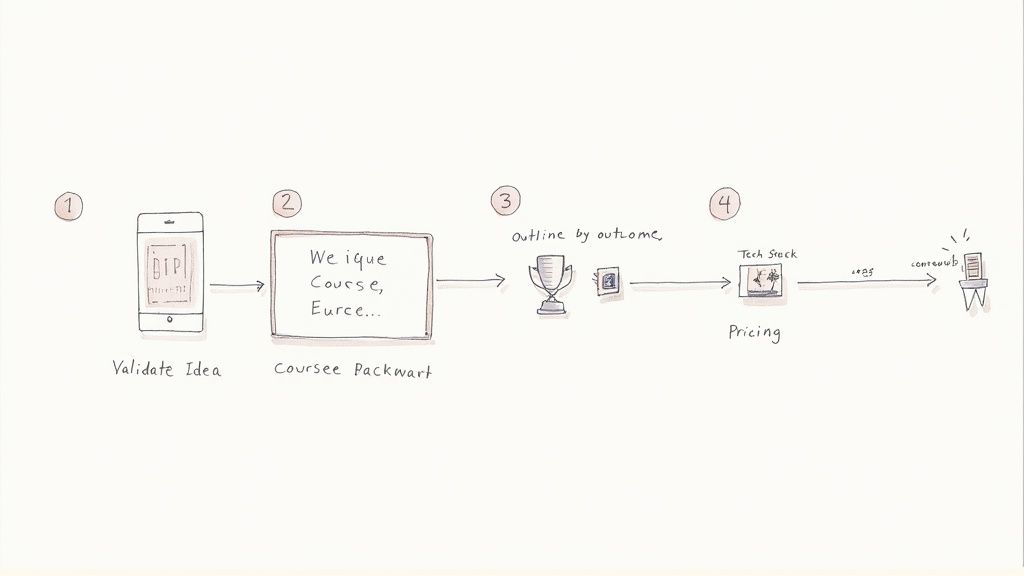
The journey begins with listening, not lecturing. Here are the practical steps to get you ready to launch something your followers will love.
Step 1: Validate Your Course Idea
Before you build anything, find out if people actually want what you're planning to teach. Guessing is the quickest path to a flop. Your followers are a real-time focus group.

Here are three simple tips to test the waters:
- Run Instagram Story Polls: Ask direct questions. "Would you rather learn how I edit my Reels (A) or how I write my captions (B)?" This gives you instant data on what resonates.
- Mine Your DMs and Comments: What questions do people ask you over and over? Those are huge clues pointing to the problems they'd happily pay you to solve.
- Post "Feeler" Content: Create a few posts or Reels around your potential course topic. If a post gets a ton of saves and shares, you've hit a nerve. That's a massive green light.
Step 2: Outline Your Curriculum
You’ve got a validated idea—awesome! Now, map out the journey. Start at the finish line: What is the big transformation you’re promising? If your course promises to help students "launch their first podcast," every module needs to be a clear step toward that goal.
Here's a quick, 3-step listicle for building your curriculum:
- Define the Final Project: What is the tangible thing they'll create? A fully launched podcast with three episodes live? A complete media kit? Make it concrete.
- Break It Into Weekly Milestones: What are the 4-6 major steps to get there? These become your weekly modules. For example: Week 1: "Finding Your Niche & Name," Week 2: "Gear & Recording Setup," etc.
- Flesh Out Each Milestone: What specific lessons and action items are needed for each week? These become your individual lesson plans (e.g., a tutorial on editing in Audacity, a template for writing show notes).
Your curriculum isn't just a collection of information; it's a strategic roadmap designed to guide a student from Point A to a specific, life-changing Point B.
Step 3: Choose Your Tech Stack
You don't need a complicated or expensive setup. The goal is to choose simple, reliable tools that make learning and connecting easy for your students.
Here’s a lean tech stack that gets the job done:
- Live Sessions: Zoom is the industry standard. It’s perfect for group calls, Q&As, and guest expert sessions.
- Community Hub: Slack or a private Facebook Group works perfectly. This gives your students a central place to connect 24/7.
- Content Hosting: A platform like Teachable or Kajabi is great for keeping your pre-recorded videos, worksheets, and resources organized.
Step 4: Price for Premium Value
It’s crucial to remember you are not just selling videos. You're selling a high-touch, guided transformation. Your price has to reflect the value of direct access to you, group accountability, and the community network. Don't be afraid to charge what it's worth.
As you start putting all the pieces together, exploring various course creation tools and strategies can give you a real edge. Think about how professional certificate programs do it—they often mix self-paced lessons with live webinars and hands-on case studies. This blended approach ensures students don't just learn theory but also gain practical, real-world skills, whether it's data storytelling or applying analytics ethically. You can learn a lot from how successful programs structure their cohorts to deliver truly measurable results.
Real-World Examples: Cohort Courses That Just Work
Theory is one thing, but seeing how other influencers are crushing it with cohort courses makes it all click. Here are a few practical examples.
The common thread isn't a massive follower count. It's a deep audience connection and a smart structure that helps people achieve a specific goal—together.
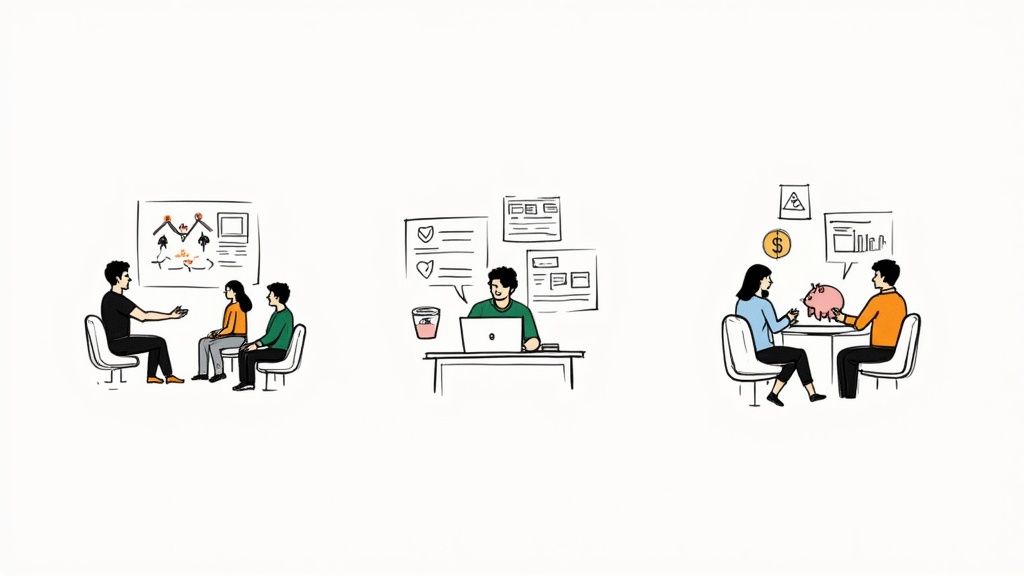
These examples show how the cohort model can elevate a great idea into a high-impact, premium offering.
The Fitness Influencer
Imagine a fitness creator with 10,000 engaged followers. Her DMs are flooded with workout questions. Instead of selling another PDF, she launches the "30-Day Bodyweight Challenge" cohort.
- The Promise: Build a solid workout habit and master key bodyweight exercises in one month.
- Cohort Structure: She caps the group at 50 people. The program includes weekly live Q&A sessions for form correction, daily accountability check-ins in a private Slack channel, and a "virtual graduation."
- Why It Works: The shared struggle and daily support create powerful peer pressure. Live access for form checks offers value a pre-recorded video could never touch, easily justifying a premium price.
The Freelance Writer
Now, think about a writer known for her amazing tips on finding clients. She packages her system into a 6-week "Client Magnet" cohort.
- The Promise: Go from zero portfolio pieces to landing your first paid writing gig.
- Cohort Structure: The course is built around weekly projects. Each week, students submit a new portfolio piece (a blog post, a case study) and get direct, actionable feedback during a live "Portfolio Review" call.
- Why It Works: This is project-based learning done right. The weekly deadlines and personalized feedback provide accountability. The community hub becomes a place where students swap job leads and editing tips, building a professional network.
By focusing on a tangible outcome ("land your first paid gig"), the creator attracts seriously motivated students who are ready to put in the effort. The cohort ensures they don't have to go it alone.
The Personal Finance Influencer
Finally, a personal finance creator who helps her audience get out of debt. She launches the "Debt-Free Journey," a 12-week accountability group.
- The Promise: Create a realistic budget you can stick to and pay off your first big debt.
- Cohort Structure: The course features weekly "Budgeting Workshops" on Zoom, guest speakers like credit experts, and members are paired up as accountability partners for daily check-ins.
- Why It Works: Talking about money can be emotional. The community provides a safe, judgment-free zone. The group accountability is the cornerstone, keeping people on track. This shared journey builds incredible trust and loyalty.
A Simple Marketing Plan to Sell Out Your Course
Having a brilliant course is just the start. The real challenge? Getting people to sign up. Luckily, as an influencer, you've already built an audience that trusts you. You don't need a complicated marketing funnel.
Marketing your cohort-based course should feel like an exclusive invitation, not a sales pitch. It’s about building hype and showing your followers you have the solution to a problem they're struggling with right now. The goal is to generate leads on social media that actually convert by focusing on real connection.
Your Five-Step Launch Playbook
Forget expensive ads. This playbook uses the platforms you’re already on. Here are five simple steps to get your course launched and filled.
- Build Hype with Behind-the-Scenes Content: Two weeks before enrollment, start dropping hints. Use Instagram Stories to share sneak peeks of your slides, run polls asking what people want to learn, and talk about why you created the course. This makes your audience feel involved.
- Host a Free, Value-Packed Webinar: A week before you launch, host a free live workshop. Teach something small but powerful from your course—give attendees a genuine "aha!" moment. Then, introduce your full course as the next step for those who want to go deeper.
- Create an Early-Bird Waitlist: Reward your most loyal followers with a waitlist. Let them know they'll get first dibs on a spot, maybe with a small bonus or discount. This creates urgency and helps you gauge demand. Check out this guide on how to presell your course in 48 hours for killer scripts.
- Showcase Powerful Social Proof: Have you helped people in the past? Now is the time to shout about their wins. Post screenshots of happy DMs, share quick video testimonials, or pull quotes that highlight their results. Nothing convinces people like seeing success from someone they relate to.
- Emphasize Scarcity and Urgency: A huge selling point of a cohort course is the limited enrollment. Be upfront about it. Use phrases like "Only 25 spots available" in your captions and stories. This isn't a gimmick; it’s a fact that reflects the personal attention you're promising.
Why Cohort Courses Are the Future for Creators
As a creator, you’ve probably felt it: the ground is shifting. The old playbook of just posting content feels less effective. There's a more powerful, sustainable, and profitable way to build a business.
This isn't just a trend. It's an evolution from sharing content to guiding a community toward a transformation. And cohort-based courses put creators like you in the perfect position to lead the way.
From Broadcast to Community
Look at your current relationship with your audience. You post, they like, they comment… but how deep does that connection go? A cohort course flips this dynamic. It moves from a one-way broadcast to a vibrant community where you're the central guide.
This is how you build a real legacy. You stop being a content creator fighting for attention and become a community leader who delivers life-changing results.
That deep connection fosters a level of loyalty that a simple "like" could never touch. It's how you turn your audience into a true business asset.
The Market is Screaming for This
The numbers tell a compelling story. The market for cohort-based learning is set to grow at 16.2% annually, projected to be a $15.2 billion industry by 2033.
This explosive growth is a direct response to a massive demand for learning experiences that are more effective, engaging, and built around a real community. You can read more about the CBC market's future to grasp the full scale of this opportunity.
3 Tips to Future-Proof Your Creator Business
Ready to get ahead of the curve? Here's how to position yourself at the forefront of this movement:
- Tip 1: Listen to the Echoes. What questions do people ask over and over in your DMs and comments? Those are the seeds of your future course topics.
- Tip 2: Run a Pilot Program. Don't try to create the "perfect" course right away. Start small. Test your idea with an intimate group of 15-20 of your most dedicated followers. Get their feedback and refine from there.
- Tip 3: Sell the Destination, Not the Vehicle. People aren't buying a course; they're buying a new and improved version of themselves. Frame your offer around the specific outcome they'll achieve. It's all about the transformation, not just the information.
Ultimately, cohort-based courses offer a clear path to building a sustainable business that deepens your audience relationships and makes a real, lasting impact. It’s your chance to step beyond the endless content treadmill and build something that truly matters.
Ready to turn your audience into a predictable income stream? Rupa analyzes your social media to tell you exactly what digital product to launch—from cohort-based challenges to PDF guides—and gives you the landing page, emails, and checkout to start selling in hours, not weeks. Discover what your audience wants to buy at Rupa.pro.