

Last Updated on 4 days ago by Grisha E.
Why Picking the Perfect Course Platform Is a Game-Changer
As a social media influencer with 5–10K followers, you know your audience craves value—but turning engagement into revenue often feels like guesswork. Picking the right site can streamline setup, boost student satisfaction, and accelerate your earnings without endless trial and error.
In this listicle, we’ve hand-picked the 12 best platforms for selling online courses and evaluated each with:
- Screenshots and direct links for quick setup
- Real usage scenarios and influencer case studies from fitness coaches, designers, and niche experts
- Pricing tiers matched to micro-influencers or full-time creators
- Honest pros and cons to highlight limitations
You’ll learn which tools excel at:
- Automating marketing funnels
- Customizing course pages without code
- Integrating with email and community apps
- Scaling from mini-courses to full curriculum
Who should dive in:
- Social media influencers seeking to monetize content
- Content creators wanting data-driven course ideas
- Niche experts (designers, mentors, coaches) launching digital offers
- Fitness, nutrition, and wellness pros ready to sell mini-courses
- Entrepreneurs and small business owners automating marketing
What you’ll gain:
- A side-by-side comparison of Teachable, Kajabi, Thinkific, and more
- Practical examples of bundle pricing, drip content, and affiliate setups
- Clear guidance on feature trade-offs (custom domains vs. transaction fees)
Skip the guesswork—this resource cuts straight to actionable insights. Whether you’re launching your first workshop or scaling to six figures, these platforms solve the same core problem: turning your expertise into a reliable revenue stream. Ready to find the best platform for your next online course? Scroll down to the detailed breakdown.
1. Rupa
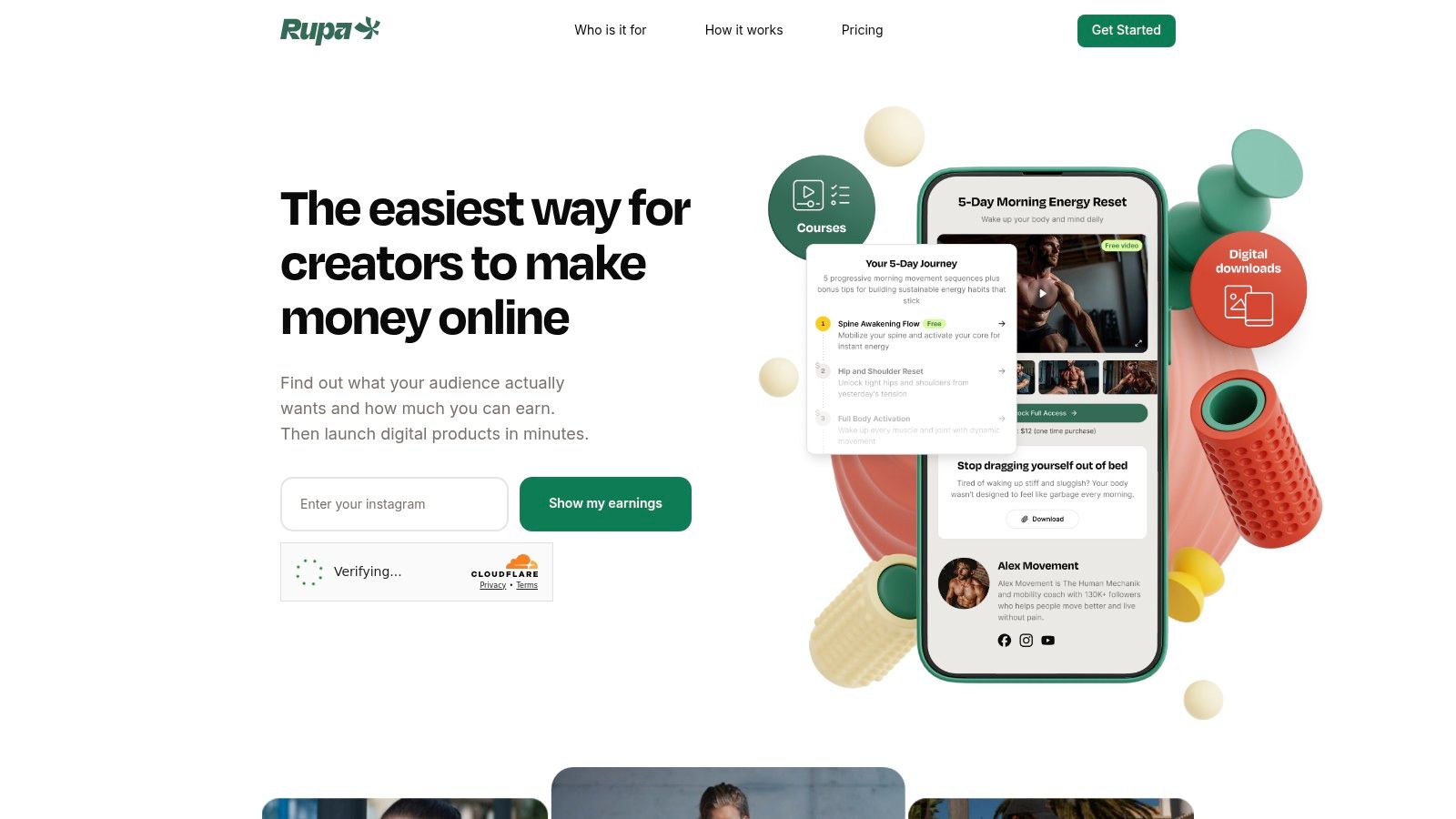
Rupa is an AI-powered, all-in-one monetization platform built for creators with 5–10k followers. It scans your public posts and engagement in 60 seconds to generate data-backed product ideas, realistic earnings forecasts, and full launch assets. Whether you’re a fitness coach, design mentor, or creative entrepreneur, Rupa streamlines setup so you can go from concept to live funnel in hours instead of weeks.
Key Features
- AI Audience Scan
Identifies what your followers want by analyzing comments, likes, and shares - Revenue Calculator
Projects pricing, conversion rates, and earnings for downloads, challenges, or mini-courses - Ready-to-Use Assets
Generates product outlines, landing pages, checkout flows, email/DM funnels, and promotional hooks - Community Integration
Connects with WhatsApp, Telegram, or Discord to build repeatable sales channels - Transparent Pricing
One plan at $29/month with zero transaction fees and a 7-day free trial
Feature Advantage Table
| Feature | Advantage |
|---|---|
| AI-driven Analysis | Data-backed product ideas in seconds |
| Automated Funnels | Launch digital offerings in hours |
| Lead-Magnet Creation | Attract and nurture prospects automatically |
| Single Pricing Plan | Predictable cost with no hidden fees |
Use Case Scenarios
- A niche designer uses Rupa’s insights to launch a 5-day mini-course at the optimal price
- A wellness coach automates follow-up sequences in Telegram after a lead magnet offer
- A micro-influencer tests multiple product outlines with built-in A/B feedback loops
Pricing & Access
- Plan: $29/month, no transaction fees
- Trial: 7 days, no credit card required
- Access: Web-based dashboard, mobile-responsive interface
Pros and Cons
Pros
- AI-driven insights yield realistic forecasts
- End-to-end assets cut setup time dramatically
- Tailored for smaller but engaged followings
- Simple, transparent subscription
Cons
- Core content creation still rests with you
- Earnings depend on niche and audience quality
When evaluating the best platforms for selling online courses, Rupa stands out for micro-influencers who need speed, data-driven guidance, and fully automated funnels. Learn more about digital product creation on rupa.pro.
2. Teachable
Teachable stands out as one of the best platforms for selling online courses with an emphasis on fast launch, integrated payments, and comprehensive tax handling. Its intuitive interface suits social media influencers and creative professionals aiming to monetize audiences without tech overhead.
Features at a Glance
- Courses & Coaching modules with quizzes, certificates, drip schedules
- Digital Downloads & Bundles (one-time, subscriptions, payment plans)
- Integrated Payments and global tax handling, cart recovery, affiliate program
- Mobile Apps for iOS and Android students
- Support via email, live chat, and knowledge base
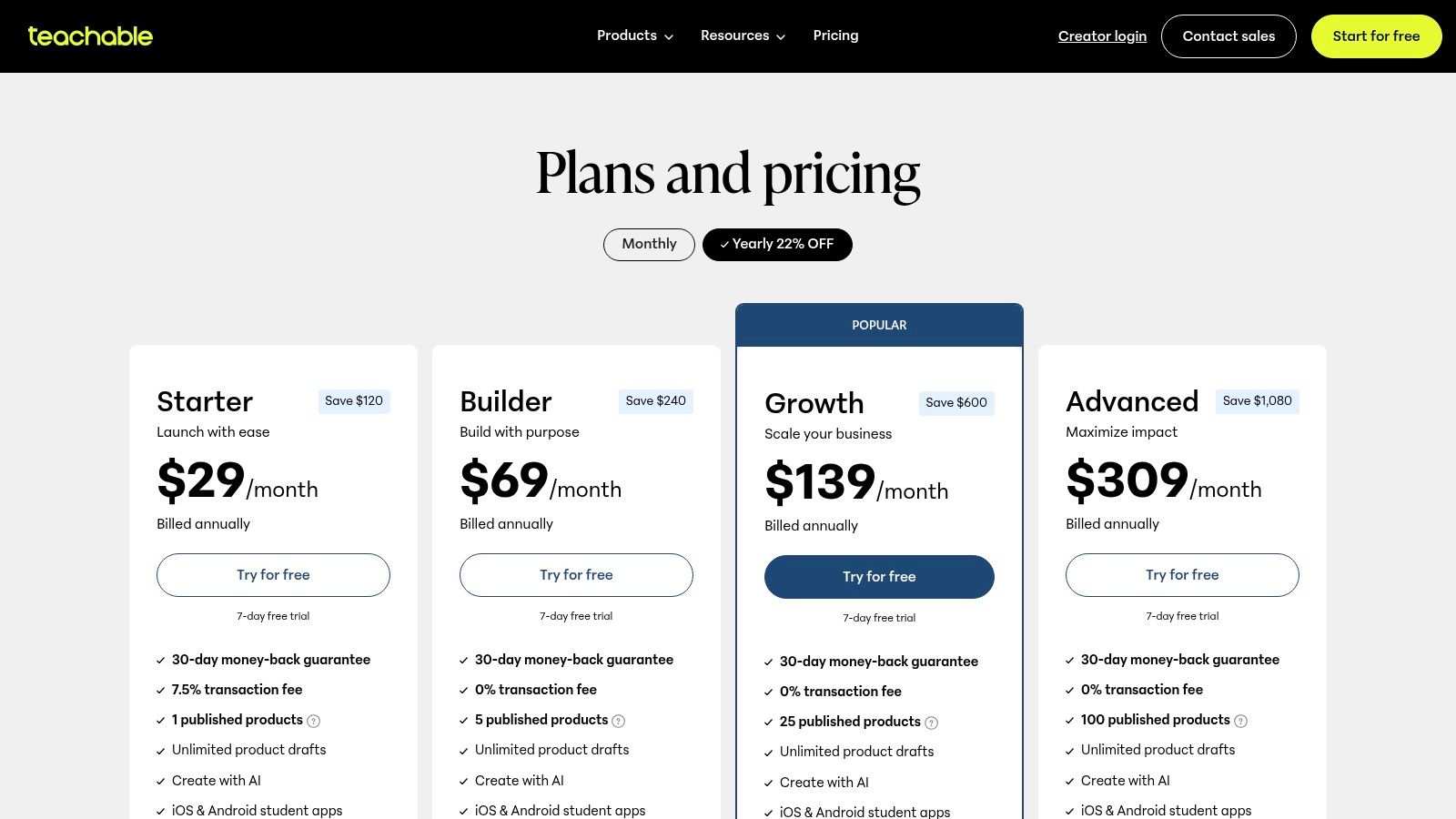
Pricing Tiers & Fees
Teachable refreshed plans in mid-2025 to simplify costs and reduce fees on higher tiers.
| Plan | Transaction Fee | Course Caps |
|---|---|---|
| Starter | 7.5% | 10 |
| Basic | 5% | 50 |
| Pro | 0% | Unlimited |
Explore detailed rates at https://www.teachable.com/pricing
Practical Tips for Influencers
- Use prebuilt templates to shorten setup to under one hour (e.g., beauty influencer @GlamByMia launched her skincare workshop in 2 hours)
- Enable cart recovery emails to recapture 10–15% abandoned checkouts (e.g., fitness coach Nate regained $1.2k in 3 days)
- Launch smaller mini-courses for real-time audience feedback (e.g., travel vlogger Lily tested micro-guides before full course)
- Recruit affiliates to tap into niche communities (e.g., cooking influencer @SpiceGuru boosted signups by 20% through affiliate partners)
Pros & Cons
Pros:
- Fast setup with built-in checkout, taxes, memberships
- Scales easily from single course to full catalog
Cons:
- Starter plan’s 7.5% fee may cut into early profits
- Advanced automations and higher product caps require Pro
Teachable’s combination of speed, support, and scalable pricing makes it a go-to choice for creators aiming to launch quickly and grow steadily on one of the best platforms for selling online courses.
3. Thinkific
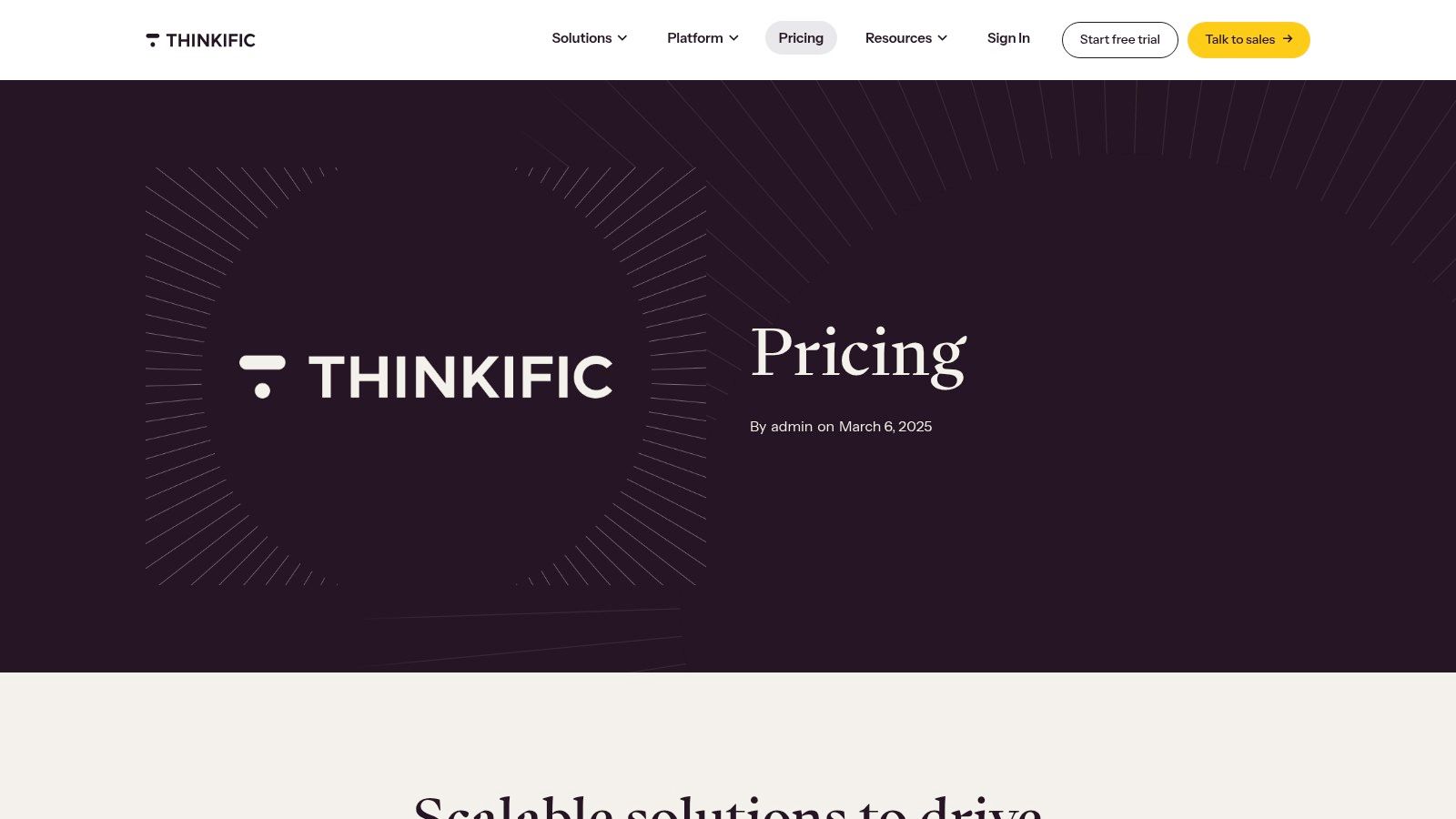
Thinkific is a mature course platform with strong learning features (certificates, assignments, compliance) and Thinkific Payments for US sellers. It balances educational tools with commerce features like subscriptions, order bumps and bundles, plus APIs and webhooks on higher plans for custom workflows. Its intuitive builder and embedded communities suit coaches, creative pros and influencers aiming to deliver structured learning paths. Learn more about Thinkific on rupa.pro.
Features at a Glance
- Unlimited courses, drip schedules and live events
- Built-in certificates, assignments and compliance tracking
- Subscriptions, memberships, coupons, order bumps and upsells
- Bundles and digital downloads for tiered offerings
- Thinkific Payments (0% fee) or 3% fee with external gateways
- APIs and webhooks on Pro plan for integrations
Pricing Tiers & Fees
| Plan | Transaction Fee | API & Webhooks |
|---|---|---|
| Free | 0% via Thinkific Payments, 3% external | No |
| Basic | 0% via Thinkific Payments, 3% external | No |
| Pro | 0% | Yes |
Explore detailed rates at https://www.thinkific.com/get-started/pricing/
Practical Tips for Influencers
- Use assignments to collect learner submissions and build testimonials (e.g., design influencer Alex showcased student projects to attract more sign-ups)
- Offer mini-courses with order bumps to boost average order value (e.g., health coach Sara added a nutrition e-book order bump to increase revenue 25%)
- Activate communities to foster peer support and improve retention (e.g., photography tutor @ShutterPro built a private group that raised completion rates by 40%)
- Leverage webhooks on Pro to automate email sequences and lead magnets (e.g., business coach Tom set up auto DM triggers to deliver bonus worksheets)
Pros & Cons
Pros:
- Comprehensive assessment and compliance tools
- Zero fee with Thinkific Payments and strong commerce toolkit
- APIs and webhooks enable custom integrations
Cons:
- 3% fee when using third-party gateways
- Advanced analytics and integrations require Pro
Thinkific’s depth of educational features and scalable commerce options make it a standout on the list of best platforms for selling online courses.
4. Kajabi
Kajabi is an all-in-one “knowledge commerce” suite that brings courses, communities, email, automations and payments into a single dashboard. It stands out among the best platforms for selling online courses by replacing a stack of fragmented tools with a unified marketing and delivery system.
Features at a Glance
- Courses & Coaching modules with drip content, assessments and certificates
- Communities & Podcasts hosted under your own brand with engagement tools
- Email/CRM & Automations for segmented broadcasts, funnels and behavior triggers
- Affiliate Support & Webhooks/API on Growth and Pro tiers for advanced integrations
- Payments via Kajabi Payments or third-party processors (extra fees apply)
Pricing Tiers & Fees
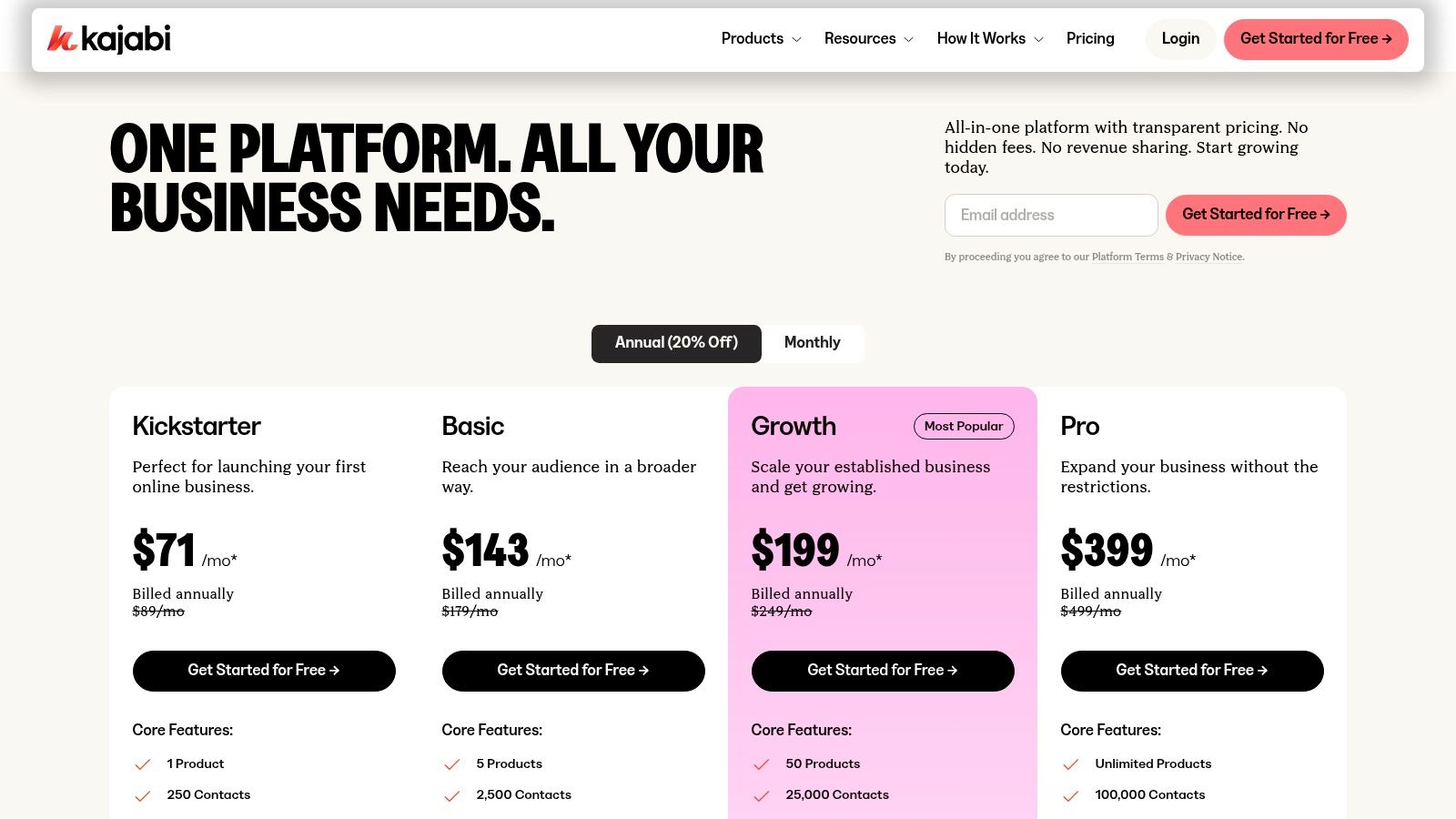
Kajabi’s tiered pricing reflects its all-inclusive feature set and mature ecosystem.
| Plan | Monthly Price | Transaction Fee |
|---|---|---|
| Basic | $149 | 1.0% (third-party) |
| Growth | $199 | 0.5% (third-party) |
| Pro | $399 | 0.0% (Kajabi Payments) |
See full details at https://kajabi.com/pricing
Practical Tips for Influencers
- Use prebuilt funnels and email automations to launch with minimal setup (e.g., marketing guru Mia launched her workshop in under a day)
- Host a small live cohort in your Kajabi Community to gather feedback (e.g., yoga influencer @ZenFlow ran a beta and refined content from comments)
- Leverage affiliate partnerships to amplify reach in niche networks (e.g., finance influencer CashFlowHarry grew his list by 30%)
- Split-test landing pages with built-in templates for higher conversion (e.g., design tutor @ArtistryPro increased clicks by 15%)
Pros & Cons
Pros:
- Replaces multiple apps with one dashboard
- Strong automations, templates and support resources
Cons:
- Higher base price than point solutions
- Extra fees for third-party payment gateways
Kajabi’s deep integration of marketing and course delivery makes it a top contender on the best platforms for selling online courses list.
5. Podia
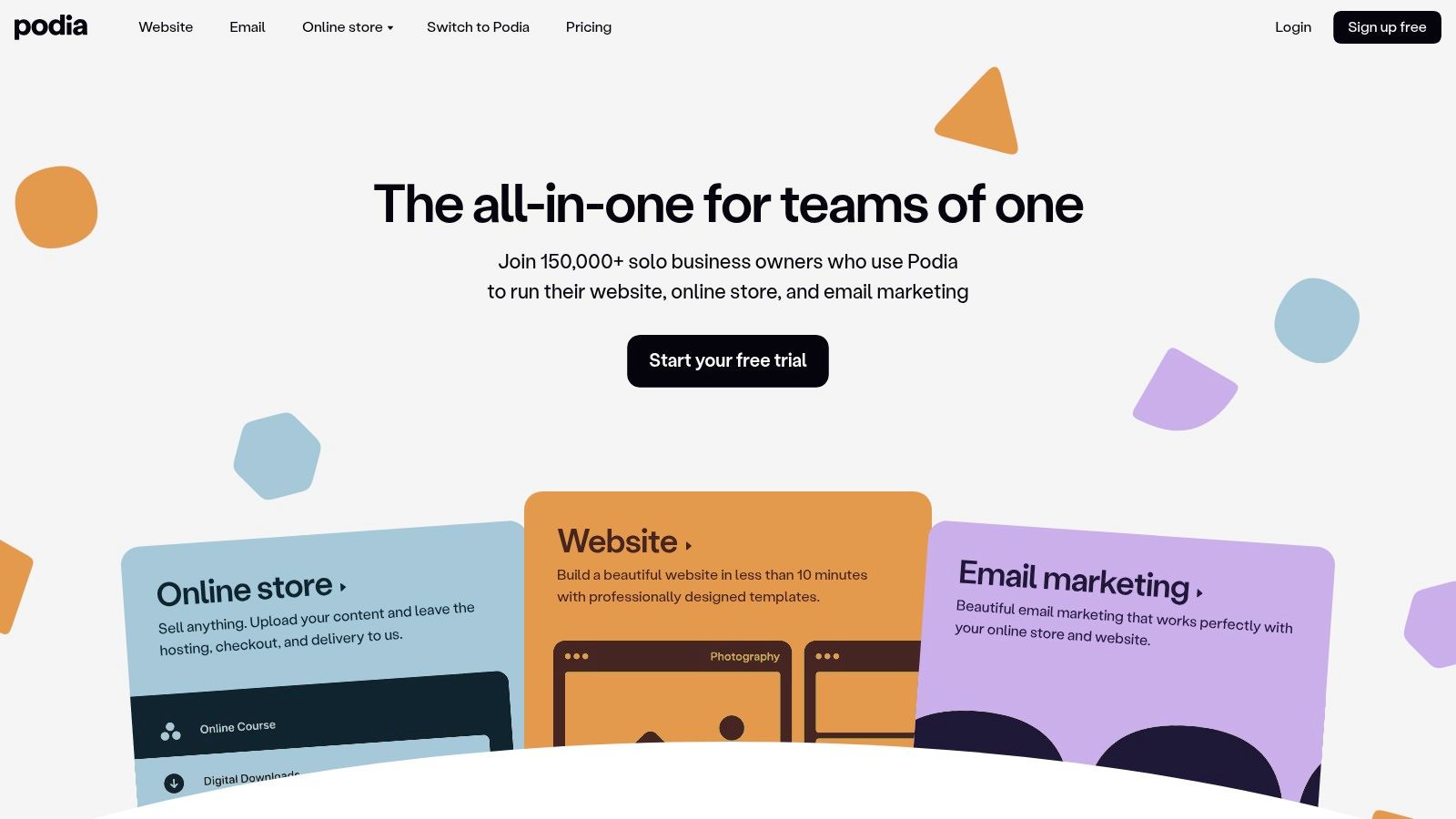
Podia is a creator-friendly storefront for courses, downloads, webinars, coaching, and basic email marketing, offering solo creators a simple setup and affordable way to start selling online courses in the US. Its low-tech barrier makes it ideal for social media influencers and niche experts who value speed and clarity over complex LMS features.
Features at a Glance
- One-time payments, subscriptions, payment plans via Stripe and PayPal
- Built-in site and landing pages, full storefront, preselling, waitlists
- Basic email marketing, audience tagging, automated broadcasts
- Affiliate program support on higher tiers for referral growth
- Webinars and coaching tools to bundle live and evergreen content
Pricing Tiers & Fees
| Plan | Monthly Price | Platform Fee | Key Limits |
|---|---|---|---|
| Mover | $39 | 5% | Unlimited courses, basic email |
| Shaker | $79 | 0% | Advanced email, affiliate |
Explore detailed rates at https://www.podia.com/pricing
Practical Tips for Influencers
- Use preselling and waitlists to validate course ideas before launch (e.g., wellness coach @BalanceWithBea got 150 waitlist signups in 48 hours)
- Leverage built-in emails to nurture leads with free mini-lessons (e.g., language teacher Lin delivered bite-size lessons via email to 300 subscribers)
- Offer subscription bundles for recurring revenue streams (e.g., fitness influencer FitWithJake created a monthly meal plan subscription)
- Recruit affiliates to expand reach into niche communities (e.g., craft influencer @DIYDan recruited 5 partner bloggers)
Pros & Cons
Pros:
- Fast, low-friction setup tailored to solo creators
- Straightforward pricing with 0% fees on higher tier
Cons:
- Basic email limits on Mover plan
- Limited deep LMS features compared with enterprise tools
Learn more about Podia on rupa.pro
6. LearnWorlds
LearnWorlds is a course-first platform with highly interactive video, SCORM support, certificates and deep analytics. It suits creators and training businesses that need richer learning features and enterprise lean capabilities to scale online teaching.

Features at a Glance
- Interactive video quizzes, transcripts, subtitles and automated translation
- SCORM and HTML5 support for corporate and technical courses
- Customizable certificates and detailed student analytics dashboard
- Integrations with Zoom, Google Meet, Webex and Microsoft Teams
- APIs and single sign on on higher tiers for enterprise clients
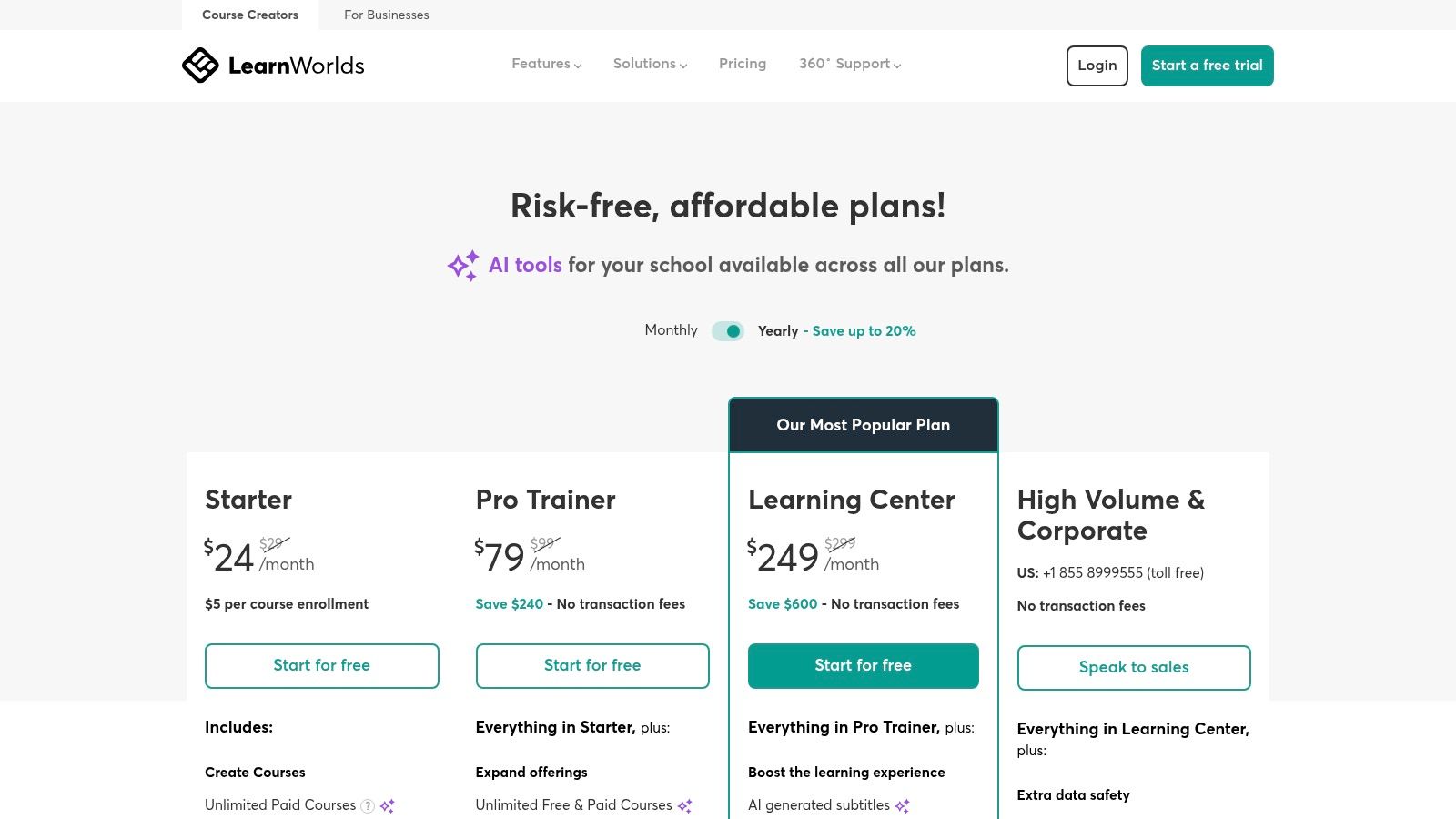
Pricing Tiers & Fees
| Plan | Transaction Fee | Key Limits |
|---|---|---|
| Starter | $5 per course enrollment | Free courses capped |
| Learning Center | 0% fee on paid courses | Unlimited courses |
| Business & Growth | 0% fee, API access | Advanced SSO |
Explore full pricing at https://www.learnworlds.com/pricing
Practical Tips for Influencers
- Use interactive video quizzes to boost engagement by 30 percent (e.g., coding tutor CodeWithAmy saw completion jump after adding quizzes)
- Offer translated subtitles to tap non-English speaking followers (e.g., Spanish-language coach @ViajeConAna grew enrollments by 25%)
- Leverage analytics to test mini course topics before full launch (e.g., music instructor @BeatMaster used data to pick best-performing modules)
- Integrate live Zoom workshops to build community and upsell (e.g., art influencer @BrushStrokes held a 2-hour live demo)
Pros & Cons
Pros:
- Strong pedagogy and enterprise lean features
- No LearnWorlds fees on Learning Center and above
Cons:
- Starter plan adds $5 per enrollment
- Higher monthly cost than some creator tools
LearnWorlds stands out among the best platforms for selling online courses by combining rich learner features with enterprise ready integrations at scale.
7. Udemy
Udemy is the largest open marketplace for online courses, offering instructors immediate access to a massive built-in audience and global discoverability. Instructors publish for free and earn via a clear revenue-share model, making it ideal for creators focused on reach rather than owning the full customer list.
Features at a Glance
- Built-in Marketplace with millions of active learners and a deals engine
- Global Pricing Tiers to adjust prices by region for maximum enrollment
- Udemy Business option for corporate learners, paid through a consumption pool
- Promotion Tools including referral links, coupon codes, and timed discounts
- Instructor Dashboard with real-time analytics on enrollments, completion, and reviews
Pricing Tiers & Fees
Publishing on Udemy is free, but revenue is shared based on sale origin:
| Sale Type | Instructor Share | Notes |
|---|---|---|
| Marketplace Sale | 37% – 50% | Udemy-driven traffic, frequent sitewide deals |
| Instructor Promotion | 97% | Sales via your coupon or referral link |
| Udemy Business | Variable by pool | Payouts based on corporate usage metrics |
Explore detailed policies at https://www.udemy.com/teaching/
Practical Tips for Influencers
- Optimize titles, subtitles, and descriptions for Udemy’s search algorithm (e.g., Excel ninja taught pivot tables with keyword-rich titles)
- Use timed coupons to boost early enrollments and influence site ranking (e.g., photographer @LensMagic offered 20% off launch week)
- Break courses into short lectures to improve completion and review rates (e.g., language tutor @LinguaLift split lessons into 5-minute bites)
- Engage in Q&A and announcements to encourage student interaction (e.g., marketing coach @SocialSavvy doubled engagement by hosting weekly AMA)
Pros & Cons
Pros:
- Zero monthly hosting fee and instant access to a global audience
- Structured marketplace with built-in marketing channels
Cons:
- Standard revenue share may leave instructors with as low as 37%
- Limited pricing control due to Udemy’s frequent discount programs
Udemy’s unparalleled reach and straightforward setup make it one of the best platforms for selling online courses, especially when expanding audience size is your top priority.
8. Skillshare
Skillshare stands out as a subscription-based platform where members get unlimited access while teachers earn from a monthly “Teacher Fund” based on minutes watched and engagement bonuses. It’s ideal for creative professionals building portfolios and influencers seeking predictable monthly payouts with minimal setup.
Features at a Glance
- Teacher Fund Earnings calculated on total watch minutes and engagement
- Monthly Payouts processed reliably via Tipalti
- 1-on-1 Sessions & Digital Products option (30% platform fee)
- Built-in Audience of millions with no hosting fees
- Class Projects & Feedback tools to boost interaction
Pricing Tiers & Fees
Skillshare uses a unified revenue model for class creators plus an optional direct-sales channel.
| Plan | Model | Fees |
|---|---|---|
| Subscription Classes | Share of monthly Teacher Fund | No hosting fees |
| 1-on-1 Sessions & Products | Direct sales within platform | 30% platform fee |
Explore teaching on Skillshare at https://www.skillshare.com/teach/
Practical Tips for Influencers
- Break courses into 5–10 minute lessons to drive up total minutes watched (e.g., calligraphy artist @InkFlow raised minutes watched by 50%)
- Assign simple class projects to encourage shares and comments (e.g., cooking influencer @SweetBites prompted users to post their creations)
- Offer digital templates or worksheets as paid extras (e.g., planner guru @OrganizeWithOlivia sold design templates on the side)
- Cross-promote your Skillshare classes in your newsletter and social stories (e.g., content creator @TravelTales added class links to IG Story highlights)
Pros & Cons
Pros:
- Predictable, monthly revenue pool payouts
- Instant exposure to a large, subscription-based audience
Cons:
- Earnings tied to a pooled watch-time model and platform rules
- Less control over individual course pricing compared with standalone storefronts
Skillshare’s combination of low barriers, consistent payouts, and an engaged creative community makes it one of the best platforms for selling online courses.
9. Gumroad
Gumroad offers a lightweight storefront for selling digital courses, memberships, and downloads with an ultra-quick launch. As of January 2025 Gumroad acts as Merchant of Record and handles global sales taxes and remittance, making it ideal for creators focused on cross-border sales without compliance headaches.
Features at a Glance
- Digital Courses & Downloads: Upload video, PDF, audio with one-click checkout
- Memberships: Recurring subscriptions, community posts, gated content
- Merchant of Record: Handles VAT, GST, and tax remittance worldwide
- Discover Marketplace: Optional listing to drive incremental traffic (higher fee)
- Basic Analytics: Track sales trends, conversion rates, customer profiles
Pricing Tiers & Fees
| Plan | Transaction Fee |
|---|---|
| Pay-as-you-go | 10% + $0.50 per sale |
| Discover Marketplace | 30% on marketplace sales |
Explore detailed rates at https://gumroad.com/pricing
Practical Tips for Influencers
- Pre-sell mini-courses to validate ideas before full rollout (e.g., digital artist @SketchySam sold 50 spots in a week)
- Bundle templates or playbooks with courses for higher cart value (e.g., resume expert @CareerCraft added design templates to her course)
- Use limited-time coupons to create urgency and boost early sales (e.g., marketing coach @AdWizard offered 10% off for 24 hours)
- List selectively on Discover to offset fees without losing margin (e.g., podcaster @VoiceWorks drove incremental sales via marketplace)
Pros & Cons
Pros:
- No monthly subscription; launch a storefront in minutes
- Merchant of Record simplifies international tax compliance
Cons:
- 10% + $0.50 fee can erode revenue at higher volumes
- Lacks advanced LMS features like quizzes and drip schedules
Gumroad’s zero-setup friction, fee-based model, and built-in tax automation make it one of the best platforms for selling online courses—especially for influencers and niche experts launching mini-courses, templates, or subscription offerings.
10. Payhip
Payhip stands out as a budget-friendly course storefront with full features and transparent tiers including a free plan. It supports video, text, quizzes, drip content and certificates while providing customizable store pages for a polished brand presence. Instant payouts via Stripe or PayPal and built-in VAT handling make it one of the best platforms for selling online courses without high upfront costs.
Features at a Glance
- Courses with video, text, quizzes, drip schedules and certificates
- Store builder with customizable storefront pages
- Coupons, payment plans, subscriptions and VAT assistance
- Stripe and PayPal integration with instant payouts
- Transparent plan tiers including a free option
Pricing Tiers & Fees
Payhip offers a free plan and tiered transaction fees so creators can scale as they grow.
| Plan | Transaction Fee | Monthly Cost |
|---|---|---|
| Free | 5% | $0 |
| Plus | 2% | $29 |
| Pro | 0% | $99 |
Explore detailed rates at https://payhip.com/pricing
Practical Tips for Influencers
- Launch mini-courses with drip schedules to gauge audience interest (e.g., yoga teacher @FlowWithMe tested 3-day flows before full programs)
- Use coupons to experiment with price points and boost conversions (e.g., health coach @WellnessWithWes tried 3 price tiers)
- Brand your store page with logos and custom banners for trust (e.g., designer @PixelPerfect created a cohesive brand look)
- Upgrade to Plus or Pro as revenue grows to eliminate fees (e.g., entrepreneur @SideHustler switched to Pro after consistent monthly sales)
Pros & Cons
Pros:
- Very low cost of entry, full feature set on Free plan
- Simple setup and multi-product support for diverse offerings
Cons:
- Transaction fees on Free and Plus plans reduce margins
- Limited advanced automations compared to all-in-one suites
Payhip’s transparent pricing and easy storefront customization make it a top choice among the best platforms for selling online courses, especially for budget-conscious creators.
11. Shopify
Shopify is a top e-commerce platform that scales from solo creators to enterprise brands. By adding the official free Digital Downloads app or third-party course/LMS integrations, you can sell online courses alongside merchandise under one brand. Its robust checkout, multichannel selling, and analytics make it a strong pick in the best platforms for selling online courses list.
Features at a Glance
- Proven checkout and global payment options with optimized cart conversion rates
- Official free Digital Downloads app for file delivery; many paid course apps support drip schedules and quizzes
- Extensive app ecosystem for marketing, analytics, and memberships
- Multichannel sales on web, social media shops, and POS
Pricing Tiers & Fees
| Plan | Monthly Fee | Transaction Fee | App Costs |
|---|---|---|---|
| Basic Shopify | $29 | 2.9% + 30¢ | Free digital app, course apps from $9/mo |
| Shopify | $79 | 2.6% + 30¢ | Course apps $19+/mo |
| Advanced Shopify | $299 | 2.4% + 30¢ | Paid apps vary |
Explore detailed rates at https://www.shopify.com/pricing
Practical Tips for Influencers
- Start with the free Digital Downloads app to bundle video and PDF lessons (e.g., nutrition coach @EatSmart used basic app for her meal plans)
- Add an LMS extension like Thinkific or Learnify for drip content and certificates (e.g., personal trainer @FitFusion integrated Thinkific seamlessly)
- Enable abandoned cart recovery to recapture up to 12% of lost sales (e.g., style influencer @FashionForward regained 8% abandoned carts)
- Use Shopify’s Instagram Shopping integration to link course products in posts (e.g., art tutor @DigitalBrush tagged courses in stories)
Pros & Cons
Pros:
- Enterprise-grade commerce foundation allowing physical and digital product bundles
- Robust checkout, multichannel support, and detailed analytics
Cons:
- Requires third-party apps for a full LMS experience
- Total cost can rise with paid apps and external payment processor fees
Shopify’s commerce power and flexible app ecosystem earn it a spot among the best platforms for selling online courses, especially for creators who want a unified store for courses and products.
12. Systeme.io
Systeme.io is an all-in-one funnel, email and course platform with a generous free plan, low paid tiers and no platform transaction fees. It’s built for solopreneurs who want funnels, checkout and course delivery without stitching multiple tools together. Learn more about Systeme.io.
Features at a Glance
- Courses & Memberships with drip scheduling and certificates
- Sales Funnels templates for webinars, product launches and mini-courses
- Email Marketing with automations, tagging and broadcast campaigns
- Affiliate Program builder to recruit promoters and track commissions
- No Platform Fees beyond standard payment processor charges
Pricing Tiers & Fees
| Plan | Price/Month | Contacts & Funnels | Automation Rules | Webinars |
|---|---|---|---|---|
| Free | $0 | 2,000 contacts, 3 funnels | 1 rule | No |
| Startup | $27 | Unlimited | 10 rules | No |
| Webinar | $47 | Unlimited | Unlimited | Yes |
Visit https://systeme.io/pricing-gg for current rates.
Practical Tips for Influencers
- Use prebuilt funnel templates to convert followers into course buyers in under one hour (e.g., entrepreneur @LaunchMate created a funnel live on tutorial)
- Leverage the affiliate system to reward micro-influencers in your niche (e.g., foodie @RecipeRebel boosted referrals by 15%)
- Set up automation rules that drip modules when students complete actions (e.g., language tutor @SpeakEasy triggered next module on quiz completion)
- Start on the free plan to validate your course idea before upgrading (e.g., consultant @GrowthGuru used free plan to test three concepts)
Pros & Cons
Pros:
- Very competitive pricing compared with many all-in-one peers
- Includes funnels and checkout plus course delivery in one platform
Cons:
- Fewer deep LMS-specific features compared with specialist course platforms
- Promotional pages list differing prices – verify current pricing on the main page
Top 12 Online Course Platforms Comparison
| Platform | Core offerings | Ease & speed & quality (★) | Price / Value (💰) | Target audience (👥) | Unique selling point (✨) |
|---|---|---|---|---|---|
| Rupa 🏆 | AI audience scan, product blueprints, auto-generated funnels & lead magnets | Launch in hours; data-backed ideas ★★★★★ | $29/mo, 0% txn fee, 7-day trial 💰 | Micro-creators (5–10k followers) 👥 | AI demand scan + done-for-you launch assets ✨ |
| Teachable | Course storefront, memberships, mobile apps, payments | Fast templates & integrated checkout ★★★★ | Tiered; Starter adds 7.5% platform fee, higher tiers 0% 💰 | Creators wanting simple course stores 👥 | Integrated payments, apps & cart recovery ✨ |
| Thinkific | LMS features (certificates, assessments), subscriptions | Robust learning tools; more setup ★★★★ | Tiered; avoid third-party fees with Thinkific Payments 💰 | Educators & growing course businesses 👥 | Strong assessment tools & API/webhooks ✨ |
| Kajabi | All-in-one: courses, email/CRM, pages, automations | Highly integrated, steeper price/learning curve ★★★★ | Higher base price; all-in-one value 💰 | Creators who want single-dashboard business 👥 | Powerful automations + marketing templates ✨ |
| Podia | Storefront for courses, downloads, webinars, simple email | Very fast, low friction to launch ★★★★ | Affordable; Mover plan 5% fee, 0% on top tier 💰 | Solo creators & low-tech sellers 👥 | Simple storefront, presells & waitlists ✨ |
| LearnWorlds | Interactive video, SCORM, certificates, analytics | Feature-rich but more setup ★★★ | Higher cost; no txn fees on top plans 💰 | Training businesses & enterprise-leaning creators 👥 | Interactive video + deep analytics ✨ |
| Udemy | Marketplace publishing, global discoverability | Publish quickly; strong reach but less control ★★★ | No monthly fee; revenue share (marketplace split) 💰 | Instructors seeking reach & discoverability 👥 | Massive built-in audience & deals engine ✨ |
| Skillshare | Subscription model; teacher fund based on minutes watched | Easy to publish; earnings via watch-time ★★★ | No hosting fee; payouts from teacher fund 💰 | Creative teachers & portfolio builders 👥 | Predictable monthly payouts tied to engagement ✨ |
| Gumroad | Lightweight storefront for downloads, memberships | Very quick to sell and iterate ★★★★ | No monthly; fees ~10% + $0.50 (Discover higher) 💰 | Indie sellers of digital products & zines 👥 | Merchant of Record + global tax handling ✨ |
| Payhip | Budget-friendly storefront, courses, coupons, VAT help | Low-cost, quick setup ★★★★ | Free/Plus plans with txn fees (5%/2%) 💰 | Cost-conscious creators & beginners 👥 | Transparent tiers, easy store pages ✨ |
| Shopify | Full ecommerce + digital apps, checkout & analytics | Flexible & scalable; needs apps for courses ★★★ | Monthly plans + app/processor fees; scalable 💰 | Creators selling merch + digital under one brand 👥 | Enterprise commerce + multichannel reach ✨ |
| Systeme.io | Funnels, courses, email, automations (generous free plan) | All-in-one funnels + courses; fast setup ★★★★ | Generous free/low tiers; no platform fees 💰 | Solopreneurs needing funnels + courses 👥 | Funnels + course delivery in one platform ✨ |
Turning These Insights into Your Next Launch
You’ve reviewed real use cases, pricing breakdowns, and honest pros and cons for each of the 12 best platforms for selling online courses. Now it is time to hone in on the factors that matter most for your unique audience and course content. Use the insights below to guide a confident launch that turns your expertise into steady revenue.
Key Insights at a Glance
- Platform Strengths
- Rupa: Rapid funnel builder with integrated payments
- Teachable & Thinkific: Robust course creation and community forums
- Kajabi & Systeme.io: All-in-one marketing automation
- Pricing vs Value
- Udemy & Skillshare: Low barrier to entry but higher revenue share
- Podia, Gumroad & Payhip: Simple fees, fast setup
- Shopify: E-commerce power with course app add-ons
- Ideal Creator Profiles
- Niche experts and coaches: LearnWorlds for advanced interactivity
- Micro-influencers: Podia or Gumroad for minimal setup
- Established brands: Shopify or Kajabi for full customization
Most Important Takeaways
- Community Size Matters: Platforms like Skillshare and Udemy offer exposure, but self-hosted options give you control over pricing and data.
- Automation vs Hands-On: If you want email sequences built in, choose Kajabi or Systeme.io. If you prefer simple checkout links, Gumroad or Payhip will do.
- Budget Flexibility: Free trials let you test features risk-free. Allocate at least two weeks per trial to build sample lessons and assess support quality.
Next Steps to Launch
- Define Your Top Criteria
- Course format (video, quizzes, downloads)
- Budget for monthly fees and transaction costs
- Marketing automation requirements
- Sign Up for 2–3 Free Trials
- Build a short pilot module
- Test checkout, member area, and analytics
- Map Out a Launch Timeline
- Week 1: Platform setup and branding
- Week 2: Content upload and automation flow
- Week 3: Soft launch with beta testers
- Collect Feedback and Iterate
- Survey early students on usability
- Tweak lessons and adjust pricing tiers
Guidance on Selecting the Right Tool
- Budget-Conscious Creators: Podia or Gumroad for flat fees and no monthly subscription
- Growth-Focused Influencers: Thinkific or Teachable for built-in community features
- Automation Enthusiasts: Systeme.io or Kajabi for email funnels, webinars, and advanced tagging
- Visual or Design Experts: LearnWorlds for interactive video overlays and custom certificates
Critical Factors to Consider When Implementing
- Payment Gateways: Ensure Stripe or PayPal integration in your region
- Branding Control: Look for white-label options if brand consistency is crucial
- Support and Community: Access to tutorials and live chat can save hours of troubleshooting
- Mobile Experience: Confirm your course looks and functions well on smartphones
Inspiring Final Thought
Your expertise has the power to transform lives. By choosing one of the best platforms for selling online courses and following a proven launch roadmap, you can turn your passion into predictable profit. Embrace experimentation, listen to your audience, and refine your process. The perfect platform is out there—it just needs your first confident step.
Ready to build your funnel in hours and start selling immediately? Try Rupa today to experience its intuitive builder, seamless payment setup, and marketing integrations designed for course creators. Rupa makes launching your online course easier than ever.